

Core Anatomy and the Science of Abdominal Training
To get the most out of an ab workout routine for beginners, it helps to understand what you are actually training. The human midsection is far more complex than just a sheet of front-facing muscle; it operates as an integrated muscular dynamic responsible for transfer of power, spinal stabilization, and torso rotation. The abdominal region consists of four major muscle groups alongside deep stabilizing structures:
- Rectus Abdominis: The outer “six-pack” muscle responsible for flexing the spine forward and bringing the pelvis toward the ribcage.
- Transverse Abdominis (TVA): The deepest muscular layer acting as your body’s natural internal corset, compressing the abdomen, creating intra-abdominal pressure, and stabilizing the lumbar spine.
- External and Internal Obliques: Located diagonally along the sides of your torso, these muscles drive rotational power, side-bending flexibility, and lateral stability during dynamic movements.
- Erector Spinae and Deep Stabilizers: The posterior core muscles (including the multifidi and quadratus lumborum) that support healthy lower back function and balance front-body exertion.
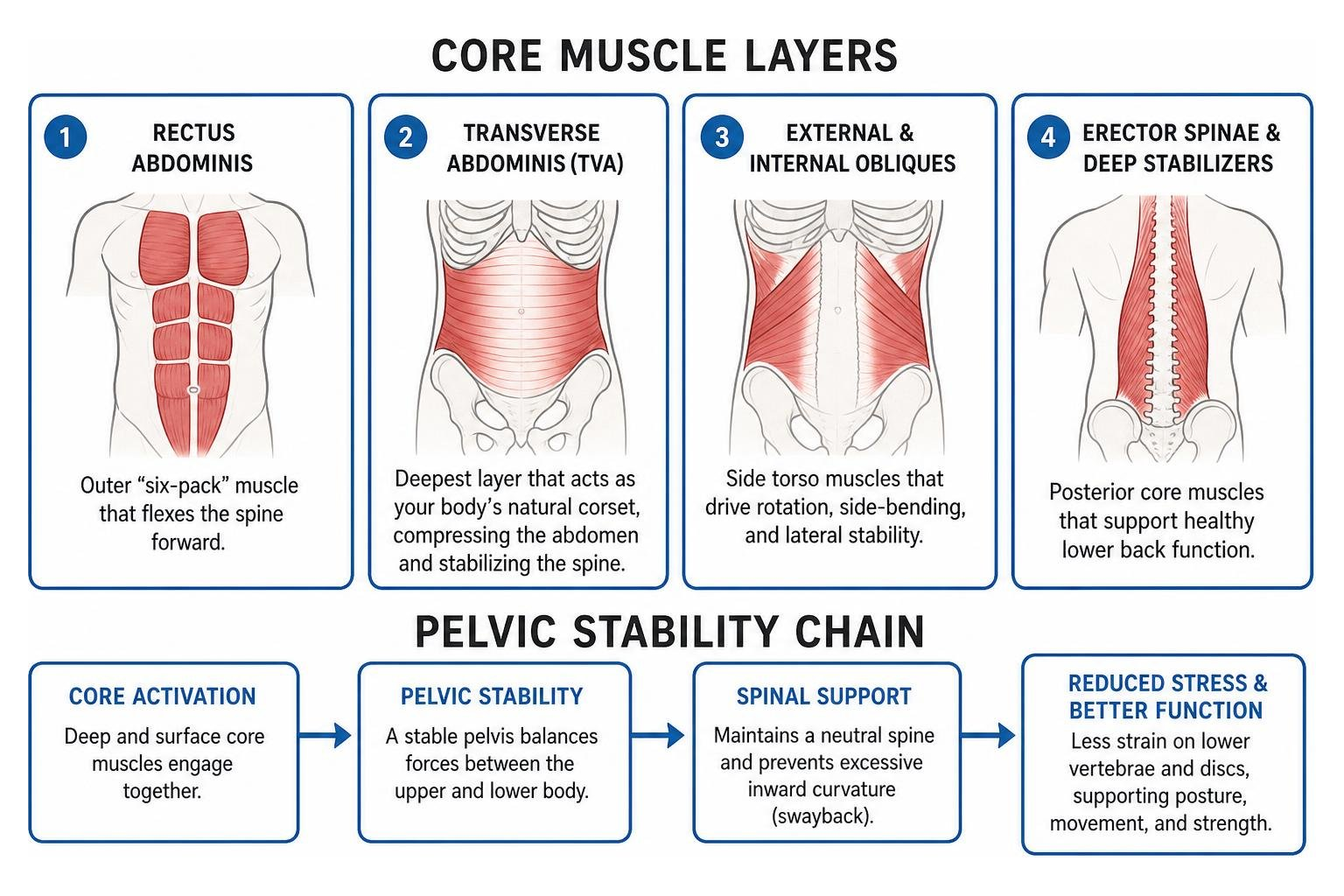
Strengthening this complete core network takes unwanted pressure off the lower spine and prevents the lumbar region from curving too far inward—a common structural posture issue known as swayback or excessive anterior pelvic tilt. When swayback occurs during daily tasks or exercise, extra stress lands directly on your lower vertebrae, significantly increasing the risk of disc bulges, stress fractures, and persistent back pain. Focusing on deep core activation supports your upper body alignment, improves everyday functional posture, and builds long-term athletic power. If you want to expand your fitness knowledge further, check out our dedicated fitness articles and resources.
Comparing the Best Ab Workout Routine for Beginners Programs
When choosing an ab workout routine for beginners, the key balance lies between exercise duration, exercise variety, and adequate recovery time. Abdominal muscles, like any other muscle tissue, require at least 24 hours of rest after a targeted session to repair microscopic tears and adapt effectively. Rushing through daily heavy training without rest often leads to overtraining or poor form.
The comparison table below breaks down the top beginner approaches currently popular in 2026:
| Workout Approach | Session Length | Weekly Frequency | Primary Movements | Key Advantage |
|---|---|---|---|---|
| 5-Minute Express Circuit | 5 mins | 3-5 days | Dead bugs, modified jackknives, side-to-side knee tucks | High time efficiency and zero barrier to entry |
| 10-15 Minute Core Circuit | 10-15 mins | 2-3 days | Planks, bird dogs, dead bugs, glute bridges | Optimal balance of deep stability and strength |
| 28-Day Daily Rotation Plan | 15 mins | Daily (short blocks) | Rotating planks, bodyweight crunches, isometric holds | Excellent for building an initial habit |
| 4-Week Progressive Split | 10-15 mins | 3-4 days | 3 targeted moves per week (e.g., bridges, planks, leg raises) | Systematic progressive overload without burnout |
Choosing between a daily short routine or a spaced-out circuit depends largely on your personal lifestyle and baseline capacity. For example, a structured bodyweight program built around a daily 15-minute format works exceptionally well for overall habit consistency, while a quick 15-minute workout guide fits easily into busy workdays without causing physical fatigue.
Evaluating a 5-Minute Ab Workout Routine for Beginners
Can five minutes really light up your midsection? Absolutely. Short circuits emphasize controlled movements, deliberate muscle contraction, and high focus over sheer speed. A standard 5-minute setup uses 40 seconds of focused work followed by 20 seconds of rest across 4 to 5 low-impact moves.
Exercises like the dead bug, modified jackknives, and seated knee tucks force your core to work against gravity without demanding expensive gym gear. By focusing on time under tension rather than endless rapid repetitions, a 5-minute beginner ab workout format can effectively train deep core stabilizers while fitting seamlessly into minimal downtime.
Designing a 4-Week Ab Workout Routine for Beginners
If you want structured progress over a month, limiting your exercise selection to just three complementary movements per week yields fantastic results. Rotating exercises every seven days keeps training fresh while allowing your central nervous system to master fundamental motor patterns.
Here is a tested weekly progression designed for optimal adaptation:
- Week 1: Glute Bridge (10-12 reps), Standard Crunch (15 reps), Plank Twists (10 total reps).
- Week 2: Upward Plank (20-sec hold), Bicycle Crunches (20 total reps), Lying Leg Raises (10 reps).
- Week 3: Arm Slides (10 reps), Forearm Side Plank (20-sec hold per side), Flutter Kicks (12 reps).
- Week 4: High Plank (30-sec hold), Windshield Wipers (10 total reps), Boat Pose (15-sec hold).
Pairing this style of training with a wider beginner workout challenge guide builds functional momentum across all major muscle groups. For targeted structural guidance, simple form variations, controlled tempo, and gradual increases in hold time can keep your muscles growing safely without rushing into advanced movements.
Step-by-Step Execution, Form Cues, and Preventing Strain
Executing abdominal exercises incorrectly leads straight to neck tension, hip flexor strain, and lower back ache. The most critical cue for any lying core exercise is achieving a posterior pelvic tilt-often called the “squash the grape” visualization. Imagine resting a small grape underneath the arch of your lower back; brace your belly muscles firm and press your lumbar spine downward to crush the grape flat against the floor.

Follow these key step-by-step form cues for essential beginner core movements:
- Forearm Plank: Stack your elbows directly underneath your shoulders and push through your forearms to engage the upper back. Keep a straight line from your head to your heels without letting your hips sag down or pike upward.
- Bird Dog: Start on all fours with wrists under shoulders and knees under hips. Extend your right arm forward and left leg back simultaneously until parallel to the floor. Hold for 2 seconds without letting your hips tilt side to side.
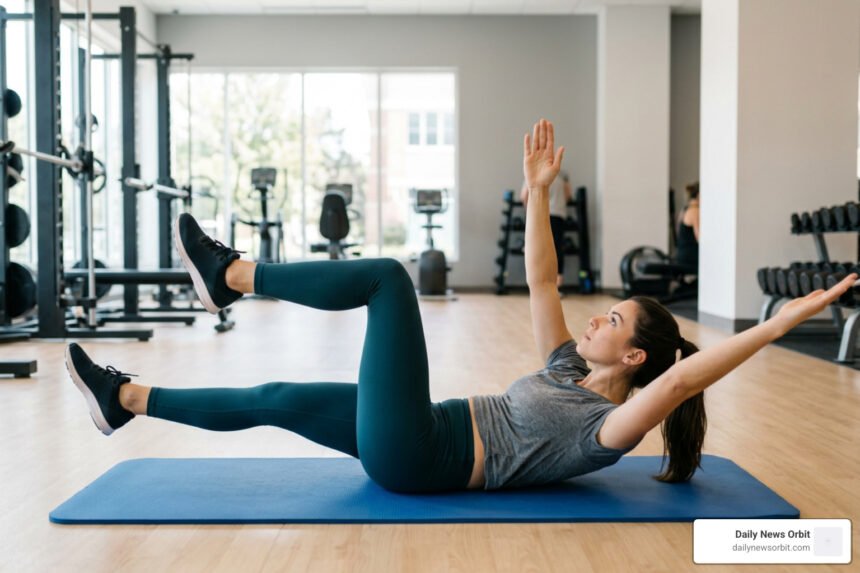
- Dead Bug: Lie flat on your back with knees bent at 90 degrees and arms extended toward the ceiling. Press your lower back into the mat and lower opposite limbs slowly toward the ground while keeping the core braced.
- Reverse Crunch: Use your lower abdominals-rather than kicking with momentum-to curl your hips slightly off the mat, bringing your knees toward your chest in a controlled arc.
To prevent neck strain during crunches, imagine cradling a tennis ball or orange under your chin. Never pull forward on your head with your hands; drive the upward movement entirely by contracting your upper ribcage toward your pelvis. For general exercise safety reminders before increasing intensity, review this MedlinePlus guide to exercise and physical activity.
Nutrition, Fat Loss, and the Six-Pack Myth
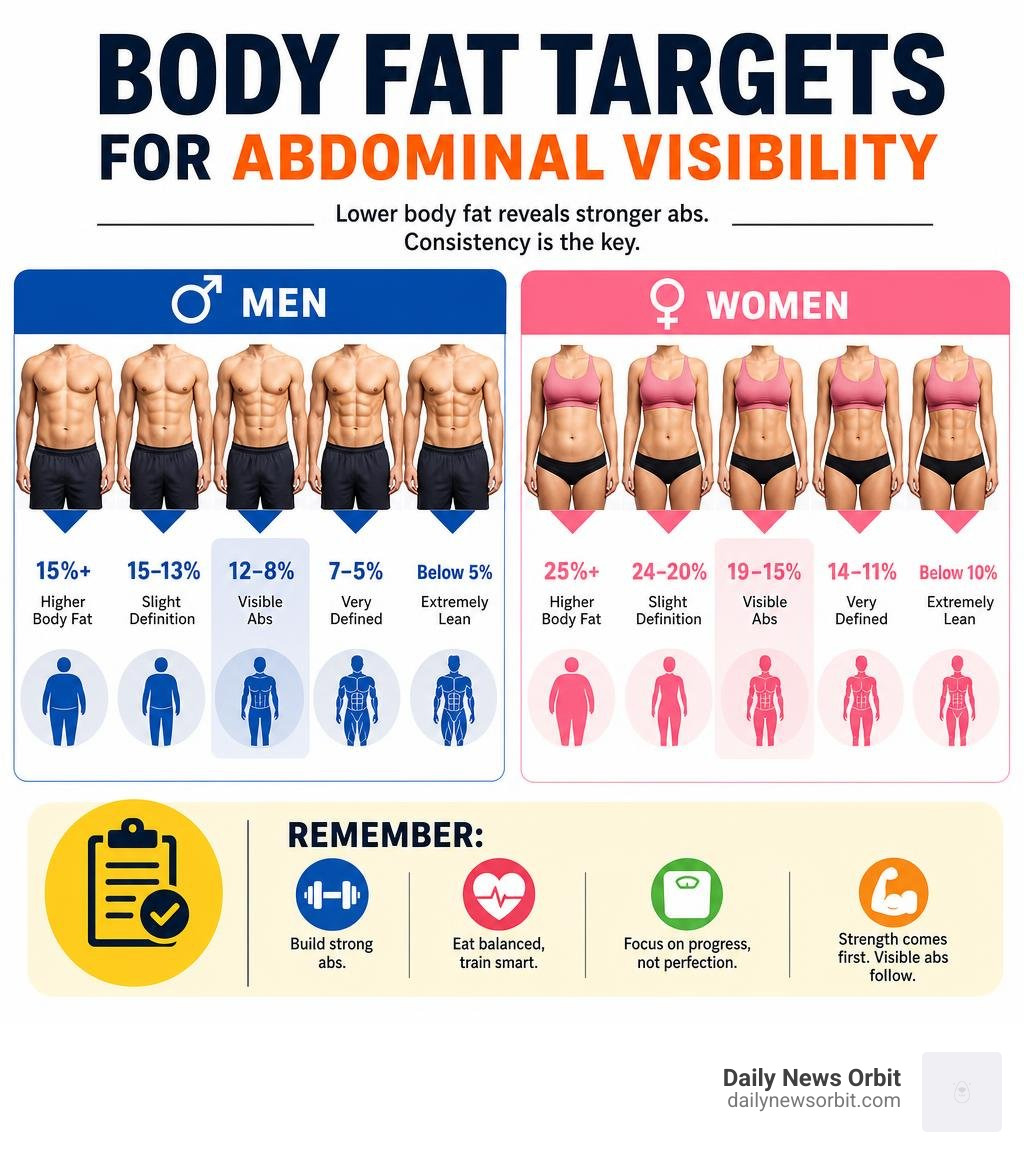
A common fitness misconception among beginners is that targeted stomach training burns localized belly fat. In reality, spot reduction is scientifically impossible. Abdominal workouts strengthen underlying muscle fibers, but your total body fat percentage ultimately dictates whether those defined muscles are visible to the naked eye.

Revealing abdominal definition requires a sustained, moderate caloric deficit paired with balanced, high-quality nutrition:
- Lean Protein: Chicken breast, tofu, eggs, turkey, and white fish support muscle tissue repair and promote satiety after training sessions.
- High-Fiber Whole Grains: Oats, quinoa, brown rice, and legumes regulate digestion and keep blood sugar steady throughout the day.
- Healthy Fats: Avocados, almonds, seeds, and extra virgin olive oil support essential hormone production and cell health.
While men generally need to drop below 13% body fat and women below 20% for crisp abdominal visibility, core strength provides massive postural, back health, and performance benefits regardless of whether your abs are visually defined. To balance your nutrition with a full-body strength plan, review our practical strength and workout plans.
Frequently Asked Questions About Beginner Core Workouts
Can beginners perform ab workouts every day?
While short daily habit challenges (like a 28-day light movement program) are safe for low-intensity endurance building, high-intensity targeted core routines should not be performed every single day over the long term. Abdominal muscle tissues experience microscopic tears during resistance training and require a 24-hour recovery window to rebuild and strengthen. Training 2 to 4 days per week on non-consecutive days yields superior long-term results and prevents chronic lower back fatigue.
How long does it take to see visible ab definition?
Noticeable core stability, better balance, and improved posture often develop within 3 to 4 weeks of consistent training. However, clear muscle definition relies primarily on reducing overall body fat through balanced nutrition and cardio activity. Depending on your starting body composition, revealing visible abs typically takes anywhere from 8 weeks to several months of disciplined calorie management.
What should I do if my lower back hurts during crunches?
Lower back discomfort indicates that your deep core (transverse abdominis) has disengaged, causing your lumbar spine to arch and absorb unwanted mechanical load. Stop the movement immediately, re-establish a posterior pelvic tilt by pressing your lower back flat against the mat, and exhale forcefully during effort. If crunches continue to cause discomfort, switch to crunch-free alternatives like dead bugs, bird dogs, or modified forearm planks.
Conclusion
Building a functional, strong midsection doesn’t require complex gym machinery or endless sit-up marathons. By selecting a structured ab workout routine for beginners, prioritizing proper pelvic alignment over fast repetitions, and supporting your hard work with balanced nutrition, you protect your spine while constructing a strong athletic foundation for everyday living.
At Daily News Orbit, we believe fitness should be simple, safe, and effective for everyone. Choose a 5- to 15-minute routine that fits comfortably into your weekly schedule, allow adequate recovery days, and stay consistent with your efforts. Ready to take your complete training routine to the next level? Explore our comprehensive workout guides to build total-body strength today.