
Why a Beginner 30 Day Workout Challenge Is the Best Way to Start Exercising
Why a Beginner 30 Day Workout Challenge Is a Smart First Step
A beginner 30 day workout challenge is a simple way to start exercising without trying to change your whole life at once. The goal is not to train hard every day. It is to build a repeatable habit with short workouts, basic movements, walking, and recovery days.
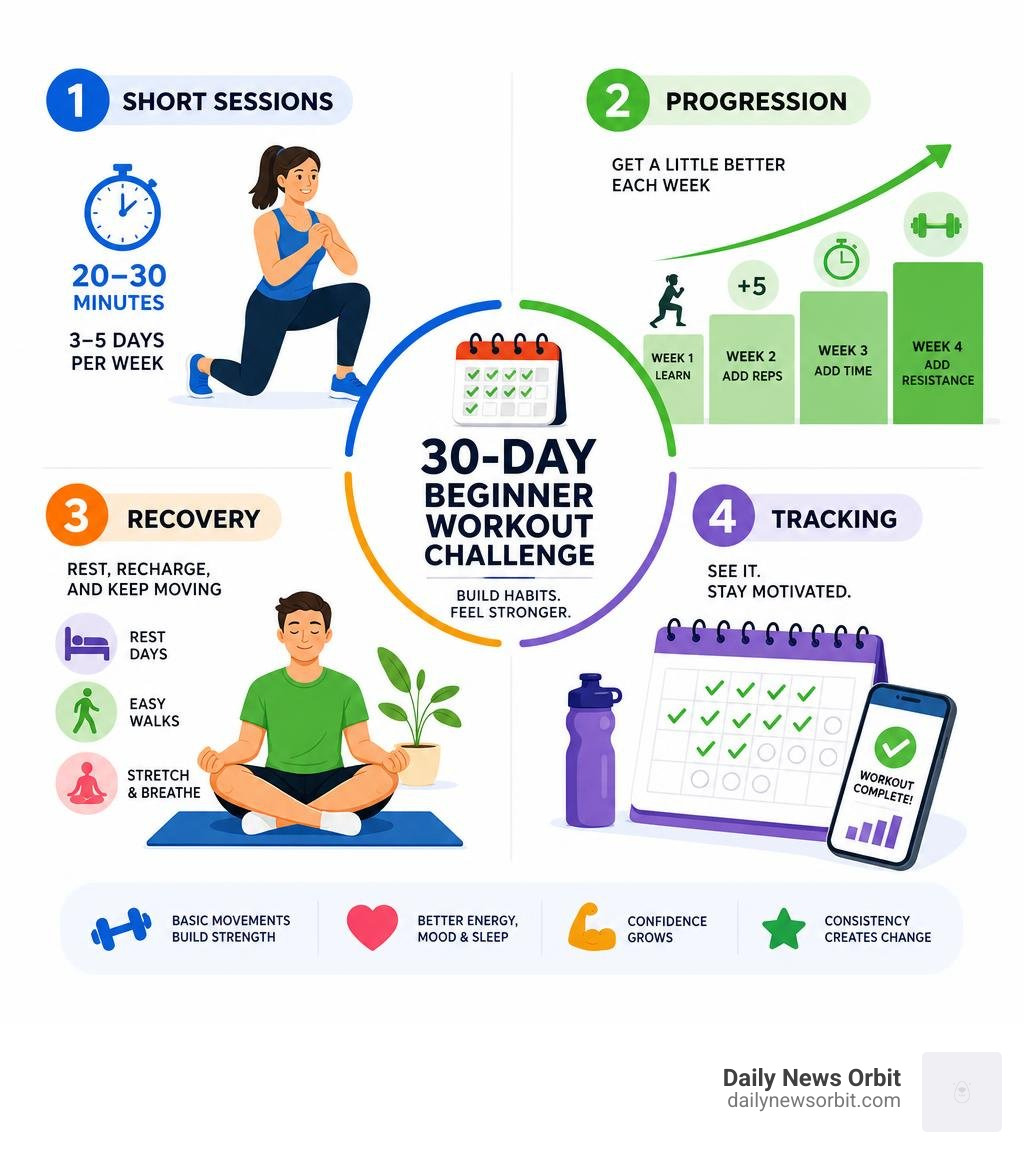
For most beginners, a good challenge looks like this:
- Work out for 20 to 30 minutes on 3 to 5 days each week.
- Start with bodyweight basics such as squats, wall push-ups, glute bridges, lunges, and planks.
- Take rest days or go for easy walks to recover.
- Make the plan slightly harder each week by adding reps, time, or light resistance.
- Track completed workouts on a calendar so progress is visible.
You may notice better energy, mood, sleep, and movement confidence within the first few weeks. Strength can improve quickly as your body learns new movements. Bigger changes in muscle, weight, or body shape usually take longer than 30 days.
That is still a win. Research suggests habits take about 66 days to become automatic on average, which makes the first month an important starting block. A clear schedule reduces the daily question of “What workout should I do today?” and makes it easier to show up.
Why a Beginner 30 Day Workout Challenge Works for Habit Formation
Starting a fitness journey can feel overwhelming, especially when we try to copy intense routines meant for experienced athletes. That is why so many people give up during week one. Research from the European Journal of Social Psychology reveals that forming a new habit takes an average of 66 days. However, the first 30 days are the most critical period for breaking mental resistance and laying down new neural pathways.
When we commit to a beginner 30 day workout challenge, we remove decision fatigue. Instead of waking up and wondering whether to exercise, we follow a pre-set map. By capping sessions at 20 to 30 minutes, we keep cognitive friction low. To set up an effective routine, check out these 30-day beginner fitness plan recommendations to align your schedule with realistic habit-building principles.
Realistic Physical and Mental Results in 30 Days
Many beginners ask: Can you really see physical changes in 30 days? The short answer is yes, but the most dramatic early transformations happen inside the body first.
Within the first 7 to 10 days, regular physical activity triggers neuromuscular adaptations. Our brains learn to recruit muscle fibers more efficiently, improving coordination and strength before actual muscle size increases. Additionally, exercising immediately improves systemic blood circulation, boosts energy levels, reduces resting blood pressure, and enhances deep sleep quality.
By weeks 3 and 4, muscle soreness typically drops by 40% to 60% as movement mechanics stabilize. Beginners who combine consistent movement with balanced nutrition often lose between 2 and 6 pounds of body weight while noticing subtle improvements in posture and muscle definition.
How to Structure Your Daily Routines for Maximum Results
The American College of Sports Medicine (ACSM) recommends at least 150 minutes of moderate activity per week for overall cardiovascular and metabolic health. For a complete novice, jumping straight into 150 active minutes can cause severe muscle fatigue or injury.
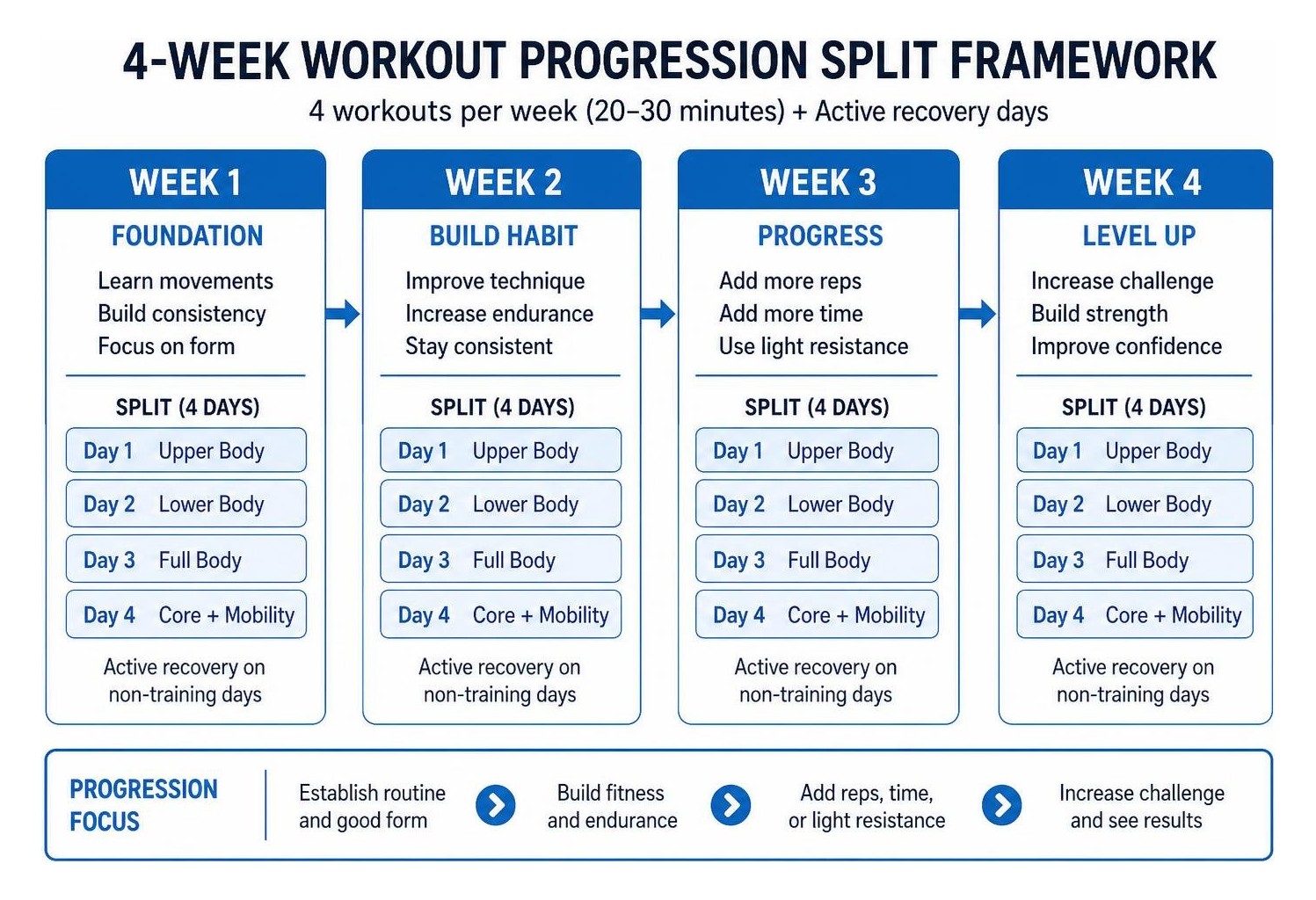
We recommend structuring your beginner 30 day workout challenge around four 20-minute to 30-minute training sessions per week, paired with low-impact active recovery days.
Building Muscle in a Beginner 30 Day Workout Challenge
Muscle tissue grows through progressive overload—gradually increasing the strain placed on target muscle groups over time. For absolute beginners, building muscle does not require lifting heavy weights right away. Bodyweight resistance or light dumbbells (between 6 and 10 pounds) are enough to stimulate muscle protein synthesis.
To maximize safety and effectiveness, stick to these foundational guidelines:
- Sets and Repetitions: Complete 2 to 3 sets of 8 to 12 repetitions per exercise.
- Form Focus: Execute every repetition with slow, controlled cadence—lowering weight or body position slower than you lift it.
- Rest Intervals: Pause for 60 to 90 seconds between sets to allow full ATP energy recovery.
The 3-3-3 Rule for Beginner Workouts
If you struggle to stick to a daily schedule, apply the 3-3-3 rule:
- 3 Workouts per Week: Commit to just three primary full-body strength sessions every seven days.
- 3 Weeks of Adherence: Focus strictly on sticking to the routine for three consecutive weeks without missing a scheduled day.
- 3-Session Progression: Evaluate your progress every three sessions, slightly increasing the workload by adding 1 or 2 repetitions, extending a hold by 5 seconds, or moving to a harder movement variation.
This rule reduces mental pressure and keeps progression steady and manageable.
The 4-Week Workout Plan for Beginners
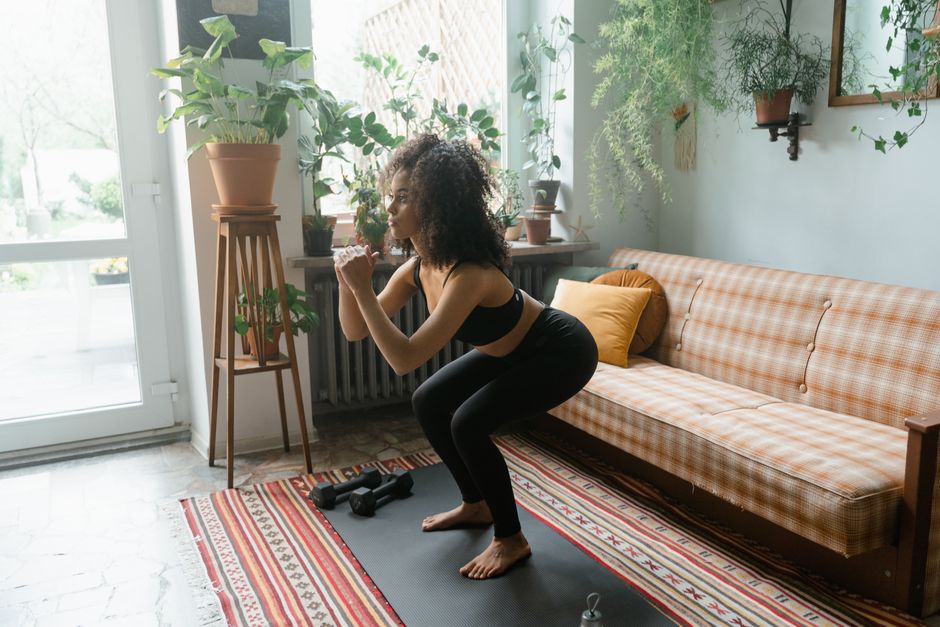
To build functional strength across all major muscle groups without burning out, we split the 30-day timeline into two distinct two-week phases.
| Week Phase | Workout Duration | Weekly Frequency | Primary Training Focus | Work / Rest Ratio |
|---|---|---|---|---|
| Week 1 & 2 (Foundation) | 15–20 Minutes | 3–4 Days Strength + Walking | Movement Form & Neuromuscular Baseline | 30s Work / 15s Rest |
| Week 3 & 4 (Progression) | 25–30 Minutes | 4 Days Strength + Active Recovery | Volume, Conditioning & Resistance | 35–40s Work / 10s Rest |
Week 1 & 2: Movement Foundations and Form
The goal of the first fortnight is mastering basic human movement patterns: squats, pushes, hinges, pulls, and core stabilization.
During these weeks, perform a circuit of foundational bodyweight movements:
- Bodyweight Squats: Target quadriceps, glutes, and hamstrings.
- Wall or Incline Push-ups: Build upper body strength in the chest, shoulders, and triceps.
- Glute Bridges: Activate posterior chain muscles and protect the lower back.
- Plank Holds: Develop deep core stability and transverse abdominis strength.
- Reverse Lunges: Improve single-leg balance and joint alignment.
Keep these daily circuits around 15 to 20 minutes long. Review these structured home workout routines for step-by-step guidance on exercise execution without specialized gear.
Week 3 & 4: Intensity, Volume, and Progression
In weeks three and four, we build on our foundational movement baseline by introducing light resistance, slightly longer intervals, and reduced rest periods.
Extend circuit durations to 25 or 30 minutes. You can increase intensity by:
- Transitioning from wall push-ups to knee push-ups or full push-ups.
- Adding pause squats (holding the bottom position for 2 seconds) or holding light dumbbells during lunges.
- Increasing plank hold times from 20 seconds to 45 or 60 seconds.
If you enjoy pre-planned session structures, try this 5-day time-capped fitness challenge to incorporate short mobility work alongside strength days.
Equipment, Motivation, and Consistency Tips
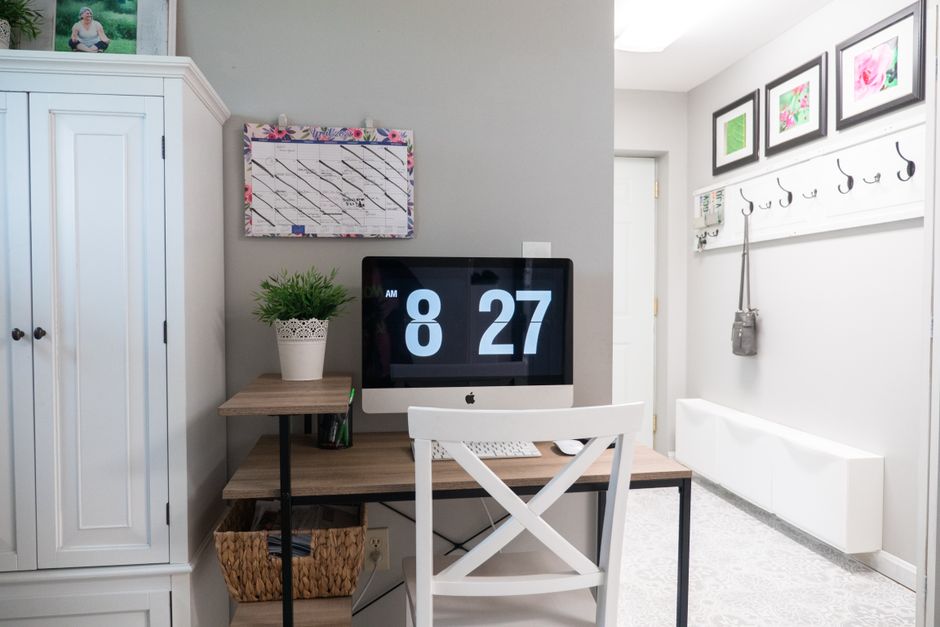
One major advantage of a beginner 30 day workout challenge is its low barrier to entry. You do not need expensive gym memberships or complex machines to achieve real fitness results.
Essential home equipment includes:
- An exercise or yoga mat for floor exercises and joint comfort.
- A pair of light-to-medium dumbbells (6 to 12 lbs) or resistance bands.
- Comfortable athletic shoes with good lateral support.
How to Stay Motivated for 30 Days
Motivation naturally fluctuates over a 30-day period. To stay consistent, build systems that support your goals:
- Use Visual Trackers: Print a physical 30-day calendar chart and place it on your refrigerator. Physically marking off completed workouts triggers a dopamine release that reinforces habit loop adherence. You can download free 30-day printable trackers to log daily workouts easily.
- Apply the ‘Never Miss Twice’ Rule: If life disrupts your schedule and you miss a workout day, resume the routine the following day without double-booking workouts.
- Establish Accountability: Partner with a friend, family member, or online community to share daily check-ins.
- Reward Milestones: Celebrate completing each 7-day milestone with non-food rewards like new athletic apparel or a relaxing foam-rolling session.
Next Steps After Your Beginner 30 Day Workout Challenge
Completing 30 consecutive days of structured movement is a huge achievement. But what happens on day 31?
To maintain momentum and keep progressing:
- Transition to an 8-Week Program: Gradually step up workout volume and add heavier resistance.
- Explore New Training Modalities: Introduce Pilates, kettlebell circuits, or cycling into your weekly schedule.
- Consider a Gym Setup: If you feel ready to transition from home bodyweight workouts to formal resistance equipment, read our guide on the ultimate gym workout routines for men for beginners to transition smoothly to weight room training.
Frequently Asked Questions About Beginner Fitness Challenges
Can you complete a 30-day challenge entirely at home without equipment?
Yes. Bodyweight exercises like squats, push-ups, lunges, glute bridges, and planks utilize your own body mass as resistance. They effectively build functional strength, boost heart rate, and burn calories in small living spaces without any specialized fitness equipment.
What should I do if I miss a workout day during the challenge?
Simply pick up where you left off the next day. Never double up on workouts to make up for a missed session, as this increases the risk of overtraining, acute muscle soreness, and injury. Consistency over 30 days matters far more than single-day perfection.
Is brisk walking sufficient for active recovery days?
Brisk walking is one of the most effective active recovery activities available. Walking stimulates systemic blood circulation to clear metabolic waste from sore muscles without stressing joints. Walking on a slight 5-degree incline can even double your calorie burn while keeping cardiovascular strain low.
Conclusion
At Daily News Orbit, we believe that fitness should enrich your daily life rather than complicate it. Committing to a beginner 30 day workout challenge is the single best way to overcome early fitness anxiety, develop solid movement patterns, and build a lasting health habit.
Focus on showing up for 20 minutes at a time, listen to your body, and celebrate every checkmark on your calendar. Thirty days from now, you will be proud you took that very first step today!