

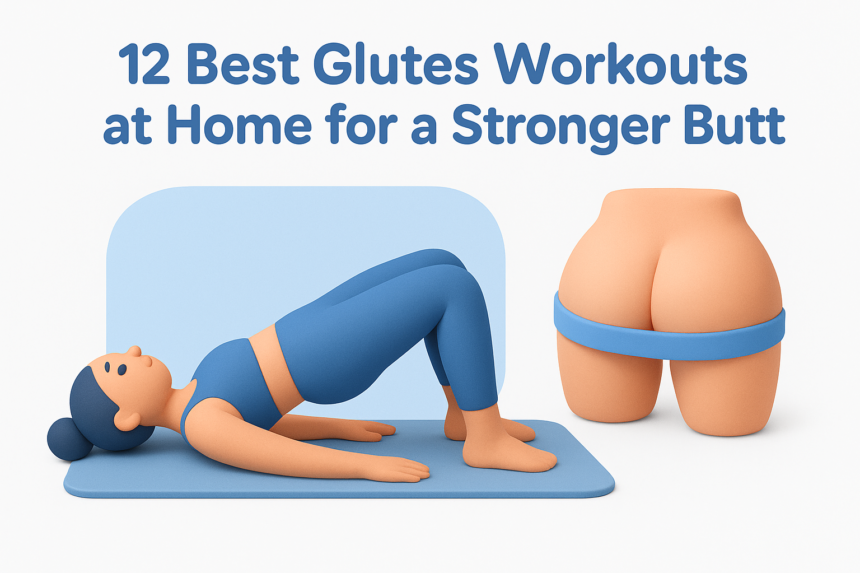
You don’t need a gym membership or a rack of heavy dumbbells to build a stronger, rounder butt. Some of the most effective glutes workouts at home rely on nothing but your own bodyweight, a bit of floor space, and consistency. If you’ve been putting off training your glutes because you can’t get to a squat rack, that excuse doesn’t hold up anymore.
This list answers exactly what you’re searching for: real, at home glute workouts that actually fire up your glute muscles instead of just tiring out your quads. Every move here targets the glute max, medius, and minimus from different angles, so you’re building strength and shape, not just breaking a sweat.
Below you’ll find 12 glute workouts at home that range from beginner-friendly to seriously challenging, plus tips on reps, form, and how to structure them into a routine that fits your week. Grab a mat, maybe a resistance band if you have one, and let’s get your glutes working.
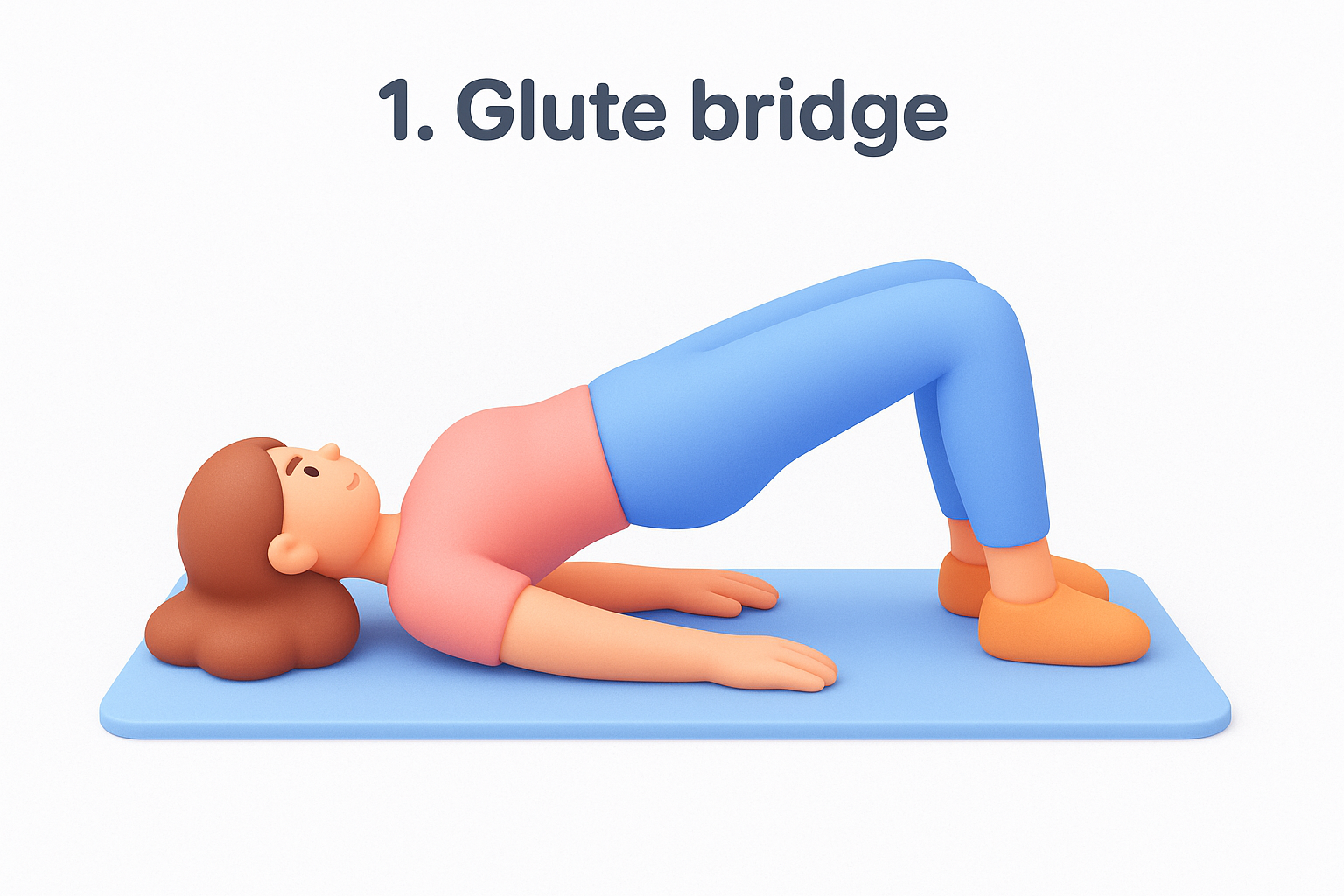
1. Glute bridge
The glute bridge is where every solid at home glute workouts routine should start. It’s low-impact, easy on the lower back when done right, and teaches your body how to actually squeeze your glutes instead of just moving through a range of motion. If you’ve never trained your glutes with intention before, this move retrains the mind-muscle connection you’ll need for everything else on this list.
How to do it
Lie on your back with your knees bent and feet flat on the floor, hip-width apart, heels a few inches from your butt. Press through your heels and lift your hips toward the ceiling until your body forms a straight line from shoulders to knees. Squeeze your glutes hard at the top for a full second, then lower back down with control instead of dropping.
1. Lie on back, knees bent, feet flat
2. Drive through heels, lift hips up
3. Squeeze glutes at the top (1-2 sec hold)
4. Lower slowly, don't let hips touch the floor between reps
Muscles worked
This move primarily hits the gluteus maximus, with your hamstrings and lower back pitching in as stabilizers. Your core also has to stay braced to keep your hips from sagging, which makes the bridge a sneaky good move for people dealing with lower back tightness from sitting all day, and it pairs well with core routines you can do on the same mat.
Master the glute bridge first, because every other exercise on this list builds on the squeeze you learn here.
Sets and reps
Beginners should aim for 3 sets of 15 reps, resting about 30 seconds between sets. Once that feels easy, slow down your tempo instead of just adding more reps. A 3-second lowering phase on each rep will fatigue your glutes far faster than rushing through 20 quick pumps.
Make it harder or easier
If you’re just starting out, keep your feet closer to your hips to shorten the lever arm and make the lift easier. To increase the challenge, try these progressions:
- Single-leg glute bridge: extend one leg straight and press through the other heel
- Marching bridge: hold the top position and alternate lifting each knee toward your chest
- Weighted bridge: rest a heavy book, backpack, or dumbbell across your hip crease
- Banded bridge: loop a resistance band above your knees and press outward as you lift
Any of these turns a beginner move into a genuinely tough finisher, no gym required.
2. Hip thrust
The hip thrust is the single best move for pure glute activation, and research on muscle engagement backs that up. Unlike the bridge, your shoulders stay elevated on a couch or sturdy chair, which lets your hips travel through a longer range of motion and puts way more tension directly on the glute muscles at the top of the movement. If you only have time for one exercise in your glute workouts at home routine, this is the one to keep.
How to do it
Sit on the floor with your upper back against the edge of a couch or low bench, knees bent, feet flat on the floor about shoulder-width apart. Roll a rolled towel or place a folded blanket across your hip crease for comfort, then drive through your heels to lift your hips until your torso is parallel to the floor. Squeeze your glutes hard at the top, then lower back down without letting your hips sag toward the floor.
Muscles worked
This exercise isolates the gluteus maximus more directly than almost any other bodyweight move, with secondary work hitting your hamstrings and core. Because your shoulders are elevated, your glutes handle nearly the entire load instead of sharing it with your lower back.
If you want one move that proves your glutes are actually firing, it’s the hip thrust.
Sets and reps
Start with 3 sets of 12 to 15 reps, pausing for a full second at the top of each rep.
Make it harder or easier
Beginners can do floor-only hip thrusts without elevation. To level up, try single-leg hip thrusts, add a resistance band above the knees, or rest weight across your hips.
3. Bodyweight squat
The bodyweight squat is a staple in almost every at home glute workouts plan because it trains your glutes, quads, and core together in one natural movement pattern. Squatting is something your body already knows how to do, so this move is less about learning new mechanics and more about tightening up your form so your glutes do their fair share of the work.
How to do it
Stand with your feet shoulder-width apart, toes turned slightly out. Push your hips back like you’re sitting into a chair, keeping your chest up and weight in your heels, and lower until your thighs are at least parallel to the floor. Drive through your heels and squeeze your glutes to stand back up, pushing your hips forward at the top instead of just straightening your knees.
Muscles worked
Squats hit the quadriceps heavily, but going deep and squeezing at the top shifts more tension onto your gluteus maximus and glute medius. Your core and lower back also stay engaged to keep your torso upright through the whole range.
Depth and a hard glute squeeze at the top turn a basic squat into a real glute builder, not just a leg burner.
Sets and reps
Aim for 3 sets of 15 to 20 reps. Pause for a full second at the bottom of each rep to remove momentum and force your muscles to do the lifting.
Make it harder or easier
Easier: hold onto a doorframe or chair for balance while you build strength. Harder: try jump squats, add a resistance band above your knees, or slow your descent to a 4-second count.
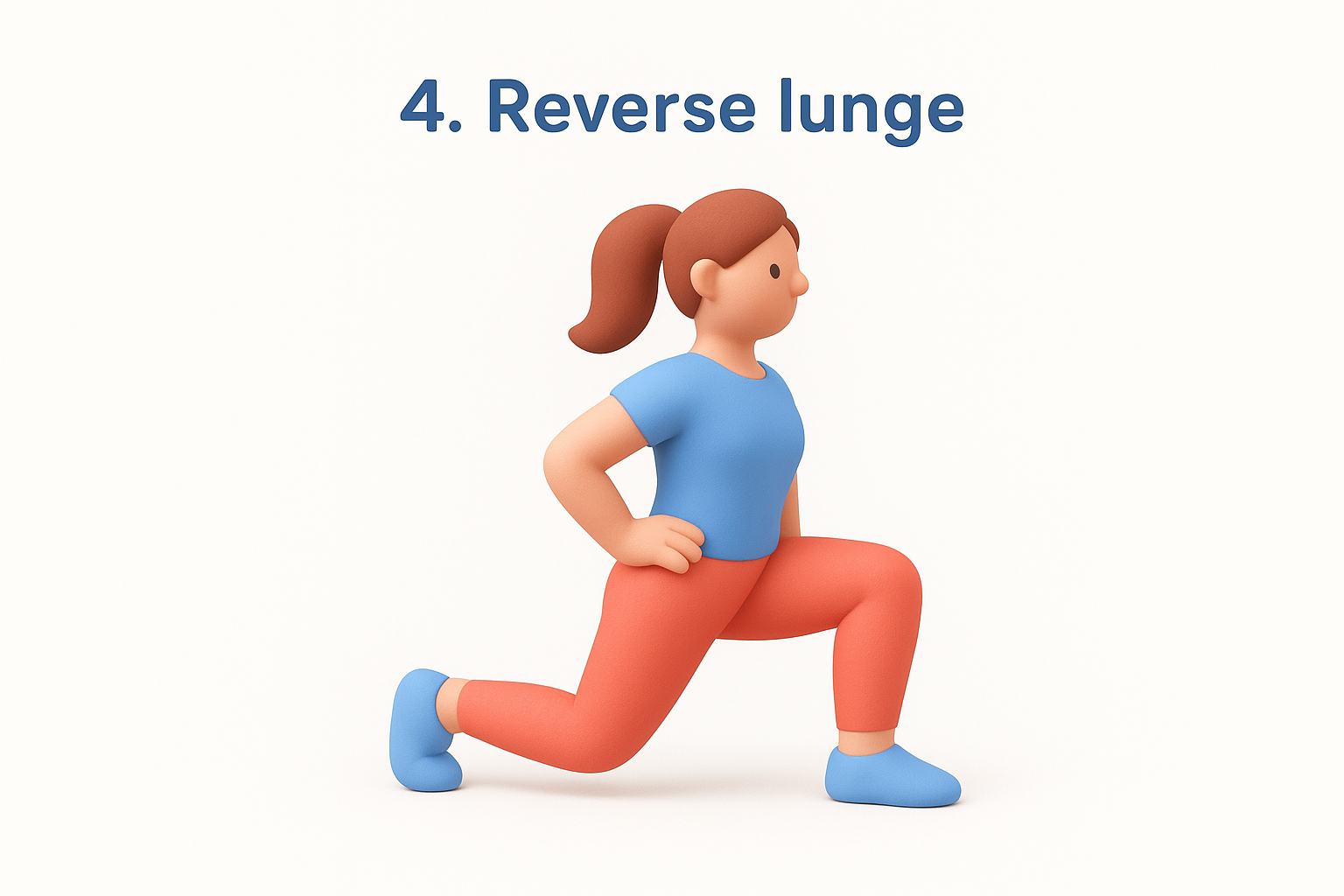
4. Reverse lunge
The reverse lunge belongs in every serious glutes workouts at home routine because it trains each leg on its own, which exposes and fixes the strength imbalances a plain squat can hide. Stepping backward instead of forward also puts less strain on your front knee, making it a smarter pick if squats ever leave your joints achy.
How to do it
Stand tall with your feet hip-width apart. Step one foot straight back and lower your hips until both knees form roughly 90-degree angles, keeping your front knee stacked over your ankle. Push through your front heel to return to standing, squeezing your glute at the top before you step back and repeat on the same side or alternate legs.
Muscles worked
This move loads the gluteus maximus of your front leg hard, especially as you drive back up to standing. Your quads and hamstrings assist, and your glute medius fires to keep your hips from tipping sideways, which builds real stability along with size.
A reverse lunge trains one leg at a time, so it exposes weaknesses a two-legged squat lets you hide.
Sets and reps
Do 3 sets of 10 to 12 reps per leg, resting 30 to 45 seconds between sets. Focus on control rather than speed, since rushing turns this into a quad-dominant move fast.
Make it harder or easier
Beginners can shorten the step back or hold a wall for balance. For more challenge, add a pulse at the bottom, hold dumbbells or filled water bottles at your sides, or slow the descent to three full seconds.
5. Curtsy lunge
The curtsy lunge adds a diagonal step that most at home glute workouts skip, and that’s exactly why it belongs here. Crossing one leg behind the other shifts the work toward your glute medius and minimus, the smaller muscles on the side of your hip that shape and stabilize your butt but rarely get hit by squats or bridges.
How to do it
Stand tall with your feet hip-width apart, hands on your hips or clasped at your chest. Step one leg diagonally behind the other, like you’re about to curtsy, and bend both knees until your back knee nearly grazes the floor. Push through your front heel to return to standing, squeezing your glute before you repeat on the same side or alternate.
Muscles worked
The crossing step lights up the glute medius on your standing leg, which controls hip stability and helps prevent that wobbly, uneven look some people get from training only with straight-ahead moves. Your quads and inner thighs assist, and your core works overtime to keep you from tipping over.
Curtsy lunges hit the side of your glutes that squats and bridges usually miss.
Sets and reps
Stick with 3 sets of 10 to 12 reps per leg. Since balance is the real challenge here, slow, controlled reps beat rushing through a higher count every time.
Make it harder or easier
If balance is shaky, hold a wall or chair and shorten the crossing step. To make it harder, add a pulse at the bottom, hold weight at your chest, or loop a resistance band above your knees for constant outward tension throughout the movement.
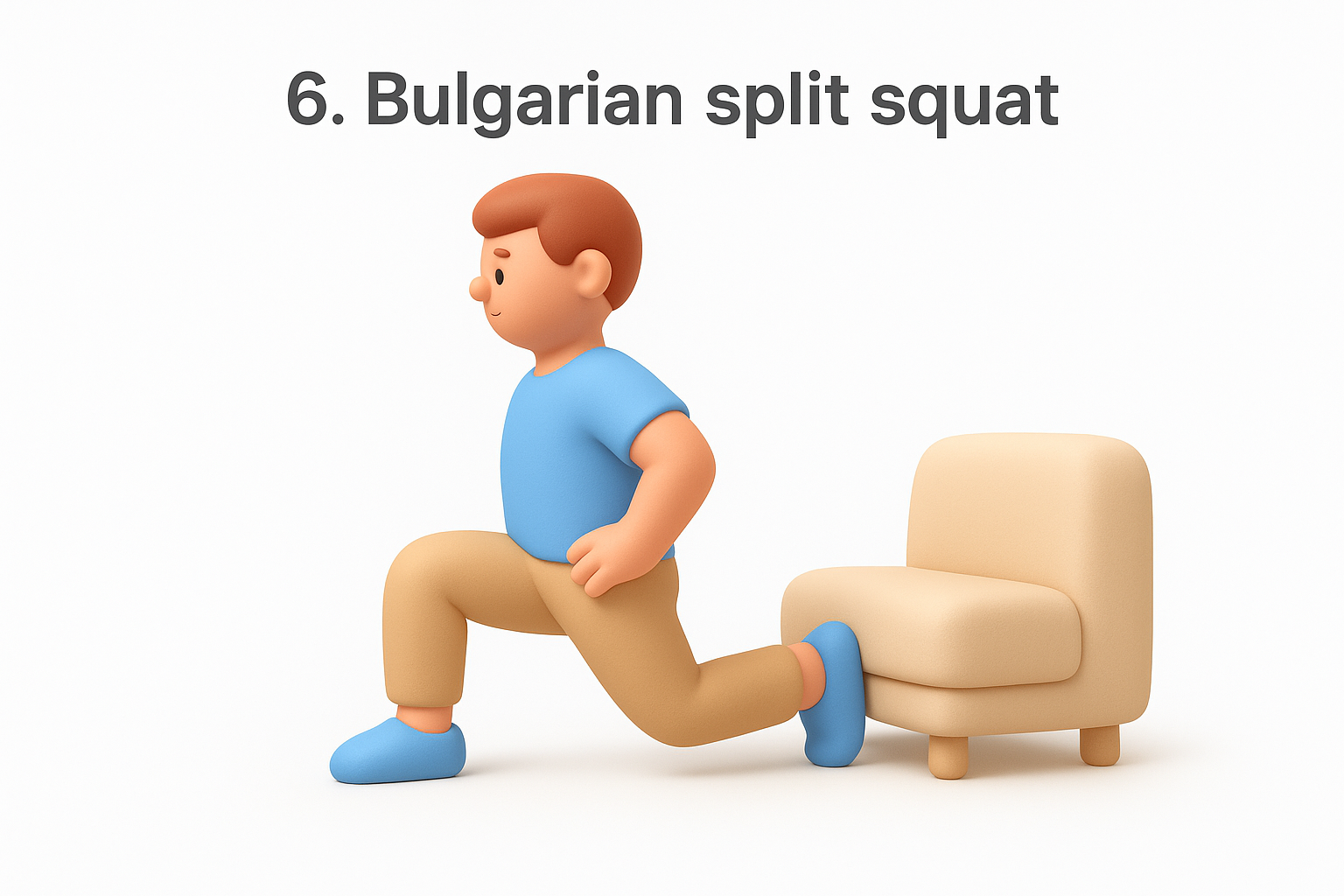
6. Bulgarian split squat
The Bulgarian split squat is the toughest bodyweight move on this list, and it earns its spot in any serious glutes workouts at home plan because it demands balance, strength, and range of motion all at once. Elevating your back foot forces your front leg to handle almost the entire load, which builds single-leg strength that a regular squat just can’t touch.
How to do it
Stand a couple of feet in front of a couch, chair, or sturdy step, and rest the top of one foot behind you on the elevated surface. Lower your hips straight down until your front thigh is close to parallel with the floor, keeping your torso upright and most of your weight in your front heel. Push through that heel to stand back up, squeezing your glute at the top before lowering into the next rep.
Muscles worked
This exercise loads the front leg glutes intensely, especially the gluteus maximus, while your quads handle stabilization through the knee. Your glute medius also fires hard to keep your hips level, since the elevated back foot removes any chance of leaning on your other leg for support.
If one glute exercise humbles you fast, it’s the Bulgarian split squat.
Sets and reps
Aim for 3 sets of 8 to 10 reps per leg, resting 45 to 60 seconds between sides since this move fatigues your legs quickly.
Make it harder or easier
Beginners should lower the back foot height or skip the elevation entirely and use a reverse lunge instead. For more challenge, hold dumbbells at your sides, add a pause at the bottom, or slow your tempo to build serious control.
7. Single-leg Romanian deadlift
The single-leg Romanian deadlift rounds out your glute workouts at home routine by training the hip hinge, a movement pattern squats and lunges don’t really touch. Balancing on one leg while you hinge forward forces your glutes and hamstrings to control the descent, which builds strength and stability at the same time.
How to do it
Stand tall on one leg with a slight bend in your knee. Hinge forward at the hips, extending your free leg straight behind you for counterbalance, until your torso is roughly parallel to the floor. Keep your back flat and reach your hands toward the ground, then squeeze your standing glute to pull yourself back up to standing.
Muscles worked
This move targets the gluteus maximus and hamstrings of your standing leg through a deep stretch and hard contraction. Your glute medius and core work constantly to keep you from tipping sideways, which is why this exercise builds balance most people didn’t know they were missing.
A single-leg Romanian deadlift trains the hip hinge your squats and lunges never touch.
Sets and reps
Do 3 sets of 8 to 10 reps per leg, moving slowly through each rep since speed wrecks your balance and shifts the work away from your glutes.
Make it harder or easier
Beginners can tap their back toe down lightly between reps for extra stability, or hold a wall for balance. To increase difficulty:
- Hold a dumbbell or filled water bottle in the opposite hand
- Pause for two seconds at the bottom of each rep
- Close your eyes briefly at the top to challenge stability further
8. Donkey kicks
Donkey kicks bring an isolation move into your glutes workouts at home lineup, and they earn their spot because they strip away momentum entirely. Working from all fours limits your range of motion, which forces your glute to do the lifting instead of your lower back swinging the weight up for you.
How to do it
Get on your hands and knees with your wrists under your shoulders and knees under your hips. Keeping your knee bent at roughly 90 degrees, lift one foot toward the ceiling by driving through your heel, without letting your lower back arch. Squeeze your glute hard at the top, then lower your knee back down just short of the floor before repeating.
Muscles worked
This move isolates the gluteus maximus of the working leg almost completely, since your hip flexors and lower back stay mostly still if your form holds. Your core has to stay braced to prevent your torso from rotating or your hips from opening up to the side, which is the most common mistake people make here.
Donkey kicks work because they limit momentum, forcing your glute to do all the lifting.
Sets and reps
Go for 3 sets of 15 to 20 reps per leg, pausing for a full second at the top of each rep to lock in the squeeze.
Make it harder or easier
Beginners can shrink the range of motion and focus purely on the squeeze rather than height. To make it harder, loop a resistance band above your knees, add ankle weights, or hold the top position for three seconds before lowering.
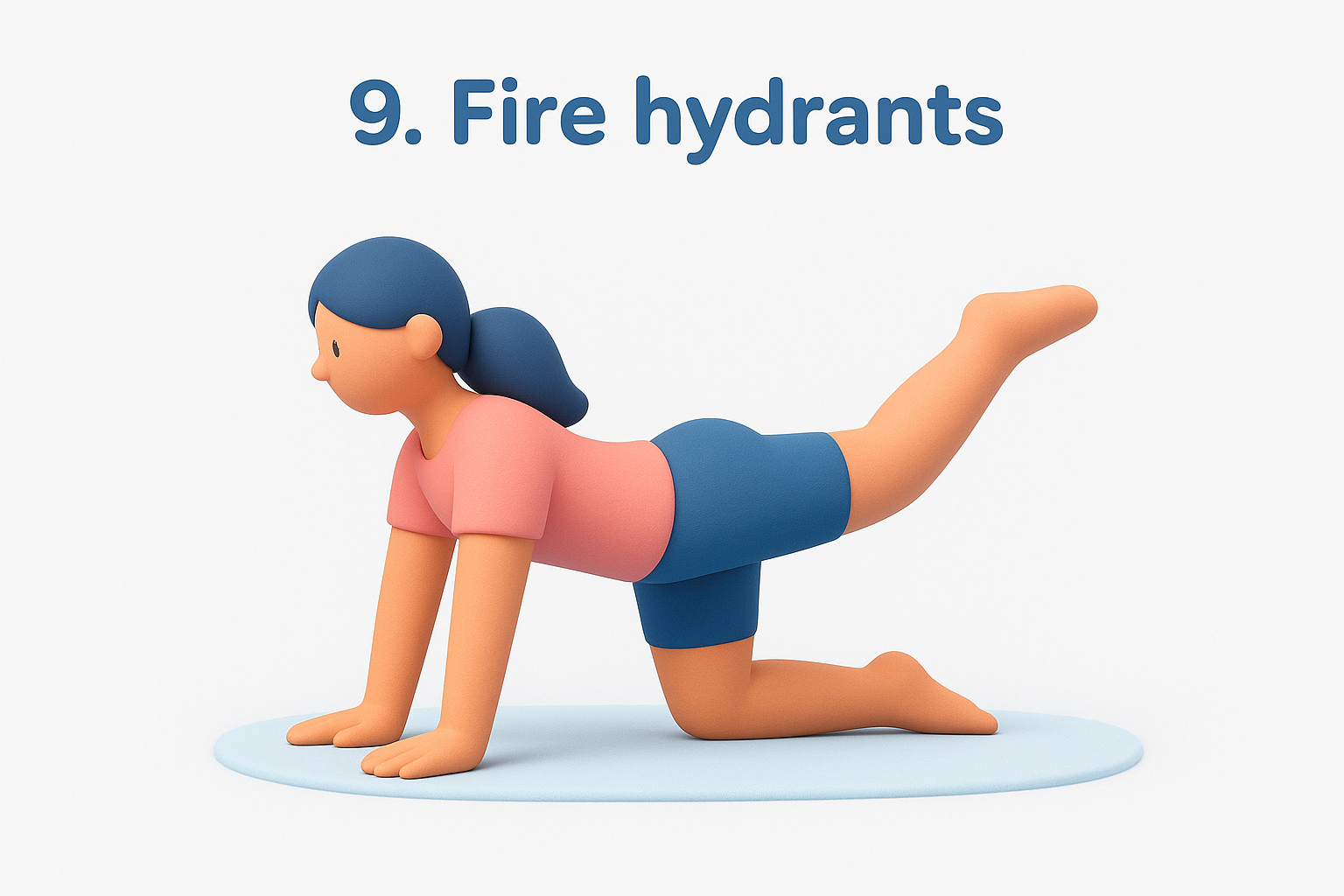
9. Fire hydrants
Fire hydrants earn their place in this glutes workouts at home lineup because they hit your hip abductors from an angle nothing else on this list touches. Instead of moving your leg forward or backward, you’re lifting it out to the side, which targets the muscle responsible for that rounded shape on the outer hip that flat lunges and squats tend to skip.
How to do it
Start on your hands and knees in a tabletop position, wrists under shoulders and knees under hips. Keeping your knee bent at 90 degrees, lift one leg out to the side until your thigh is roughly parallel to the floor, without rotating your hips or leaning your torso to the opposite side. Lower back down with control just short of touching the floor, then repeat for reps before switching legs.
Muscles worked
This move isolates the glute medius, the muscle on the side of your hip that stabilizes your pelvis when you walk, run, or stand on one leg. Your core has to stay tight to keep your torso from swaying, and your standing-side glute works as an anchor throughout the set.
Fire hydrants build the outer hip shape that forward-and-back moves like squats and lunges never reach.
Sets and reps
Aim for 3 sets of 15 reps per side, keeping the movement slow and controlled instead of swinging your leg for extra height.
Make it harder or easier
Beginners should focus on a smaller range of motion with a strong squeeze rather than lifting high with sloppy form. For more resistance, add a mini band above your knees, hold ankle weights, or pause for two seconds at the top of each rep.
10. Clamshells
Clamshells look almost too easy, but they belong in any glute workouts at home routine because they isolate the exact muscle that keeps your hips stable when you walk, climb stairs, or run. This move strips away the temptation to swing your leg or use momentum, so your glute medius has nowhere to hide.
How to do it
Lie on your side with your knees bent to about 45 degrees and your feet stacked together, hips stacked directly on top of each other. Keeping your feet touching, lift your top knee toward the ceiling like you’re opening a clamshell, without letting your hips roll backward. Lower back down with control, then repeat for reps before switching sides.
Muscles worked
Clamshells target the glute medius almost exclusively, with a bit of help from the deep hip rotators that keep your pelvis level during everyday movement. Your obliques and lower back also engage lightly to keep your torso from tipping as you lift.
Clamshells train the small hip muscle that keeps your stride steady and your hips from wobbling.
Sets and reps
Work through 3 sets of 15 to 20 reps per side, pausing at the top of each rep for a full second before lowering.
Make it harder or easier
Struggling to feel it in your hip? Shrink the range of motion and focus on a slow, deliberate lift instead of speed. To add resistance, loop a mini band above your knees, hold a light dumbbell against your top thigh, or add a two-second pause at the top of each rep.
11. Lateral band walk
The lateral band walk stands out in this glute workouts at home roundup because it’s the rare move that trains your glutes while you’re moving instead of holding still. This one does require a mini resistance band, but it’s cheap, packable, and worth adding to your setup if you’re serious about shaping your outer hips, especially once you see how many band workouts for women open up with one.
How to do it
Loop a mini band around your legs, either above your knees or around your ankles for more resistance, and stand with your feet hip-width apart. Bend your knees slightly, sink into a quarter-squat, and step sideways with control, keeping tension on the band the entire time. Take 10 to 15 steps in one direction, then reverse and walk back the other way.
Muscles worked
This move hammers the glute medius on both legs throughout the entire walk, since each step requires one leg to push out against the band while the other resists it caving inward. Your quads stay engaged from the squat position, and your core works to keep your torso from bobbing up and down as you shuffle sideways.
The lateral band walk keeps constant tension on your glutes, which is exactly why it burns faster than most exercises on this list.
Sets and reps
Do 3 sets of 10 to 15 steps per direction, staying low the entire time instead of standing up between steps.
Make it harder or easier
Beginners can loop the band above the knees and take smaller steps. For more challenge, move the band down to your ankles, sink lower into your squat, or slow each step to a full two-count.
12. Frog pumps
Frog pumps close out this glute workouts at home list because they combine the hip bridge pattern with a wider, turned-out stance that lights up your glutes in a way a standard bridge can’t match. Opening your knees wide and pressing the soles of your feet together shortens your glutes at the top of every rep, which means faster, more obvious burn even at higher reps.
How to do it
Lie on your back with the soles of your feet pressed together and knees dropped open to the sides, heels pulled in close to your hips. Press your feet together and drive your hips up toward the ceiling, squeezing your glutes hard at the top, then lower back down with control without letting your knees close.
Muscles worked
This exercise targets the gluteus maximus through a shortened, squeezed range of motion, with your inner thighs and hip external rotators pitching in to hold the frog-legged position. Because the range is smaller than a regular bridge, your glutes end up under near-constant tension instead of getting a break at the bottom.
Frog pumps trade range of motion for constant tension, which is exactly why your glutes fatigue so fast.
Sets and reps
Knock out 3 sets of 20 to 25 reps, keeping the tempo quick but controlled since this move works best as a high-rep burnout.
Make it harder or easier
Easier: shrink the range of motion and pause less at the top while you build endurance. Harder: rest a light weight across your hips, loop a mini band above your knees, or hold the top position for two full seconds on every rep.
13. How to turn these moves into a real workout
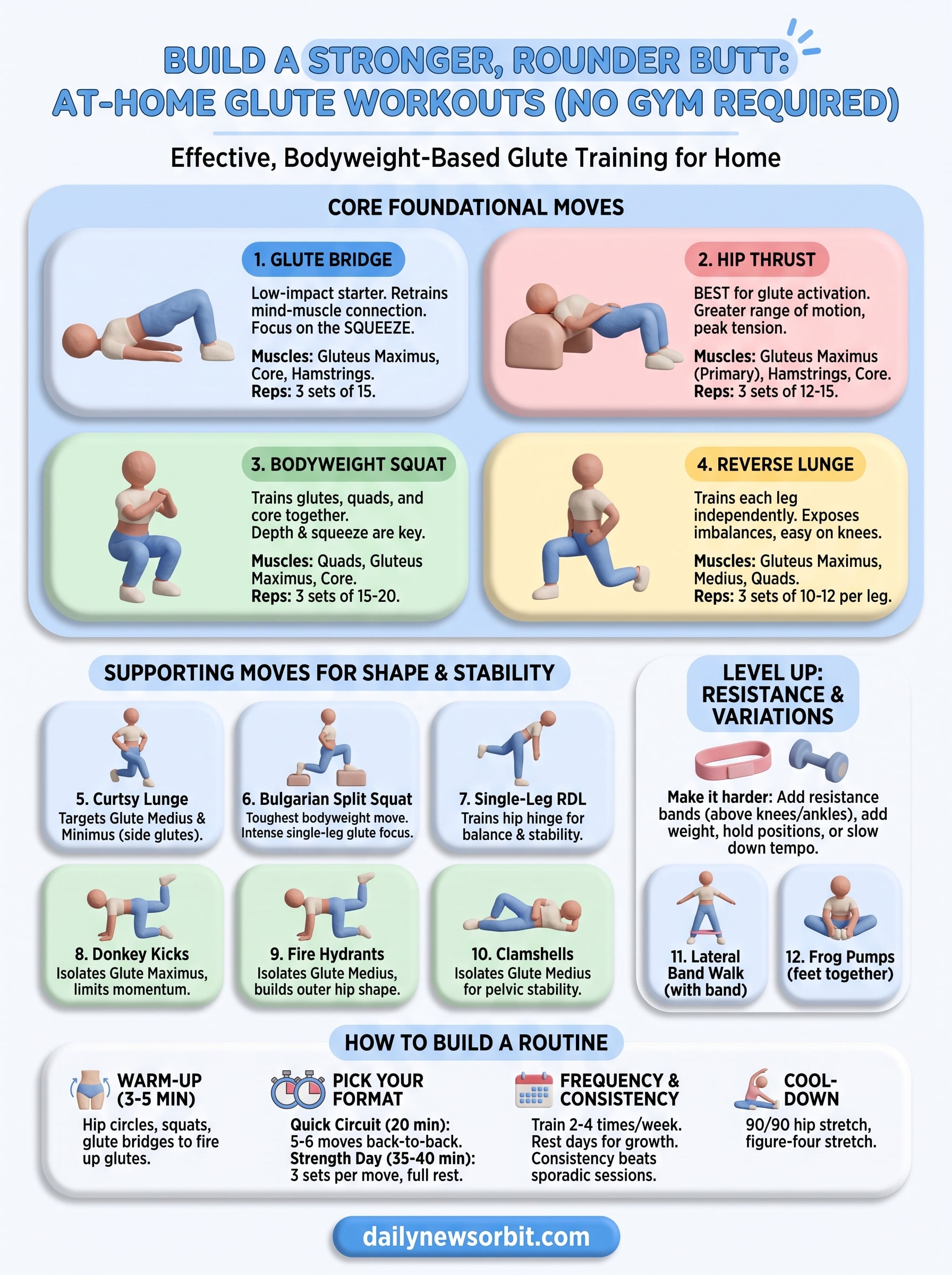
Knowing twelve exercises doesn’t help much if you just do random reps whenever you remember to. Turning this list into an actual at home glute workouts routine means warming up properly, picking a format, and training with enough frequency to see real change, the same structure behind a solid beginner bodyweight training plan.
Warm up your hips first
Spend 3 to 5 minutes on hip circles, bodyweight squats, and glute bridges before you touch any of the harder moves. Cold glutes fire slowly, and your quads or lower back will happily steal the work if you skip this step.
Pick a format that fits your time
Short on time? Circuit through 5 to 6 exercises back to back with minimal rest for a 20-minute burner, the same approach that makes short workouts that build real muscle work. Got more time? Run a straight-sets routine, 3 sets per move with full rest, for deeper strength gains.
Quick circuit (20 min): Bridge, Squat, Donkey Kicks, Fire Hydrants, Clamshells
Strength day (35-40 min): Hip Thrust, Bulgarian Split Squat, Single-Leg RDL, Reverse Lunge
How often to train your glutes
Hit your glutes 2 to 4 times a week, leaving at least one rest day between harder sessions so the muscle can actually rebuild.
Your glutes grow between workouts, not during them, so recovery days aren’t optional.
Alternate a strength-focused day with a lighter, higher-rep day to balance intensity across the week.
Cool down and stretch
Finish with a 90/90 hip stretch and a standing figure-four stretch held for 30 seconds per side. Loosening tight hip flexors keeps your glutes doing the work next session instead of handing it back to compensating muscles.
Building stronger glutes takes consistency, not a gym membership
You now have everything you need to build a stronger butt without stepping foot in a gym. These 12 glutes workouts at home cover every angle your muscles need, from deep squeeze moves like bridges and hip thrusts to the small stabilizers that clamshells and fire hydrants target. Nothing here requires fancy equipment, just a mat, maybe a mini band, and the willingness to show up two to four times a week.
Results come from repetition, not from finding some secret move nobody else knows about. Pick five or six exercises, run them consistently for a month, and track how your strength and form improve week to week. Small, steady progress beats sporadic hard sessions every time.
Want a ready-made structure to keep that month on track? Start with our four-week challenge for building a workout habit and turn these moves into a routine you actually stick to.