
Gym memberships add up fast, and let’s be honest, half the year you’re too busy or too tired to drive there anyway. That’s why so many people are turning their spare room, garage, or basement corner into a real workout space. If you’re staring at an empty area wondering what to actually buy, home gym equipment shopping can feel overwhelming fast, with a thousand options and price tags all over the place.
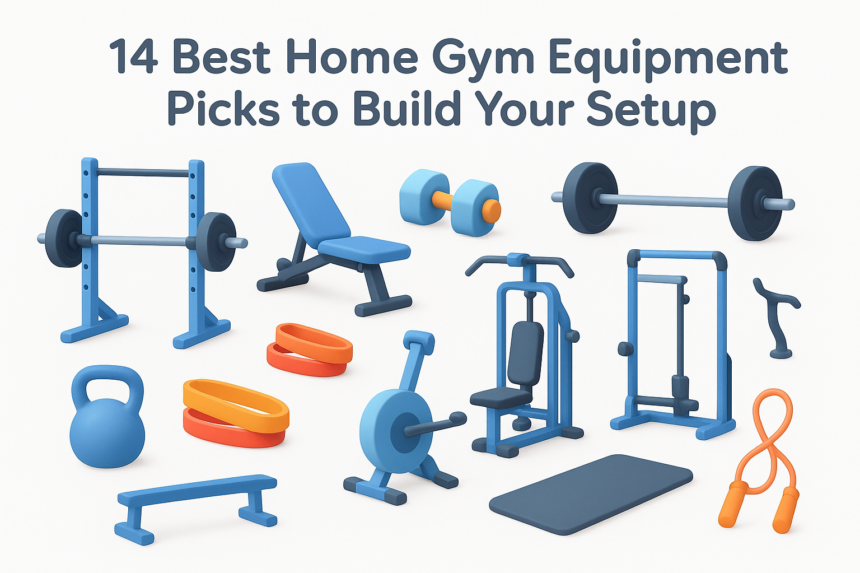
This list cuts through that noise. We picked 14 home gym equipment essentials that actually earn their spot in a small space, from adjustable dumbbells and power racks to resistance bands and cardio machines that don’t require a second mortgage. Whether you’re starting from zero or filling gaps in your current home gym fitness equipment collection, you’ll find picks that match different budgets and goals.
We’ll walk through what each piece does best, who it’s actually right for, and what to look for before you buy, so you’re not left with expensive gear collecting dust. By the end, you’ll have a clear, practical shopping list instead of a browser full of open tabs and second-guessing.
1. Power rack or squat cage
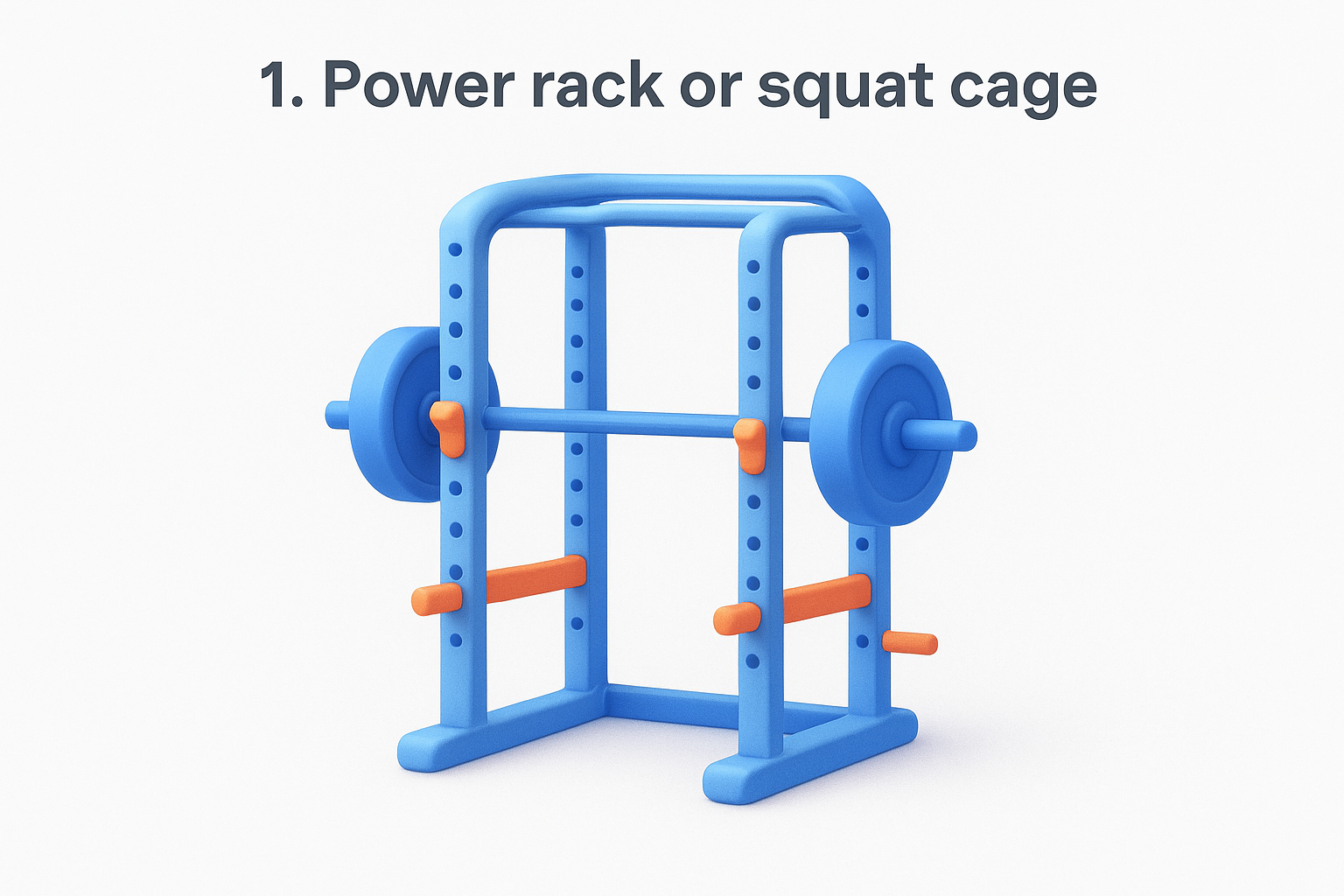
A power rack is the backbone of any serious home gym, a four-post steel frame with adjustable J-hooks and safety pins that lets you squat, bench, and press heavy weight without a spotter standing behind you. If you’re only going to buy one big-ticket item for your home gym equipment setup, this is usually it, since everything else can be built around it over time.
How it works
The rack holds a barbell at a set height so you can unrack it for squats, presses, or pull-up work, and the safety bars catch the bar if you fail a rep. Most racks also include pull-up bars, weight plate storage pegs, and mounting points for attachments like dip bars or landmine holders. Some models are full cages that surround you on four sides, while squat stands are open on two sides and take up less floor space.
A power rack is the one piece of equipment that lets you train heavy and alone, safely.
Who it’s for
This pick makes sense for anyone doing progressive strength training, from beginners learning squat form to lifters chasing personal records in the deadlift or bench press, and it’s the ideal frame for multi-joint barbell lifts. If your goals are mostly cardio or light toning, you can skip this one and put your budget toward dumbbells or a bike instead. But for home gym weights equipment built around barbell training, a rack is close to mandatory.
Price range
Budget squat stands start around $150 to $250, while a solid full cage with a bench and barbell package runs $400 to $800. Commercial-grade rigs with extra attachments, thicker steel, and higher weight capacity can climb past $1,200. Here’s a quick breakdown:
| Type | Price Range | Best For |
|---|---|---|
| Basic squat stand | $150-$250 | Small spaces, light budgets |
| Full power cage | $400-$800 | Most home lifters |
| Commercial rig | $900-$1,500+ | Heavy lifters, garage gyms |
What to look for
Check the steel gauge (11-gauge or thicker holds up better long-term) and the weight capacity, which should comfortably exceed what you plan to lift. Look for numbered holes on the uprights so you can set J-hooks and safety pins at consistent heights every session. Ceiling height matters too since some racks need 7 feet of clearance or more, so measure your space before you buy. Finally, check whether the footprint fits your room with enough clearance to walk around the bar during setup, especially if you’re working with a garage or spare bedroom rather than a dedicated space.
2. Adjustable weight bench
An adjustable weight bench is the second piece most people grab after a rack, and for good reason. It turns a barbell or dumbbells into dozens of different exercises, from flat presses to incline shoulder work to step-ups, all on one folding frame. Once you own a rack and a bench, you already have a functional strength setup that covers most of your home equipment gym needs.
How it works
The bench frame lets you lock the pad into flat, incline, and decline positions, usually with a pop-pin or lever adjustment on the backrest. Some models also adjust the seat angle independently, which opens up more variety for shoulder presses and seated curls. A sturdy bench sits low to the ground with a wide base so it doesn’t tip when you’re pressing heavy or bracing your feet during rows.
A good adjustable bench multiplies what your dumbbells and barbell can actually do.
Who it’s for
Anyone lifting dumbbells or barbells at home needs one of these, full stop. It suits beginners doing basic presses just as much as intermediate lifters building out a full push, pull, and leg routine from a simple weekly training blueprint. If your workouts lean entirely toward bodyweight or cardio, you can hold off, but for strength-focused home gym exercise equipment, this is a near-essential purchase.
Price range
Basic flat-only benches start around $60 to $100. Adjustable benches with multiple incline and decline positions run $120 to $250, and heavy-duty commercial versions with higher weight ratings land between $300 and $500.
What to look for
Check the weight capacity, which should exceed your body weight plus the heaviest dumbbells or barbell load you’ll press. Look for thick, firm padding that won’t sag over time, a wide base for stability, and smooth adjustment pins that don’t require wrestling to reposition mid-workout.
3. Adjustable dumbbells
Adjustable dumbbells solve the biggest problem with fixed sets: space. Instead of ten pairs lined up along a wall, one pair with a dial or pin system covers a range from 5 pounds up to 50 or even 90 pounds per hand. For anyone shopping for home gym gym equipment on a tight floor plan, this is often the single smartest purchase you’ll make, since it replaces an entire rack of iron with two compact blocks.
How it works
Most adjustable sets use a turn-dial or selector pin that locks specific plates onto the handle, so you change weight in seconds instead of swapping plates by hand. Bowflex-style dial systems and Powerblock-style pin-and-sleeve designs are the two most common mechanisms, and both let you jump from a light warm-up weight to a heavy working set without digging through a rack.
One pair of adjustable dumbbells can replace fifteen sets of fixed weights in the same footprint.
Who it’s for
These suit almost everyone building home gym weights equipment, from beginners who don’t yet know their strength range to intermediate lifters who want variety without buying new pairs every few months. Serious powerlifters chasing max-effort dumbbell presses may eventually outgrow the top weight and need fixed hex dumbbells instead.
Price range
Entry-level sets topping out around 25 pounds per hand run $100 to $200. Mid-range sets reaching 50 pounds cost $300 to $450, and premium sets that go up to 90 pounds or more often land between $500 and $700.
What to look for
Check the weight increments, since 5-pound jumps work better for pressing movements than clunky 10-pound steps. Confirm the handle diameter feels comfortable in your grip, and look for a sturdy stand or tray to keep the set organized and off the floor.
4. Barbell and weight plate set
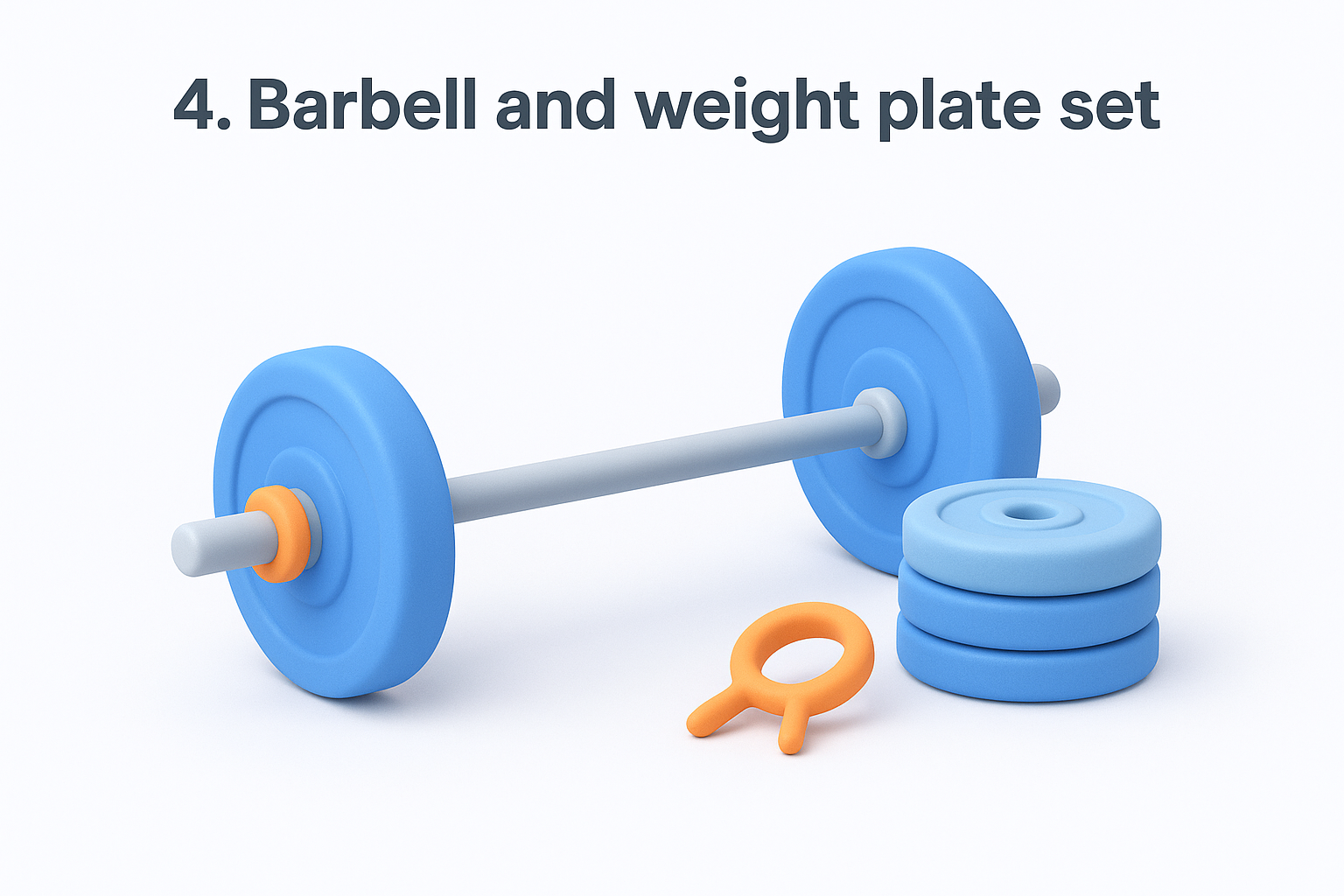
A barbell and a stack of weight plates turn your rack and bench into a full strength station. This is the piece that lets you actually load up squats, deadlifts, and bench presses instead of maxing out on dumbbells, and it’s a core part of any serious barbell and weight plate set for a home gym.
How it works
Standard Olympic barbells are 7 feet long, weigh 45 pounds, and spin on sleeves so the bar doesn’t twist in your hands during heavy lifts. Weight plates slide onto each end and lock in place with spring clips or lock collars, letting you add small increments as you get stronger. Bumper plates, made of rubber, are built for dropping from overhead lifts, while iron plates are quieter and cheaper for straight barbell work.
A barbell and plates are the cheapest way to add serious, progressive weight to your training.
Who it’s for
This pick suits anyone doing compound lifts like squats, deadlifts, bench presses, or rows, which covers most strength-focused lifters. Beginners benefit from starting with just the bar to learn form, while intermediate and advanced lifters need plates to keep progressing past what dumbbells alone can offer.
Price range
A basic barbell alone runs $80 to $150, and a full set with 200 pounds of plates typically costs $250 to $450. Bumper plate sets cost more, often $400 to $700 for a comparable weight range, since the rubber coating adds to manufacturing cost.
What to look for
Check the barbell’s weight capacity and whirl, since a cheap bar can bend under heavy loads over time. Look for plates with a snug center hole so they don’t wobble on the sleeve, and confirm your rack’s storage pegs match the plate diameter you’re buying.
5. Smith machine
A Smith machine bolts a barbell onto fixed vertical rails, so the bar only moves up and down instead of tracking through a free path. That guided motion makes it one of the safer pieces of gym equipment home gyms owners buy when they want to lift heavy without a spotter or a full rack setup.
How it works
Hooks on the bar catch into slots on the rails at nearly any height, so you can bail out of a failed rep by twisting your wrists instead of dumping the weight. This fixed path removes the need to balance the bar, which lets you focus entirely on pushing or pulling through squats, bench presses, and shoulder presses.
A Smith machine trades some natural movement for built-in safety, a fair swap for solo lifters.
Who it’s for
Solo lifters who train without a spotter benefit most, since the safety catches let you push closer to failure on presses and squats. Beginners also like the guided bar path while they build confidence, and older lifters or anyone recovering from injury often prefer the joint-friendly fixed track over free-weight instability.
Price range
Compact home models start around $600 to $900, while full-size Smith machines with counterbalanced bars and multiple attachment points run $1,200 to $2,500. Combo units that pair a Smith machine with a cable stack push past $2,000 but replace several separate machines at once.
What to look for
Check whether the bar is counterbalanced, since unweighted bars can feel unnaturally heavy at the bottom of a lift. Confirm the frame includes adjustable safety stops at multiple heights, and measure your ceiling clearance, since taller units need 7.5 feet or more to operate comfortably.
6. Cable functional trainer
A cable functional trainer uses two adjustable pulleys mounted on a tall frame, connected to weight stacks that let you push, pull, and twist from nearly any angle. It’s one of the most versatile pieces of home gym fitness equipment you can buy, since one machine covers chest presses, rows, tricep pushdowns, and cable flys without swapping a single plate.
How it works
Each pulley slides up and down a vertical track, and a pin in the weight stack sets your resistance in 5 to 10 pound jumps. Because the cables move independently, you can work single-arm movements or full-body combinations that a barbell simply can’t replicate, and the constant tension keeps muscles working through the entire range of motion instead of just the hardest part of the lift.
A cable trainer turns dozens of gym machines into one adjustable frame.
Who it’s for
This suits lifters who want machine-style consistency without a room full of separate machines, plus anyone doing rehab work where controlled, joint-friendly resistance matters, and it opens up a full menu of cable exercises for a wider back. It’s less essential for pure powerlifters chasing max squat and deadlift numbers, but it’s a strong complement to a rack for anyone building well-rounded home gym exercise equipment.
Price range
Compact single-stack towers start around $800 to $1,200. Dual-stack functional trainers with a wider range of attachments run $1,500 to $2,500, and premium units with higher weight stacks and smoother cable systems can exceed $3,000.
What to look for
Check the weight stack’s top limit against your strongest pulling and pressing movements, and confirm the pulleys glide smoothly without cable fraying at the pulleys. Look for a wide range of adjustable heights so you can hit high-to-low and low-to-high angles, and check included attachments like a lat bar, ankle straps, and D-handles, since buying these separately adds up fast.
7. All-in-one home gym machine
An all-in-one home gym machine packs a weight stack, pulleys, and a bench-like frame into a single unit, giving you dozens of exercises without buying separate pieces. Think of it as the space-saving answer for anyone who wants home gym machine equipment that handles chest presses, lat pulldowns, leg extensions, and rows from one footprint instead of scattered across a garage.
How it works
Weighted stacks connect to pulleys and levers arranged around a central frame, so you move from one exercise to the next by swapping a pin or repositioning a seat rather than moving equipment. Most units combine a high pulley, low pulley, and leg attachment on the same tower, letting you train upper body, lower body, and core in one session without changing stations.
One all-in-one machine can replace five separate pieces of equipment in the same corner of a room.
Who it’s for
Beginners who want guided, joint-friendly resistance without learning barbell technique do well here, and so do busy people who want a full workout without setting up multiple tools each time. It’s a smart pick for fitness equipment for a home gym in a shared space like a family room, since the frame stays tidy and doesn’t require loose plates or barbells lying around.
Price range
Entry-level units start around $300 to $600, mid-range machines with more stations and higher stacks run $700 to $1,200, and premium models with smoother cables and higher weight limits reach $1,500 to $2,500.
What to look for
Check the total exercise count and confirm the stations you actually want, like leg press or pec deck, are included rather than advertised loosely. Look for a sturdy frame rated well above your max lift, and check that the seat and pulley adjustments lock firmly without sliding mid-rep.
8. Kettlebells
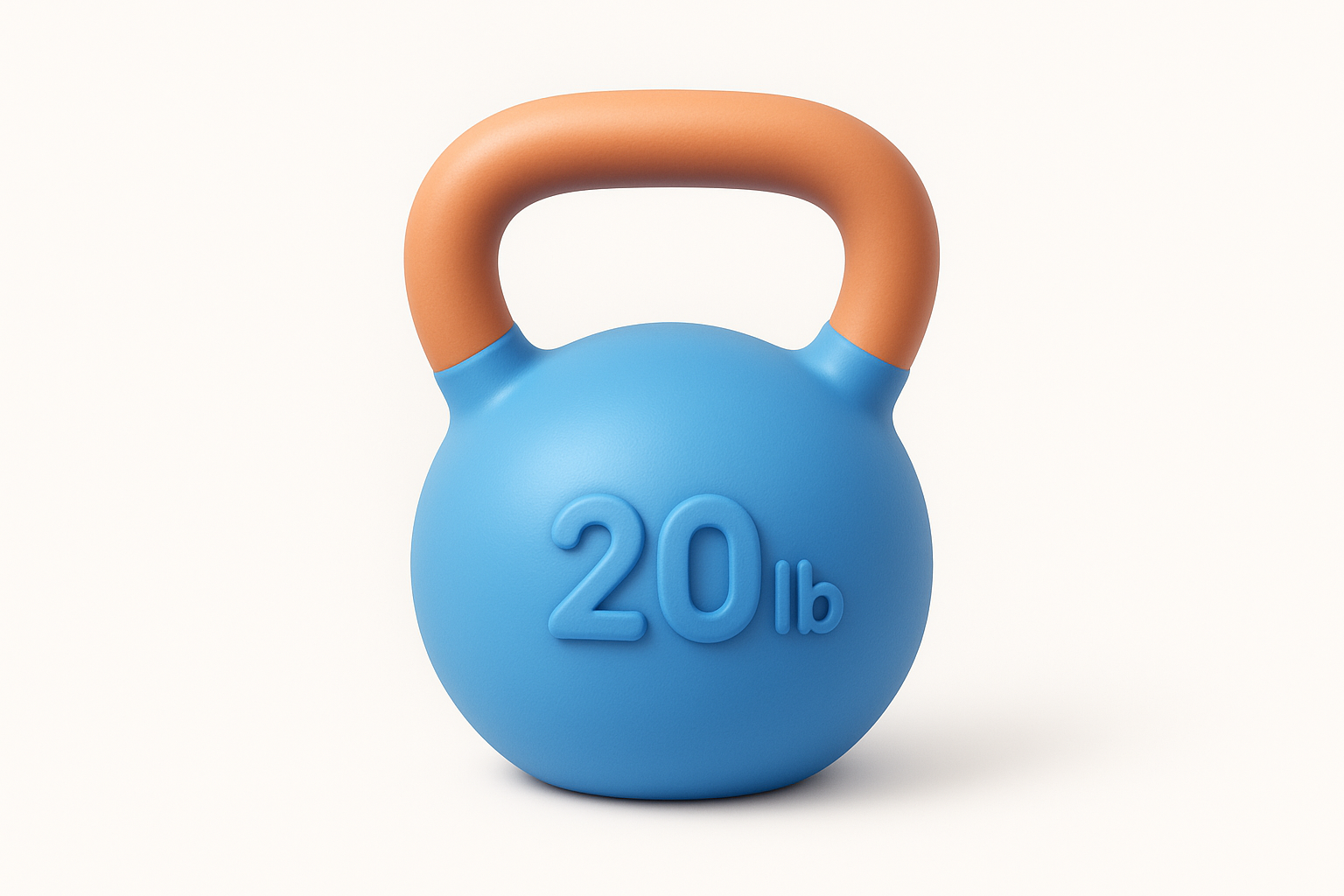
Kettlebells look simple, a cast-iron ball with a handle, but they train strength, power, and cardio all in one tool. Swings, cleans, snatches, and Turkish get-ups all use momentum and grip differently than a dumbbell does, which makes kettlebells one of the more efficient picks in any home gym gym equipment lineup when floor space is tight.
How it works
The offset handle sits above the weighted ball, so the center of mass moves as you swing, press, or rotate it, forcing your core and stabilizer muscles to work harder than a symmetrical dumbbell would. This design suits ballistic movements like swings and snatches, where the weight travels through a wide arc rather than a straight line, building explosive hip power alongside straightforward strength.
A kettlebell swing trains your hips and cardio system at the same time, something a dumbbell can’t match.
Who it’s for
Kettlebells suit anyone chasing conditioning alongside strength, from beginners doing basic goblet squats to intermediate lifters adding swings and cleans to a strength circuit. They’re a smart addition to home gym equipment for people short on time, since a 20-minute kettlebell circuit can replace a separate cardio session entirely.
Price range
A single 15 to 20 pound bell costs $25 to $50, while a matched set spanning light to heavy (say, 15, 25, and 35 pounds) runs $150 to $300. Competition-style steel kettlebells with uniform sizing across weights cost more, often $200 to $400 for a small set.
What to look for
Check the handle width and texture, since a rough or too-thin handle tears up your hands during high-rep swings. Look for a flat base so the bell doesn’t wobble when set down, and confirm the weight is stamped clearly if you’re buying secondhand.
9. Resistance bands
Resistance bands are the cheapest, most portable item on this list, and they still earn a permanent spot in serious home gym exercise equipment collections. A set of flat or tube bands rolls up small enough to fit in a drawer, yet it covers everything from warmups to full strength circuits when you’re traveling or just short on space that day.
How it works
Bands create resistance through elastic tension rather than gravity, so the load increases the further you stretch them instead of staying constant like a dumbbell. This makes them useful for adding accommodating resistance to barbell lifts, looping around a rack for rows and presses, or working solo for shoulder and glute activation moves that free weights handle poorly.
A five-dollar band can add resistance a fifty-pound dumbbell physically can’t replicate at certain joint angles.
Who it’s for
Beginners like bands because the learning curve is low and injury risk stays minimal, and there are plenty of band workouts you can start today with a single set. Travelers and small-apartment dwellers rely on them as their entire home gym fitness equipment setup, and experienced lifters use heavier bands to add variable resistance to squats, bench presses, and deadlifts.
Price range
Basic loop band sets cost $10 to $25. Full sets with handles, ankle straps, and a door anchor run $30 to $60, and heavy-duty fabric-covered bands built for barbell work cost $40 to $80 per band.
What to look for
Check the material, since latex bands snap more often than fabric-covered ones. Confirm the set includes multiple resistance levels labeled clearly by color or pound rating, and inspect stitching on any handles or anchor points before buying secondhand.
10. Pull-up bar
A pull-up bar is one of the cheapest, smallest pieces of home gym equipment you can own, yet it trains your entire back, biceps, and grip better than almost anything else on this list. Whether it’s a doorway bar, a wall-mounted unit, or an attachment on your power rack, it turns bodyweight into real resistance without taking up any floor space at all.
How it works
You grip the bar and pull your chin above it, using your lats, biceps, and core to control the movement both up and down. Doorway bars wedge into the frame using pressure or screw-in hardware, while wall or ceiling-mounted bars bolt directly into studs for a sturdier, more permanent setup. Rack-mounted bars attach to the top of a power cage you already own, which is often the simplest option if you’re building around a rack anyway.
A pull-up bar delivers one of the best back workouts available, and it costs less than a single gym membership month.
Who it’s for
Anyone who wants a stronger back and better grip strength benefits here, from beginners using resistance bands for assistance to advanced lifters adding weighted vests for extra load, and it slots neatly into a beginner bodyweight training plan. It’s especially valuable for workout equipment for home gym setups with limited space, since a doorway model needs zero permanent installation.
Price range
Basic doorway bars cost $20 to $40. Wall-mounted and ceiling-mounted units run $50 to $120 depending on materials, and rack-mounted attachments typically cost $30 to $80 if your rack doesn’t already include one.
What to look for
Confirm the weight capacity comfortably exceeds your body weight plus any added load. Check the grip width options, since multiple hand positions let you target your back differently, and verify doorway models fit your specific frame width before ordering.
11. Rowing machine
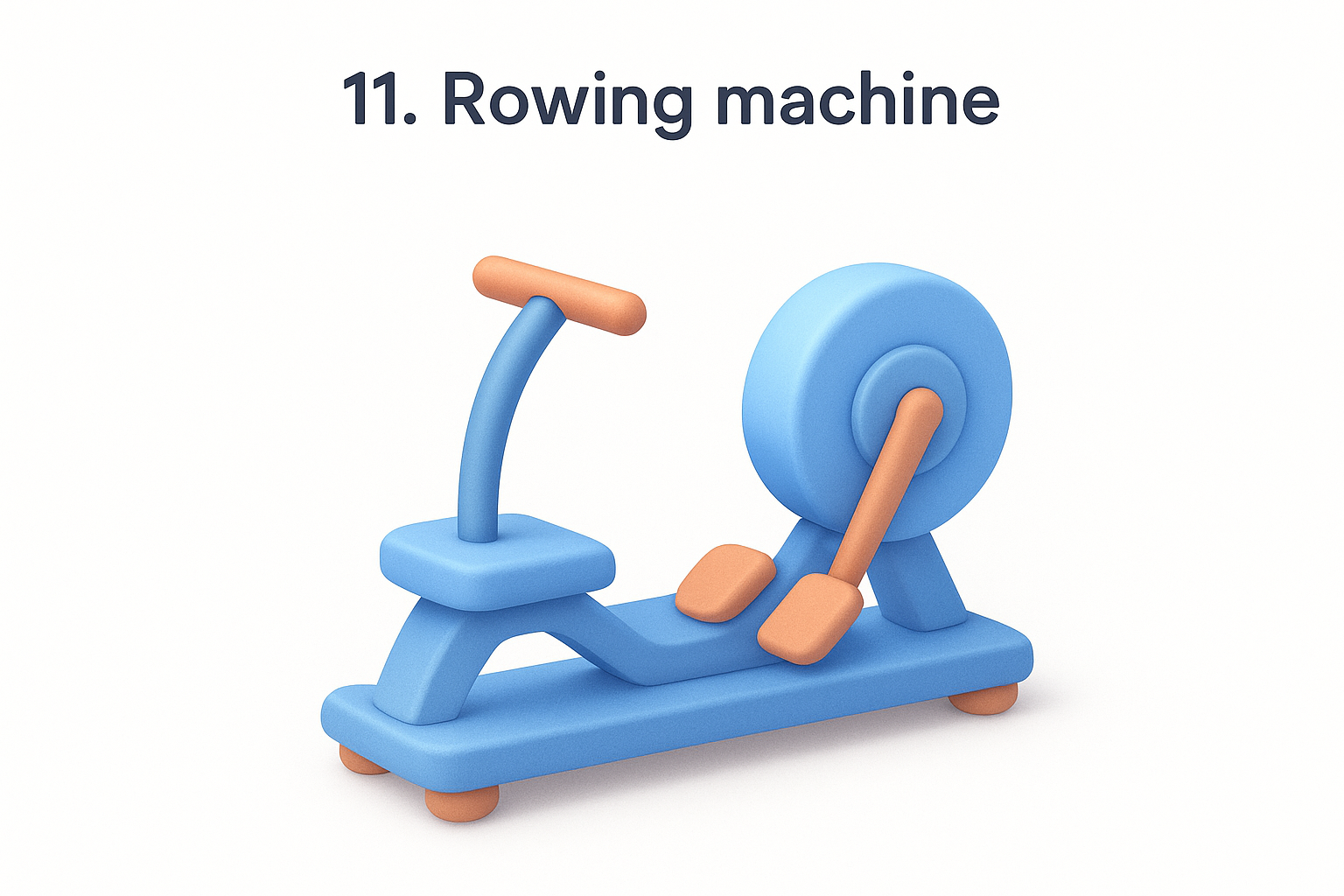
A rowing machine trains your legs, back, and arms in one continuous pulling motion, making it one of the few cardio machines that doubles as strength work. If you want home gym exercise equipment that burns calories without pounding your joints, a rower belongs near the top of your list, since roughly 80 percent of the effort comes from your legs and core rather than just your arms.
How it works
Each stroke has a drive phase, where you push through your legs and pull the handle to your chest, and a recovery phase, where you slide back to reset. Resistance comes from air, water, magnets, or a mix of the three, and each type feels slightly different: air rowers get harder the faster you pull, while magnetic models offer steady, quiet resistance you adjust with a dial.
A rowing machine works more muscle in one stroke than almost any other cardio equipment.
Who it’s for
Anyone chasing efficient full-body cardio benefits here, especially people with knee or joint issues who find running uncomfortable. It also suits lifters who want conditioning without ditching home gym weights equipment for a separate cardio room.
Price range
Basic magnetic rowers start around $200 to $350. Mid-range air and water rowers with better build quality run $400 to $900, and premium smart rowers with touchscreen coaching cost $1,000 to $2,200.
What to look for
Check the resistance type against your noise tolerance and space, since air rowers run louder than magnetic ones. Confirm the rail length fits taller users comfortably, and look for a folding frame if floor space stays tight between sessions.
12. Exercise bike
An exercise bike gives you low-impact cardio you can do rain or shine, without the joint pounding that running delivers. Whether it’s an upright, recumbent, or spin-style bike, this pick rounds out home gym fitness equipment for anyone who wants a reliable way to get their heart rate up without leaving the house.
How it works
Pedaling against adjustable resistance, either magnetic, friction, or air-based, drives a flywheel that simulates outdoor riding. Magnetic bikes use a resistance dial or digital controls to increase or decrease effort, while spin-style bikes use a heavier flywheel and a friction brake pad for a road-like feel. Recumbent models add a reclined seat and back support, which takes pressure off your lower back and hips during longer sessions.
An exercise bike lets you log cardio minutes without a single ounce of impact on your knees.
Who it’s for
Riders recovering from injury or managing joint pain do especially well on a bike, since it keeps the heart working without stressing the knees or ankles. Beginners easing into cardio and busy people squeezing in short interval sessions both find it useful, and it pairs naturally with strength-focused home gym equipment for a complete weekly routine.
Price range
Basic magnetic upright bikes start around $150 to $300. Recumbent bikes with more back support run $300 to $600, and spin-style bikes with smart connectivity and touchscreen classes climb to $1,000 to $2,500.
What to look for
Check the seat adjustability and padding, since comfort during longer rides matters more than most buyers expect. Confirm the resistance range suits your fitness level, and look for a stable base that doesn’t wobble during hard sprints or standing intervals.
13. Jump rope
A jump rope costs less than a coffee run and delivers cardio that rivals a treadmill sprint. Nothing else on this list packs so much conditioning into so little space, which makes it a natural fit for home gym exercise equipment collections that need to fold into a closet corner between sessions.
How it works
Swinging the rope under your feet forces constant small jumps, spiking your heart rate through footwork and shoulder endurance rather than heavy loading. Speed ropes with thin steel or PVC cables spin faster for double-unders and sprint intervals, while weighted ropes add resistance to the arms and shoulders on every swing. Ball-bearing handles let the cable spin freely, which matters once you’re moving past 100 skips a minute.
A jump rope turns a five-minute break into a legitimate cardio workout.
Who it’s for
Beginners use it as a quick warmup before lifting or as part of a short starter routine for new exercisers, while boxers and conditioning-focused athletes build entire intervals around it. Anyone assembling home gym gym equipment for a studio apartment or hotel room benefits most, since it rolls up small enough to toss in a bag and needs zero floor clearance beyond ceiling height.
Price range
Basic PVC ropes cost $8 to $15. Adjustable speed ropes with ball-bearing handles run $15 to $30, and weighted or smart ropes with rep counters climb to $30 to $60.
What to look for
Confirm the rope length matches your height, since a rope that’s too long tangles at your feet and one too short catches your knees. Check the handle grip material for sweaty-hand durability, and look for a swappable cable if you plan to switch between speed and weighted training.
14. Gym flooring and mats
Gym flooring rarely makes anyone’s wish list, but it’s what keeps your home gym equipment from cracking a concrete slab or shaking the floor above your garage. Interlocking rubber tiles or foam mats protect both your gear and your joints, and they turn a cold, hard surface into something you’ll actually want to train on every day.
How it works
Dense rubber tiles absorb impact from dropped weights and dampen vibration, so a heavy set of squats or a dropped kettlebell doesn’t rattle the whole house. Foam interlocking mats work well under lighter cardio or bodyweight work, but they compress and tear under barbells, so matching the mat type to your actual home gym weights equipment matters more than picking whatever’s cheapest.
The right flooring protects your floor, your joints, and your equipment all at once.
Who it’s for
Anyone lifting free weights needs rubber flooring, full stop, since dropped plates and clanging dumbbells will chip concrete and annoy neighbors fast. Renters and apartment dwellers benefit especially, since thick rubber cuts noise transfer between floors, and cardio-focused users get away with lighter foam tiles under a bike or rower.
Price range
Basic interlocking foam mats cost $30 to $60 for a small area. Rubber tiles built for weightlifting run $2 to $5 per square foot, so a 10-foot by 10-foot space typically costs $200 to $500. Thick drop-mat rolls made for Olympic lifting can push past $600 for a single station.
What to look for
Check the thickness, since anything under half an inch won’t handle dropped barbells well. Confirm the tiles interlock securely without shifting underfoot, and look for a low-odor rubber compound if you’re working in an unventilated basement or spare room.
Bringing your home gym together
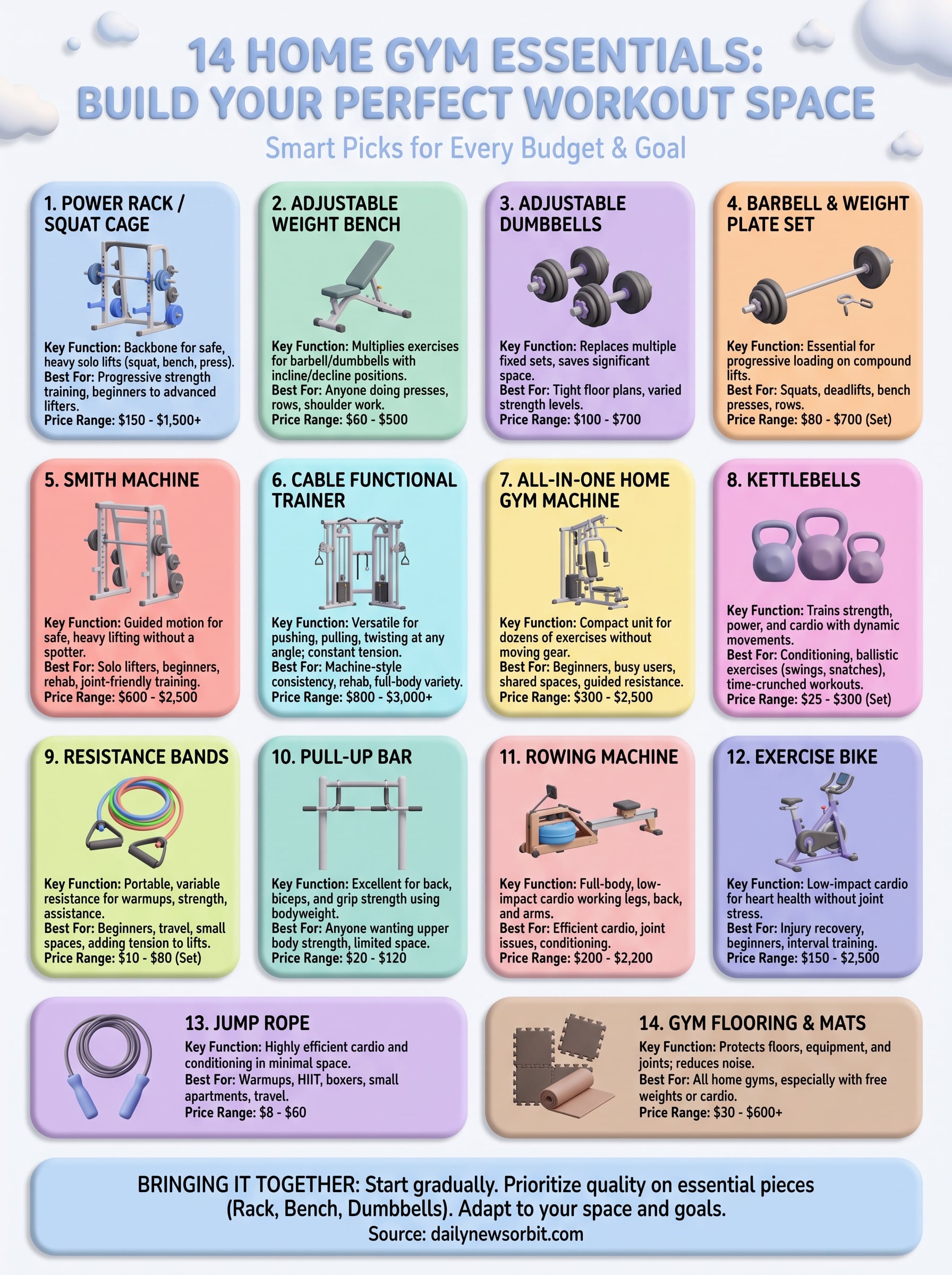
You don’t need all fourteen picks to start training seriously at home. Most people do well starting with a rack, a bench, and adjustable dumbbells, then adding cardio machines or bands as budget and space allow. The right home gym equipment mix depends on your goals, not on filling every corner of the garage with gear you’ll rarely touch.
Give yourself permission to build gradually. Buy the barbell setup first if strength is your priority, or start with a rower and jump rope if cardio matters more right now. Either way, prioritize quality on the pieces you’ll use every week, since that’s where cheap gear fails fastest and costs you twice.
Keep learning as your setup grows, since new equipment often means new questions about form, programming, and recovery. Put your new setup to work with these home chest workouts that build strength fast, and keep building smarter, one workout at a time.