

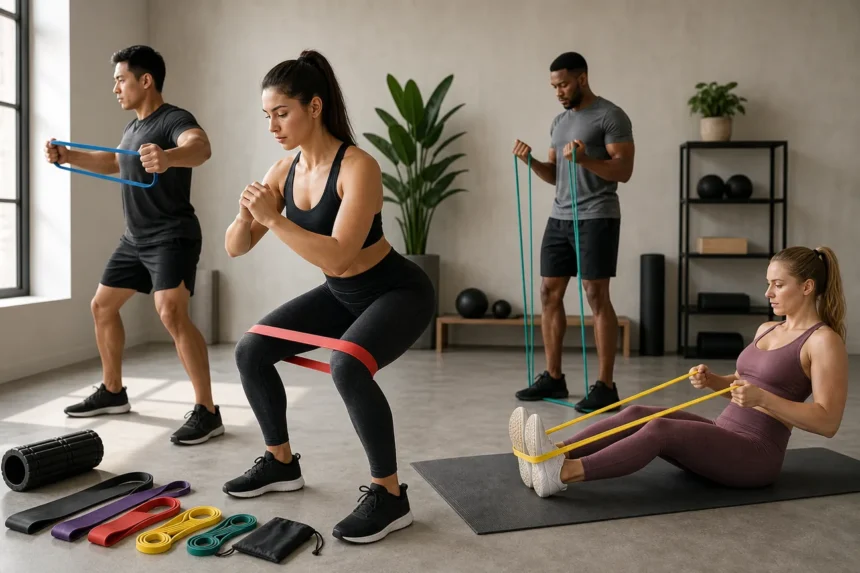
Resistance bands can replace a surprising amount of gym gear, but the right set depends on how you train. Most sets sit near the lighter end, while a few reach far higher resistance levels without a huge price jump. Here are the best resistance bands for full-body work, rehab, high resistance, and cable-style training.
1. Bodylastics Stackable Tube Resistance Bands, Best all-around kit
Bodylastics Stackable Tube Resistance Bands are a tube-and-handle kit for people who want one setup for most home workouts. The set includes five latex bands with resistance up to 80 pounds, plus a door anchor, two handles, two ankle straps, and a travel bag.
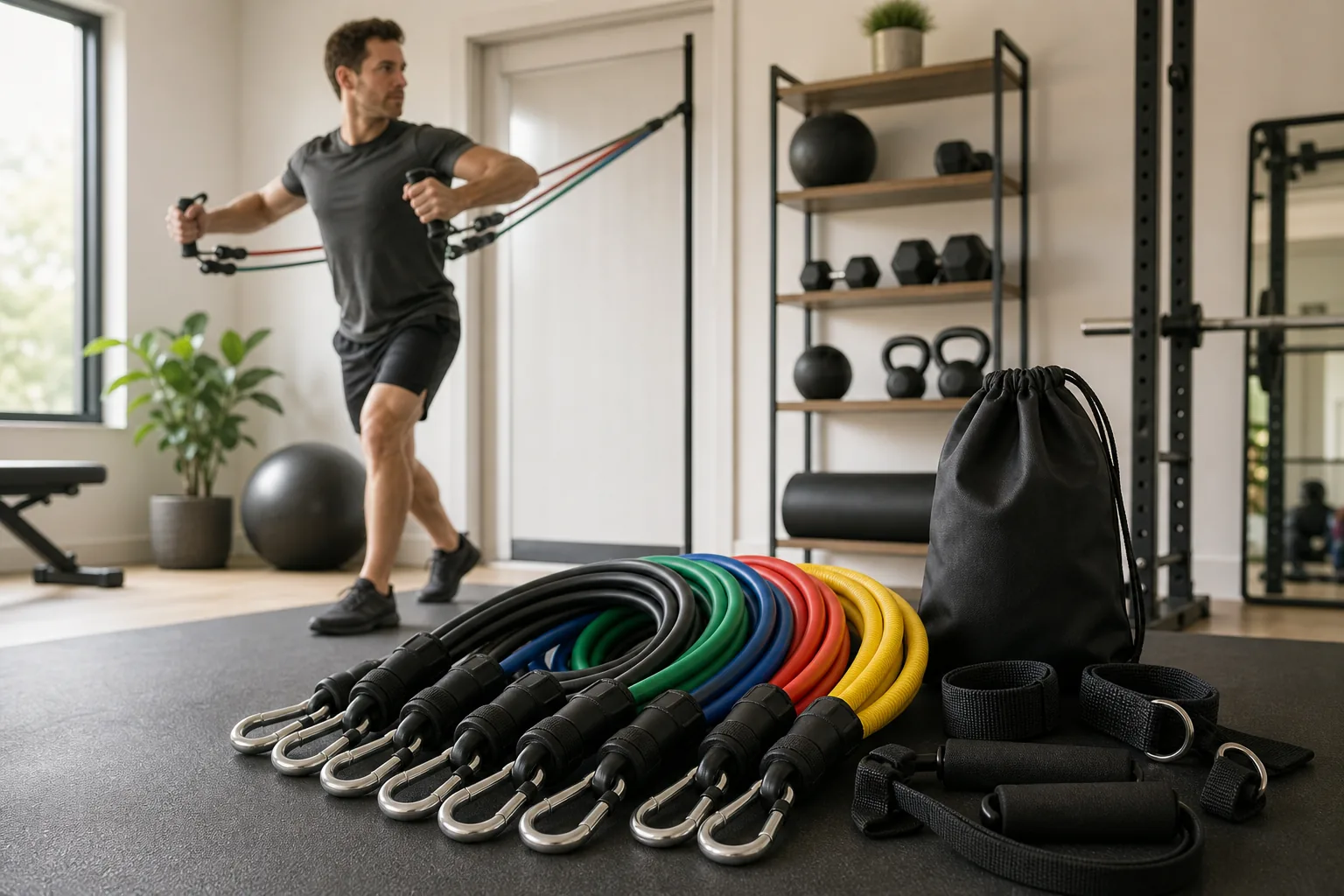
The bundle makes sense for mixed training. Use the handles for rows, presses, curls, and chest work. Add the ankle straps for leg movements. The door anchor gives you a fixed point for exercises that need a high or low pull.
That extra safety layer is a useful detail if you train often. Resistance bands face more wear when they stay stretched, sit in heat, or collect sweat. Keep this kit in a cool, dark place. Wipe the tubes down, then let them dry before packing them away.
The main drawback is bulk. A tube kit with handles and anchors takes more space than a simple loop set. It also gives you a less direct feel for load than a dumbbell, since band tension rises as the band stretches.
Pick this set if you want broad exercise coverage and a clear path to progress by adding tubes. It suits a home gym, travel bag, or a small room where a full cable machine won’t fit. For complementary shoulder exercise ideas, Daily News Orbit also keeps its health coverage easy to scan through its health news section, which pairs well with a simple home training routine.
2. Living Fit Resistance Bands, Best for high resistance
Living Fit Resistance Bands are the strongest choice on this shortlist, with a claimed range of 6 to 250 pounds. That spread gives beginners room to start light while giving stronger users more headroom for pulls, presses, and assisted bodyweight work.

The set comes with a carrying bag. A door anchor is available as an add-on, so check what your chosen package includes before buying. That detail matters because a band without an anchor may not cover the cable-style exercises you had in mind.
High resistance sounds simple, but band ratings need careful reading. A listed range often describes the force at different stretch points. A band marked from 15 to 50 pounds won’t feel like a fixed 50-pound weight through every inch of a rep.
That changing tension can help with some movements. A row may feel easier at the start and harder as your hands move back. It can also make the end of a press feel demanding, even when the first part feels light.
Living Fit makes the most sense when your main goal is strength work and you expect to outgrow lighter sets. The claimed upper range is far beyond the modest resistance found in many everyday kits. Yet more resistance doesn’t automatically mean better training. You still need a safe anchor, good control, and enough range of motion.
The limitation is the sparse accessory bundle listed in the research. You get a carrying bag, but the door anchor costs extra. That can turn a strong band set into an incomplete home setup if you want rows or pulldowns right away.
Choose Living Fit when raw resistance is your top filter. Skip it if you mainly need hip rehab, light warm-ups, or a tiny travel kit.
3. Synergee Mini Loop Bands, Best for rehab and prehab
Synergee Mini Loop Bands are small continuous loops made for light, targeted work. Their listed resistance range runs from 5 to 50 pounds, and the latex set includes five bands.
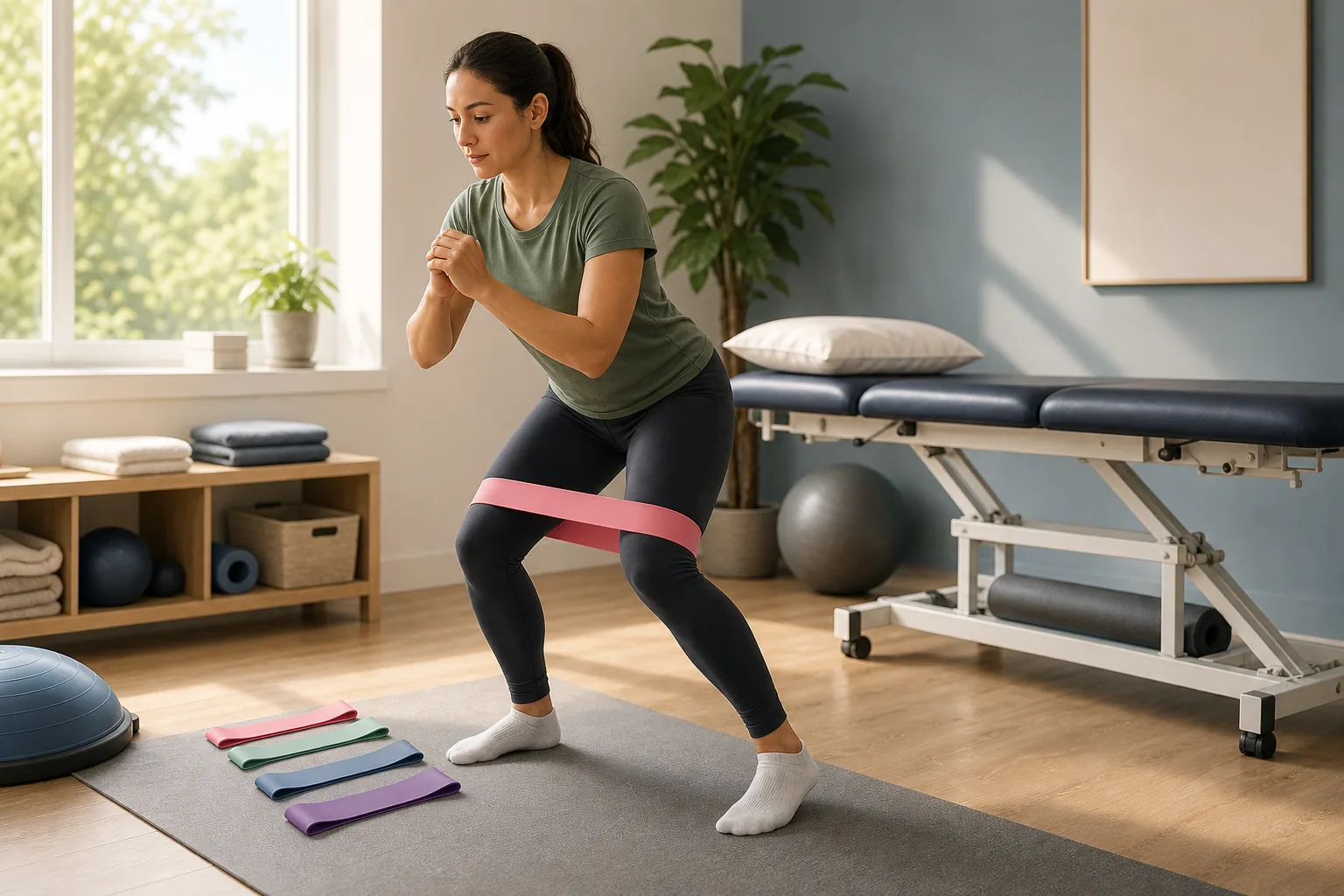
These bands fit well around the legs or arms for rehab and prehab movements. Prehab means training meant to support a joint or movement before pain or injury becomes a bigger issue. A mini loop can add light resistance to hip, shoulder, and knee drills without needing a handle.
The five bands use a dotted coding system to help you tell the levels apart. That sounds minor, but it saves time during a session. You can grab the next level without guessing from a pile of nearly identical loops.
Their best use is controlled work. Think side steps, external rotations, glute activation, or a slow shoulder drill. Keep the band flat against your skin or clothing. If it twists, it may pinch or pull unevenly.
Mini loops also have a clear limit. They won’t replace a tube set for heavy presses, rows, or door-anchor work. Latex can roll or bunch when it sits on the wrong part of the leg. Stop if you feel sharp pain, numbness, or a band cutting into your skin.
Compare the current package before you buy.
For light joint work, this is the focused pick. If your plan starts with rehab and later adds full strength sessions, pair mini loops with a tube kit rather than asking one style to do both jobs.
4. Resistance Band Training Economy Fitness Package, Best exercise variety
The Resistance Band Training Economy Fitness Package is built for people who want the widest exercise menu in one bundle. It includes four superbands, one mini-band, handles, an anchor, and a carrying bag.
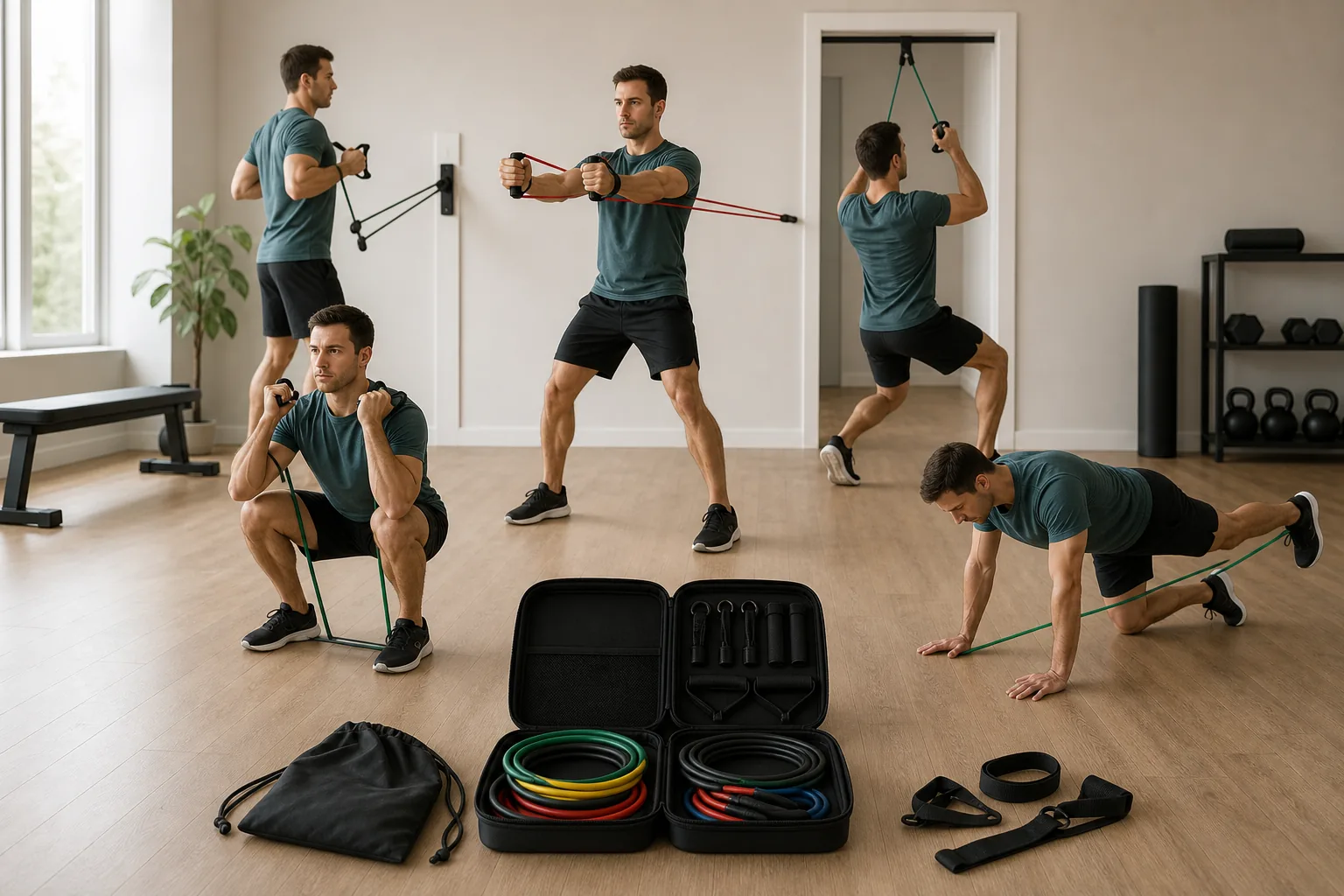
That mix covers two different band styles. Superbands are long continuous loops that work well for assisted pull-ups, stretches, and bodyweight drills. The handles add a better grip for presses, curls, and rows. The mini-band handles smaller hip and leg movements.
This variety makes the package useful in a shared home gym. One person can use the superbands for assisted pull-ups while another works through rows with the handles. You can also move between mobility work and strength work without switching to a new piece of gear.
Resistance band research often focuses on the band itself, but the accessories shape what you’ll actually do. Reviews of band kits repeatedly point to handles, anchors, and ankle straps as key differences. A bare loop may cost less, yet it can’t give you the same range of grip-based exercises.
The anchor still needs care. Use it in a solid, closed door and inspect the contact point before each session. Don’t yank the band into a sharp edge. A worn band can fail faster when it rubs against rough surfaces.
The tradeoff is that this package may feel like more gear than a beginner needs. If you only want glute work, mini loops are simpler. If you only want heavy pulls, a high-resistance set may be a better fit.
For readers who like quick updates on health and fitness topics, Daily News Orbit’s news grid is an easy place to browse between workouts. Its news updates can also help you keep up with broader coverage between training sessions. For the equipment itself, choose this package when exercise variety matters more than a single top resistance number.
5. Whatafit Tube Set, Best for a cable-machine feel
Whatafit Tube Set is for you if handles matter more than the flat feel of a loop band. The kit includes foam-grip handles, ankle straps, a door anchor, and a carrying bag. Its listed bands run from 10 to 50 pounds and can be stacked.
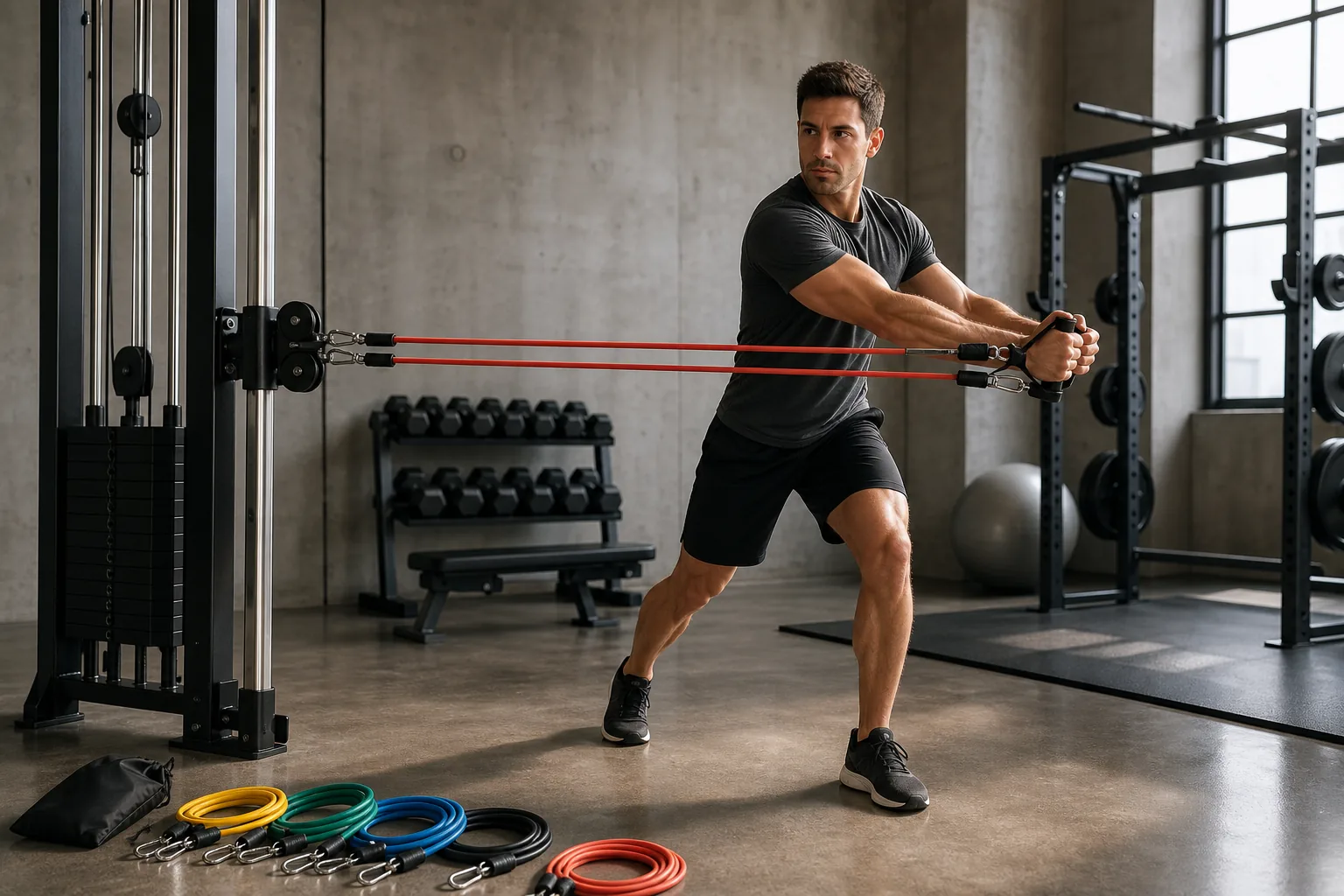
The foam handles change the feel of each rep. Your hand stays in a more natural position for curls, presses, and rows. The ankle straps also let you set up leg work without gripping the tube.
The door anchor is the key part of this kit. Place it at the right height and you can copy the path of common cable exercises. A high anchor suits pulldown-style work. A low anchor fits curls or some row variations. Test the door and anchor with light tension first.
Stacking can help you progress. Add one tube when a movement becomes easy, rather than jumping straight to a much heavier band. Still, treat the combined rating with caution. The highest possible stack number doesn’t tell you how the resistance feels through the full rep.
Compared with flat loops, tubes are less comfortable for exercises where the band sits around your thighs. They can slide more, and the clip hardware may get in the way. Use a mini loop for lateral walks or glute work when that is your main goal.
The research also shows why price and resistance shouldn’t be treated as the same thing. Ultra-high-resistance products can cost about as much as some mid-range kits, while a lower-rated tube set may still give you better accessories for your routine. Whatafit earns its place through setup range, not a single headline number.
Choose Whatafit when you miss the grip and movement path of a cable machine. It is a strong fit for upper-body home training, especially when you want several exercises from one bag.
FAQ
What are the best resistance bands for a full-body workout?
The best resistance bands for full-body work are tube sets with handles, a door anchor, and ankle straps. Bodylastics Stackable Tube Resistance Bands stand out because the set reaches up to 80 pounds and includes those core accessories. A mixed package with superbands adds assisted pull-up work and more stretch-focused movements.
Are resistance bands good for building strength?
Yes, resistance bands can build strength when you use enough tension and progress over time. Band force rises as the material stretches, so the hardest part of a rep may come near the end. Add a tube, move to a stronger band, or use more controlled reps when your current level no longer feels challenging.
Which resistance bands are best for physical therapy?
Mini loop bands are usually the best resistance bands for light rehab and prehab work. Synergee Mini Loop Bands cover 5 to 50 pounds and use five dotted levels. That range can suit gradual movement work, but follow your clinician’s plan if you’re recovering from surgery or an injury.
Are tube bands better than loop bands?
Tube bands are better for handle-based exercises such as rows, presses, and curls. Loop bands are better for hip work, glute drills, and light joint exercises. Neither style wins for every workout. Pick tubes for a cable-style setup, or choose loops when the band needs to sit around a limb.
How should I store resistance bands?
Store resistance bands in a cool, dry, dark place away from direct sunlight. Don’t leave latex crumpled while it is damp, because moisture and folds can speed wear. Before every workout, look for cuts, cracks, frayed areas, or damaged clips. Replace a worn band instead of testing it under heavy tension.
Conclusion
For most home users, Bodylastics Stackable Tube Resistance Bands are the safest starting point because the set covers pressing, pulling, leg work, and travel. Choose Synergee for rehab, Living Fit for high resistance, or Whatafit for a cable-style feel. If you want more health and training updates, browse Daily News Orbit, then choose the set that matches your next month of workouts.