


The Science Behind Why a 10 Minute Exercise for Beginners Works
Many people assume that unless a workout lasts an hour, it doesn’t count. Fortunately, exercise science as of 2026 tells a completely different story. A 10 minute exercise for beginners leverages the power of intensity and movement efficiency to deliver real biological benefits without forcing you to spend half your day changing into athletic gear or driving to a gym.
Research shows that short, high-effort routines stimulate your cardiovascular system and boost your metabolic rate effectively. A study published in PLOS ONE demonstrated that just 10 minutes of interval-style exercise—including a single cumulative minute of higher intensity—produced cardiovascular adaptations and mitochondrial improvements comparable to 45 minutes of moderate, steady-state cardio over 12 weeks. Furthermore, a 2014 study found similar metabolic adaptations in individuals engaging in quick micro-workouts.
Short sessions also trigger Excess Post-Exercise Oxygen Consumption (EPOC), commonly known as the “afterburn effect.” EPOC causes your body to consume more oxygen and burn extra calories for hours after your workout ends as it repairs muscle tissue and restores baseline energy systems. Furthermore, health studies indicate that accumulating even 10 minutes of daily physical activity significantly reduces all-cause mortality risk and improves daily insulin sensitivity. While health organizations recommend adults aim for 150 minutes of moderate activity per week, using 10-minute workout research and benefits as daily building blocks makes reaching that goal manageable, actionable, and achievable for anyone.
How to Structure an Effective 10-Minute Routine
To get the most out of a quick workout, every minute needs a clear purpose. You can’t spend five minutes adjusting your shoes or flipping through a playlist. We recommend breaking your 10-minute window into a simple, balanced sequence: a 2-minute dynamic warm-up, a 6-minute main bodyweight circuit, and a 2-minute cool-down stretch.
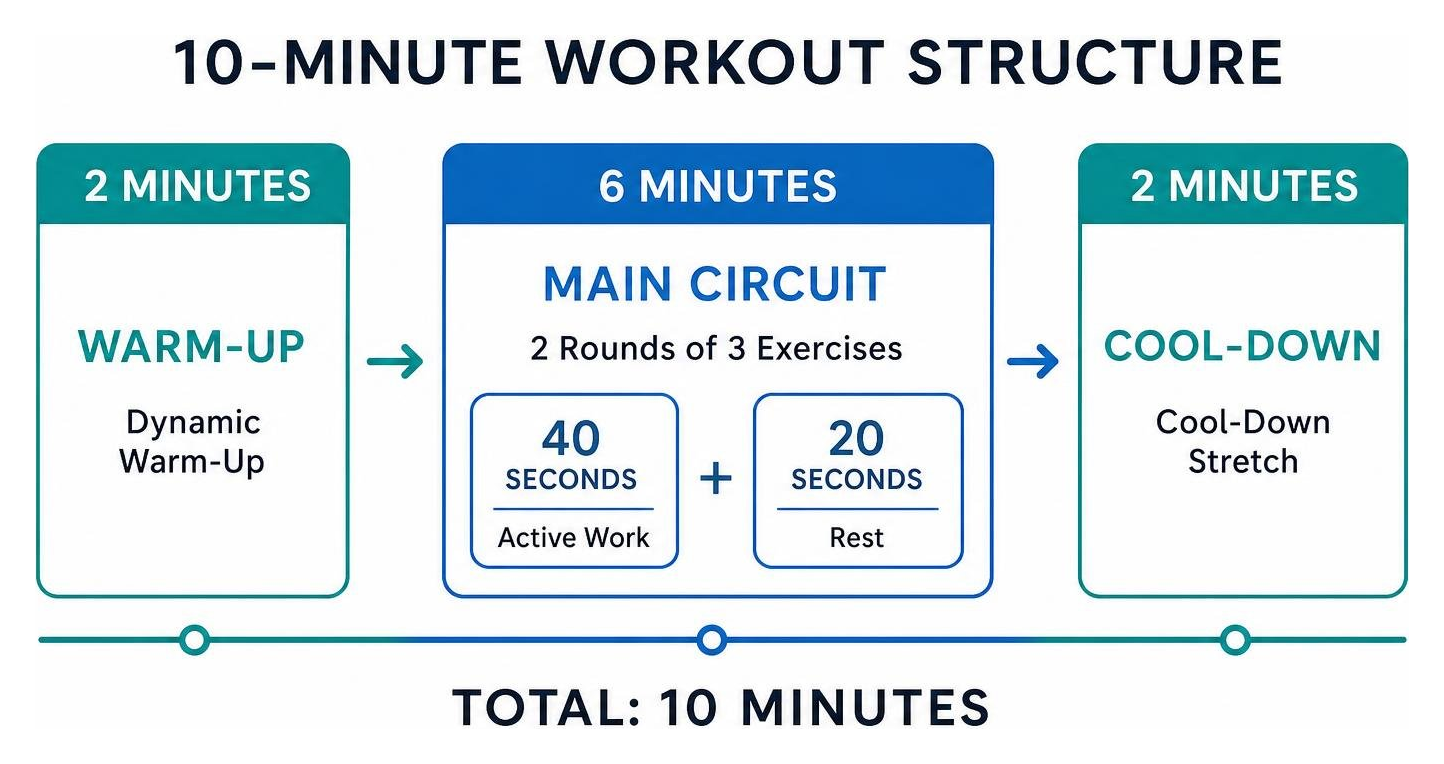
Structure of the 10 Minute Exercise for Beginners Home Circuit
Before starting the main circuit, spend 2 minutes performing light movement like shoulder rolls, gentle arm circles, and marching in place to increase core body temperature. During the core 6-minute circuit, you will alternate between 40 seconds of active work and 20 seconds of rest for each exercise. Complete two full rounds of these three foundational movements:
- Bodyweight Squats (or Chair Squats): Stand with feet shoulder-width apart. Sit your hips back like you’re reaching for a chair. Keep your chest elevated, engage your core, and press firmly through your heels to stand.
- Wall Push-Ups (or Knee Push-Ups): Place your hands shoulder-width apart on a wall, step back slightly, lower your upper body with controlled alignment, and push back out.
- Step Jacks: Step one foot out to the side while raising both arms overhead, then return to center and repeat on the opposite side to keep your heart rate up without high impact.
Using a fixed work-rest interval keeps your heart rate gently elevated while ensuring you don’t burn out prematurely or compromise movement quality.
Modifying a 10 Minute Exercise for Beginners to Avoid Injury
Pushing through joint pain is never the answer when building long-term habits. Utilizing low-impact workout modification techniques protects your knees, shoulders, and lower back while you build foundational strength.
If full squats cause knee discomfort, place a sturdy chair behind you and gently touch your glutes to the seat before standing up. If push-ups on the floor feel too heavy on your wrists, perform them against a wall or elevate your hands on an incline like a sturdy kitchen counter.
To monitor your effort, use the simple “talk test”: during your 40-second work windows, you should be breathing hard enough that speaking a full sentence feels slightly challenging, but you shouldn’t be gasping for air. Always maintain a neutral spine, pull your belly button toward your spine, and avoid holding your breath.
Comparing Short HIIT Sessions to Longer Moderate Workouts
Is a short interval workout truly capable of standing toe-to-toe with a long, casual stroll or an extended gym session? The answer lies in how movement intensity impacts heart rate response, muscle recruitment, and post-exercise oxygen uptake.
| Feature | 10-Minute HIIT / Circuit Routine | 45-Minute Steady-State Cardio |
|---|---|---|
| Primary Benefit | High time efficiency, metabolic boost, EPOC afterburn | High total endurance, low joint stress |
| Target Heart Rate | 70% – 80% of maximum in short spikes | 50% – 65% of maximum consistently |
| Time Commitment | Minimal (10 minutes total) | Moderate to High (45–60 minutes total) |
| Visceral Fat Reduction | High efficiency due to intensity spikes | Effective via total calorie expenditure |
| Equipment Needed | None (Bodyweight only) | Optional (Treadmill, bike, or path) |
While longer moderate sessions are excellent for building general endurance, quick bodyweight routines pack an incredible punch in fraction of the time. Following an anywhere workout routine guide gives you the flexibility to exercise in your living room, office, or hotel space without dedicated equipment. If you’re looking for more health and wellness inspiration, explore our broader fitness category guides to complement your daily activity goals.
Weekly Workout Planning and Safe Progression Strategies
Consistency beats intensity every single time when launching a new physical activity routine. For absolute beginners, we suggest starting with 3 to 5 sessions per week. This frequency provides ample stimulus to kickstart your physical conditioning while giving your body at least 2 full rest days to repair tissue, restore glycogen stores, and adapt safely.
As your body adapts over 2 to 3 weeks, you will naturally feel stronger and want to progress. You can apply progressive overload safely without increasing your workout time exponentially by adjusting a few key variables:
- Improve your form and depth: Lower yourself slightly deeper into your squats or push-ups while keeping movement controlled.
- Adjust your rest intervals: Shift from 40 seconds work / 20 seconds rest to 45 seconds work / 15 seconds rest to increase effort duration.
- Stack your mini sessions: Perform one 10-minute circuit block in the morning and a second 10-minute mobility or active recovery block in the evening.
If you’re looking for a structured roadmap to keep you accountable over your first month, check out our beginner 30-day workout challenge guide. For tips on cutting out scheduling friction and making activity automatic, read our article on how to stop making excuses and start these 15-minute workouts today.
Common Mistakes Beginners Make and How to Avoid Them

When exercise time is short, it’s easy to fall into bad habits or push beyond safe movement limits. Here are the most common traps beginners stumble into during short daily routines:
- Rushing repetitions over form: Moving like a speed demon with sloppy alignment drastically increases your risk of joint strain. Focus on controlled, smooth movements through every rep.
- Skipping the cool-down: Abruptly stopping after intense effort can cause blood pooling in your legs and leave you feeling lightheaded. Take 120 seconds to slow your breathing and gently stretch your hamstrings, chest, and quads.
- Holding your breath: Many beginners unconsciously lock their breathing during challenging exercises like planks or wall push-ups. Remember to exhale during exertion and inhale as you return to the starting position.
- Expecting overnight transformation: A short bodyweight routine will rapidly improve your daily mood, blood glucose response, and muscular stamina, but building major muscular strength or physique changes takes consistent work over months. Keep your expectations aligned with sustainable habit building!
Frequently Asked Questions About 10-Minute Workouts
Is 10 minutes of exercise a day enough for weight loss?
A 10-minute workout burns approximately 80 to 120 calories depending on your current body weight and effort level. While it effectively boosts your metabolic rate and improves insulin sensitivity, sustainable weight loss depends primarily on maintaining a moderate calorie deficit through nutrition. Think of your short routine as a vital tool to preserve lean body mass and build steady physical activity habits rather than your sole strategy for weight management.
Do I really need to warm up before a 10-minute workout?
Yes, taking time to prepare your muscles is essential! Cold muscles and tendons are far more prone to minor strains or joint irritation. Taking just 2 minutes to march in place and roll your shoulders lubricates your joints with synovial fluid, gently raises your core temperature, and prepares your central nervous system for exercise.
How soon will beginners see results from 10-minute workouts?
You will likely notice non-physical improvements within your very first week—including elevated mental focus, better mood regulation, enhanced daily energy, and reduced morning joint stiffness. Measurable cardiovascular changes, such as improved physical stamina, reduced resting heart rate, and easier everyday movements, typically manifest clearly after 3 to 4 weeks of regular effort.
Conclusion
Starting a healthier lifestyle doesn’t require a total overhaul of your daily calendar or hours in a commercial gym. A 10 minute exercise for beginners breaks down intimidating fitness barriers, giving you a safe, highly effective, and flexible movement strategy that fits seamlessly into even the busiest days. By committing to just ten intentional minutes today, you lay a solid foundation for lifelong strength, joint mobility, metabolic balance, and personal confidence. For more expert wellness tips, training routines, and lifestyle guidance, explore our comprehensive collection of exercise guides at Daily News Orbit. Clear a small spot on your living room floor, set your timer, and take your first empowering step right now!