

Essential Exercises for Explosive Arm Hypertrophy
The science of hypertrophy isn’t magic; it is biology coupled with consistent work in the gym. When we structure arm workouts for mass, we are setting off a specific cascade of mechanical tension, localized fatigue, and muscle protein synthesis. Understanding fundamental physiological mechanisms documented in research on muscle hypertrophy helps dedicated lifters optimize every rep. If you want arms that threaten to split your favorite t-shirts, you need to understand how training targets work.
Understanding Arm Anatomy: Prioritizing Triceps vs Biceps
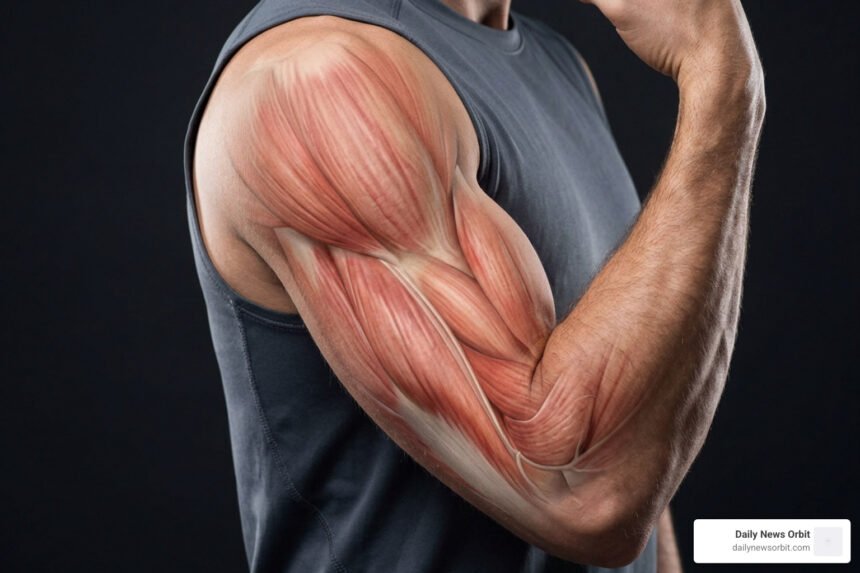
Many lifters spend endless hours performing bicep curls, hoping for huge arms. However, the triceps brachii account for approximately two-thirds of total upper arm mass. If you neglect triceps, you leave the vast majority of your arm growth potential on the gym floor.
The triceps consist of three distinct heads:
- The Long Head: The largest head, spanning across the shoulder joint, which requires overhead extensions for full stretch-mediated growth.
- The Lateral Head: Located on the outside of the arm, responsible for the sought-after horseshoe shape.
- The Medial Head: Lies deep in the lower tricep and handles baseline elbow extension power.
The biceps brachii consist of a long head (outer arm) and short head (inner arm). Beneath the biceps lies the brachialis, a key muscle that pushes the biceps upward as it grows, adding impressive arm width. Integrating balanced movements into Good Workout Plans for Men: A Practical Roadmap to Strength ensures all of these key heads are stimulated effectively.
Volume, Frequency, and Rep Ranges for Maximum Muscle Growth
Sports science research shows that an optimal hypertrophy target is roughly 40 to 60 repetitions per muscle group per workout, typically achieved through 12 to 20 total working sets per week. Training one body part every 5 to 7 days—or splitting volume across 2 to 3 weekly sessions—produces superior growth compared to cramming all volume into a single weekly session.
| Training Style | Intensity (% 1RM) | Target Reps / Set | Primary Adaptation | Best For |
|---|---|---|---|---|
| Heavy Mechanical Load | 75% – 85% | 6 – 8 reps | Mechanical tension & strength | Heavy compound presses & curls |
| Moderate Hypertrophy | 65% – 75% | 8 – 12 reps | Balance of tension & metabolic stress | Incline curls, overhead extensions |
| High-Volume Pump | 50% – 60% | 15 – 20+ reps | Cell swelling & metabolic stress | Cable pushdowns, burnout sets |
Exercise selection dictates how tension is distributed across the arm muscles. Incorporating stretch-mediated loading—where the muscle is fully stretched under load—delivers powerful growth signals. Combining these moves alongside Upgrade Your Pull Day with Cable Back Workouts ensures complete upper-body development.
Top Bicep Exercises in High-Yield Arm Workouts for Mass
- Barbell Curl: The king of bicep compound movements. Keep your elbows locked at your sides to prevent shoulder takeover and focus pure loading on the biceps.
- Incline Dumbbell Curl: Positioning the bench at a 30- to 40-degree angle stretches the long head of the bicep before contraction begins, triggering optimal stretch-mediated hypertrophy.
- EZ-Bar Preacher Curl: Isolates the short head and prevents momentum, ensuring strict tension through a supinated grip throughout the active portion of the lift.
Top Tricep Exercises in High-Yield Arm Workouts for Mass
- Close-Grip Bench Press: Allows heavy mechanical loading on the triceps without stressing individual joints excessively.
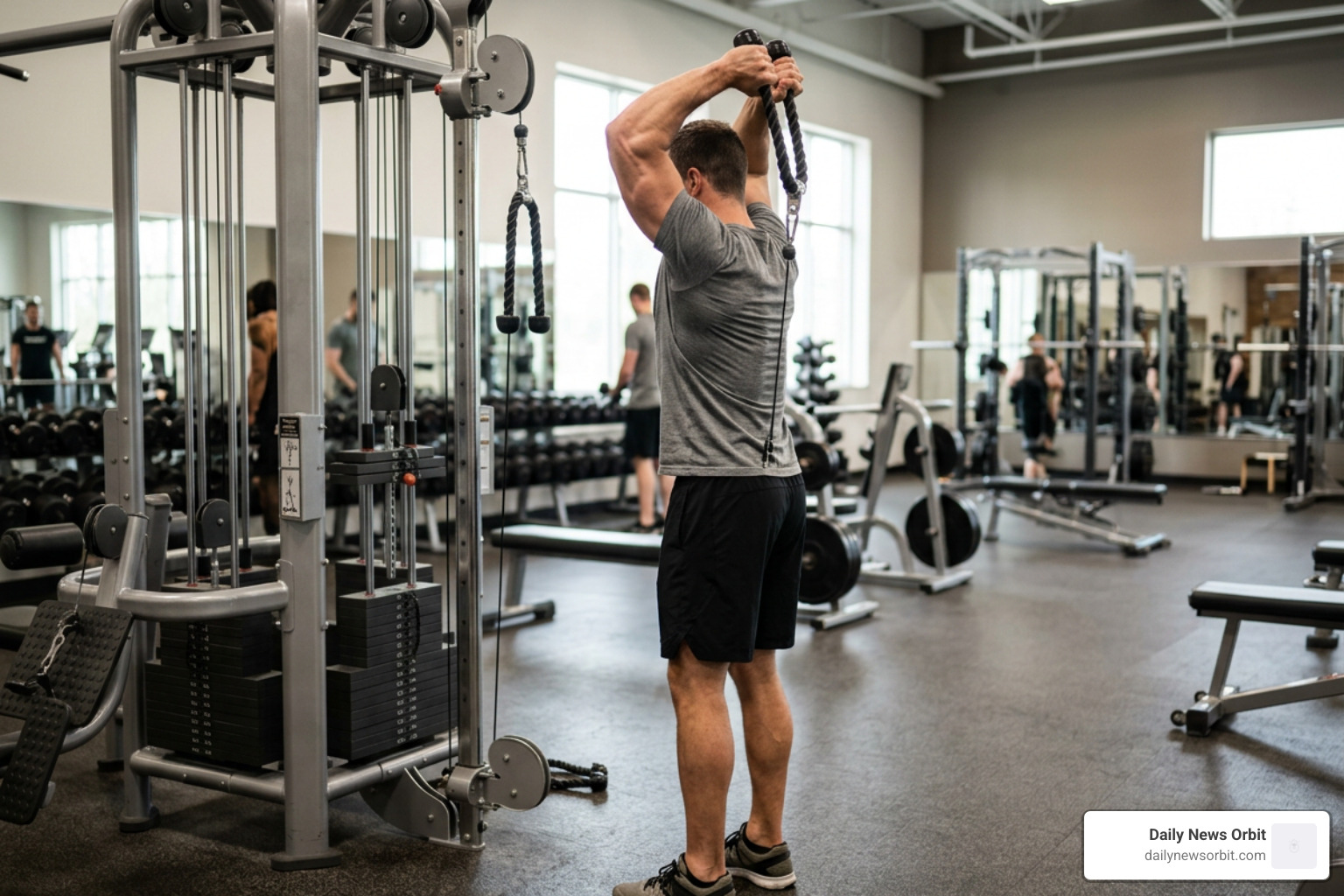
- Overhead Tricep Extension: Research demonstrates that overhead extensions produce up to 40% more growth in the tricep long head compared to pushdowns due to the lengthened position under load.
- Rope Cable Pushdown: Excellent for targeting the lateral head and achieving a strong peak contraction at the bottom of the movement.
Building Brachialis and Forearms for Complete Arm Mass
A truly massive arm requires thick forearms and a developed brachialis:
- Dumbbell Hammer Curls: Using a neutral grip shifts load directly onto the brachialis and brachioradialis, adding genuine side-profile thickness.
- Reverse Barbell Curls: Targets the forearm extensors and wrist flexors, ensuring structural balance, grip capacity, and joint stability.
Structuring an 8-Week Arm Specialization Routine
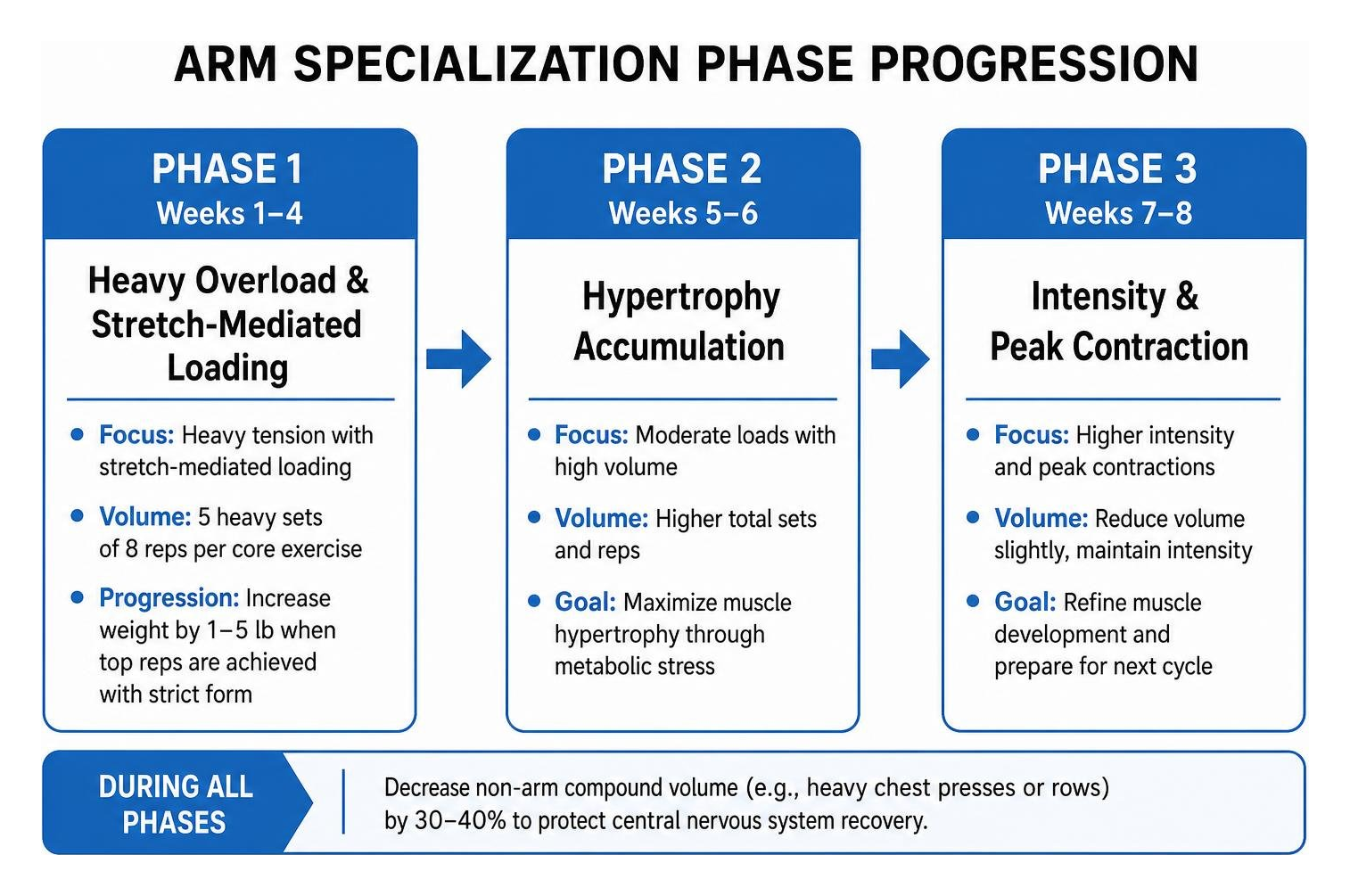
If your growth has stalled, shifting to a focused specialization block can restart progress. When running an arm specialization phase, we strategically decrease non-arm compound volume (like heavy chest presses or rows) by 30–40% to protect our central nervous system recovery and allow maximum adaptive capacity to be directed toward arm expansion.
Lifters looking to optimize their weekly programming can review our guide on how to Build Muscle Faster Using a Weekly 5-Day Training Split for long-term setup options.
Phase 1: Heavy Overload and Stretch-Mediated Loading (Weeks 1–4)
Focus on heavy mechanical tension using a double-progression strategy. Aim for 5 heavy sets of 8 reps per core exercise, increasing working weights by 1 to 5 pounds once top rep targets are met with strict form and full control through the eccentric phase.
Phase 2: High-Volume Burnout and Plateau-Busting Techniques (Weeks 5–8)
Shift toward metabolic stress and cell swelling. Perform 5 heavy sets followed immediately by a single 20-rep burnout set with controlled tempo to flood the tissue with metabolites.
Key plateau-busting intensity techniques include:
- Lengthened Partials: Performing partial reps only in the stretched position after reaching full-range failure to maximize stretch-induced tension.
- Drop Sets: Reducing weight by 20–30% upon hitting muscular failure and continuing immediately to recruit higher-threshold motor units.
- Blood Flow Restriction (BFR) Training: Wrapping elastic straps light-tight near the shoulder joint and utilizing 20–30% of standard 1RM for high-rep light sets to generate intense metabolic stress.
Anabolic Nutrition and Progressive Overload Strategies
Direct isolation routines will fall flat without sufficient fuel. Muscle tissue is metabolically expensive to build, requiring adequate caloric support and systematic load progression over time.

Caloric Surplus, Protein Intake, and Creatine Supplementation
As a general rule of thumb, an average-sized lifter must add roughly 10 pounds of genuine lean muscle mass across their body to gain 1 flexed inch of upper arm size.
To build an anabolic internal environment:
- Caloric Surplus: Maintain a moderate 200 to 400 daily calorie surplus above maintenance levels to support recovery without excessive fat gain.
- Protein Intake: Consume 0.7 to 1.0 grams of protein per pound of bodyweight (1.6 to 2.2 g/kg) daily to maximize muscle protein synthesis.
- Creatine Monohydrate: Take 3 to 5 grams daily. A major 2022 meta-analysis indexed on PubMed confirmed that creatine combined with resistance training yields an average of 1.37 kg (about 3 lbs) more lean muscle mass than training alone.
If you struggle to find time for long training sessions during busy weeks, you can check out how to Stop Making Excuses and Start These 15-Minute Workouts Today! to keep momentum going.
Applying Double Progression and Managing Fatigue
Progressive overload is the ultimate driver of long-term arm size. Use a double progression model: choose a rep range (e.g., 8–12 reps). Start with a weight you can handle for 8 clean reps. Keep that load until you can complete 12 clean reps across all working sets, then increase load by 2.5 to 5 pounds. If elbow tendonitis or wrist discomfort flares up, schedule a deload week by dropping set volume by 40% to preserve joint integrity and promote tissue repair.
Frequently Asked Questions about Building Arm Mass
How often should you perform arm workouts for mass each week?
We recommend direct arm workouts 2 to 3 times per week, allowing 48 to 72 hours of recovery between hard sessions. Because muscle protein synthesis drops back toward baseline within 24 to 48 hours post-workout, multi-session frequency beats a single weekly “bro split” by maintaining elevated protein synthesis throughout the entire week.
Why are my arms not growing despite consistent lifting?
Common culprits include:
- Ego Lifting: Swinging weights during curls removes mechanical tension from the biceps and places it on the front deltoids and lumbar spine.
- Ignoring Triceps: Spending all your energy on biceps while ignoring triceps (which make up roughly two-thirds of your upper arm mass).
- Lack of Caloric Surplus: Attempting to build substantial arm mass while eating in an aggressive caloric deficit.
- Poor Eccentric Control: Dropping weights quickly without controlling the lowering phase deprives the muscles of valuable eccentric stimulus.
How long does it take to add a genuine inch to your arms?
For natural lifters following a structured arm workouts for mass program in a slight caloric surplus, adding 0.3 to 0.7 inches typically takes 8 to 12 weeks. Gaining a full, permanent flexed inch generally requires building roughly 10 pounds of total lean body mass over several months of dedicated training.
Conclusion
Building bigger arms comes down to consistent training principles: hit the triceps hard with stretch-focused overhead extensions, execute strict bicep curls, train the brachialis for width, and fuel your body with an adequate caloric surplus and protein. Track your weights every single week, control the lowering phase of every repetition, and allow your body enough time to recover.
Ready to transform your routine? Explore The Ultimate Gym Workout Routines for Men for Beginners right here on Daily News Orbit to build your full-body strength foundation today!