


You're probably staring at a sale page right now, wondering whether that gaming chair deal is worth it or just another flashy discount on a chair that'll peel, sag, and annoy you by next winter. That's the right instinct. The best buys in this category aren't the deepest cuts, they're the chairs that still feel solid after the honeymoon period ends.
The market isn't tiny anymore, either. The global gaming chair market has crossed USD 1.5 billion in the mid-2020s, with trackers putting 2025 revenue around USD 1.49 billion to USD 1.80 billion, which is exactly why discounting has become so aggressive on major shopping events like holiday promos and Prime Day-style sales Mordor Intelligence's gaming chair market overview. A cheap chair in a big market can still be a bad purchase.
Table of Contents
- Why the Biggest Discount Isn't Always the Best Deal
- When to Buy Using the Annual Deal Calendar
- Evaluating Materials and Adjustability Before Buying
- Comparing Gaming Chairs Against Ergonomic Office Chairs
- Tracking Prices and Verifying Seller Legitimacy
- Assessing Whether New Tech Features Add Real Value
- Your Final Decision Checklist for Gaming Chair Deals
Why the Biggest Discount Isn't Always the Best Deal
A gamer sees 40% off on a racing-style chair and assumes the hard part is over. The price looks tempting, the photos look bold, and the seller leans on words like “premium” and “ergonomic.” Six months later, the PU leather starts flaking, the foam feels dead, and the chair turns into an expensive reminder that a markdown is not the same as value.

What the sticker price hides
Retailers usually cut prices on models they need to move, not the chairs that age well. The category is large enough to support regular promotion cycles, so steep markdowns show up often, especially on entry-level and midrange stock.
A discount still misses the point if the chair falls apart early. Thin upholstery, weak stitching, and foam that compresses fast can make a cheap purchase more expensive than it first looks. That is why the simple question is: what keeps holding up after daily use?
Practical rule: A smaller discount on a chair that keeps its structure is usually a better buy than a huge markdown on something that wears out fast.
Buy with years in mind, not just checkout totals. A chair that looks good in a product image but feels flimsy in hand can cost more through replacement, discomfort, and wasted time. Real value comes from durability first, then price.
When to Buy Using the Annual Deal Calendar
Timing matters because retailers don't price chairs randomly. They move inventory around predictable retail cycles, and that's where serious buyers win. The best windows are still the obvious ones, but you need to be picky about which chair types go on sale during each wave.
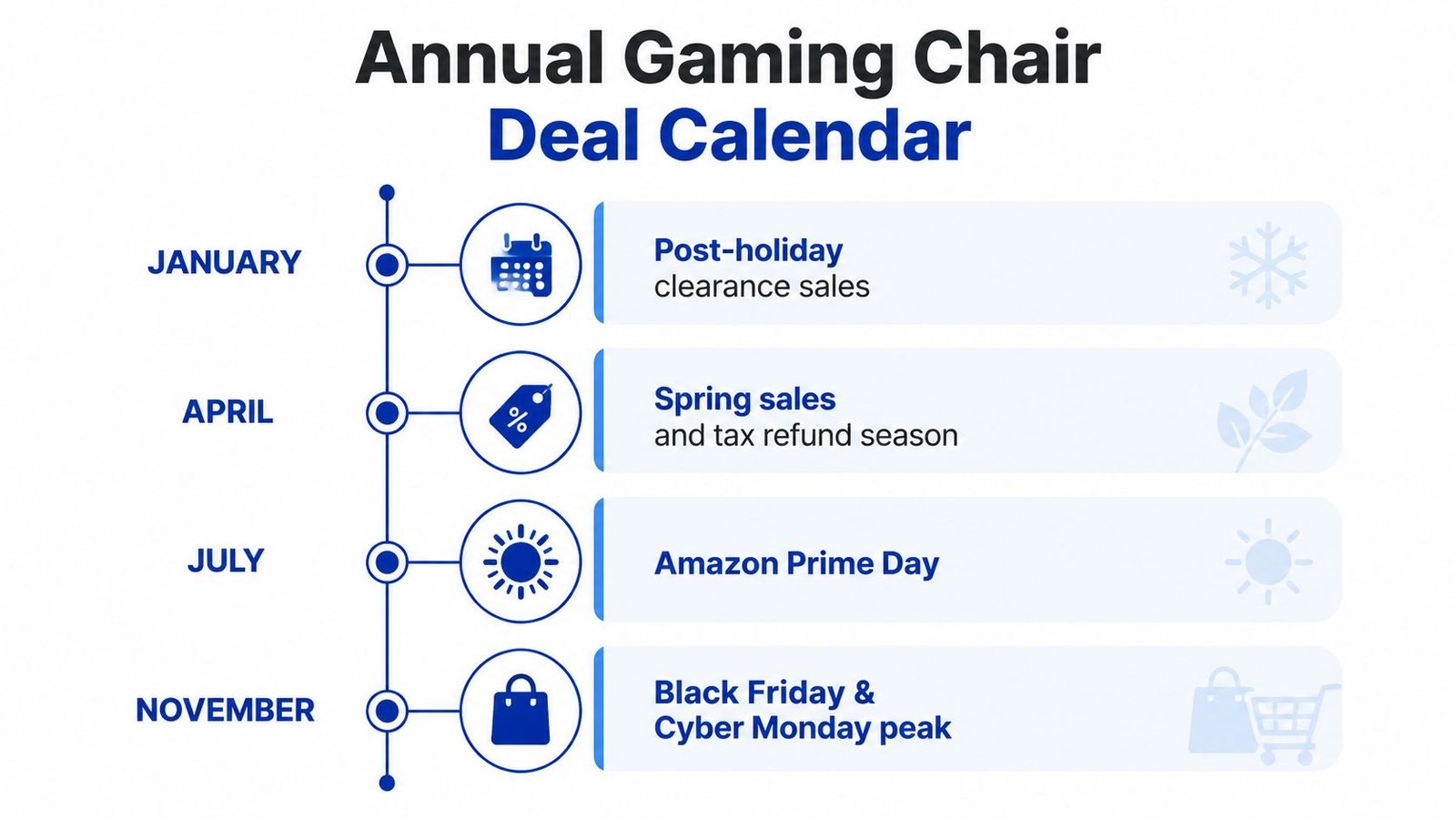
The sale windows that actually matter
January is where post-holiday clearance usually shows up. Retailers want shelf space back, and that's when leftover inventory from Q4 gets pushed out. The catch is selection, since the best-looking colors and popular sizes may already be gone.
April often lines up with spring promotions and tax refund season. This is a decent time to watch for midrange chairs, especially if a retailer is refreshing its lineup before summer launches. You won't always see the absolute lowest price, but you can catch a solid combination of stock and discount.
July is where Prime Day-style competition gets loud. Big e-commerce events push sellers to compete on headline pricing, and that's useful if you've already narrowed your shortlist. Don't browse casually during this period, compare exact models and ignore the marketing noise.
November is still the heavyweight. Black Friday and Cyber Monday tend to bring the widest spread of markdowns, especially across larger retailers with real volume. That's the best time to hunt premium chairs that rarely get meaningful price cuts during the rest of the year.
The market scale explains why this works. With the global category already past USD 1.5 billion in the mid-2020s, even modest discounting can move a lot of units during peak shopping events Mordor Intelligence's gaming chair market overview. The game isn't to buy whenever the price dips. It's to know which seasonal sale is likely to produce the right mix of price and quality.
Evaluating Materials and Adjustability Before Buying
A discounted chair isn't a good deal if the materials give up early. The fastest way to waste money is to chase features you can show off in a product gallery while ignoring the parts that take the punishment of daily sitting. Materials, padding, and adjustment range decide whether a chair still feels decent after long use.
Start with the upholstery
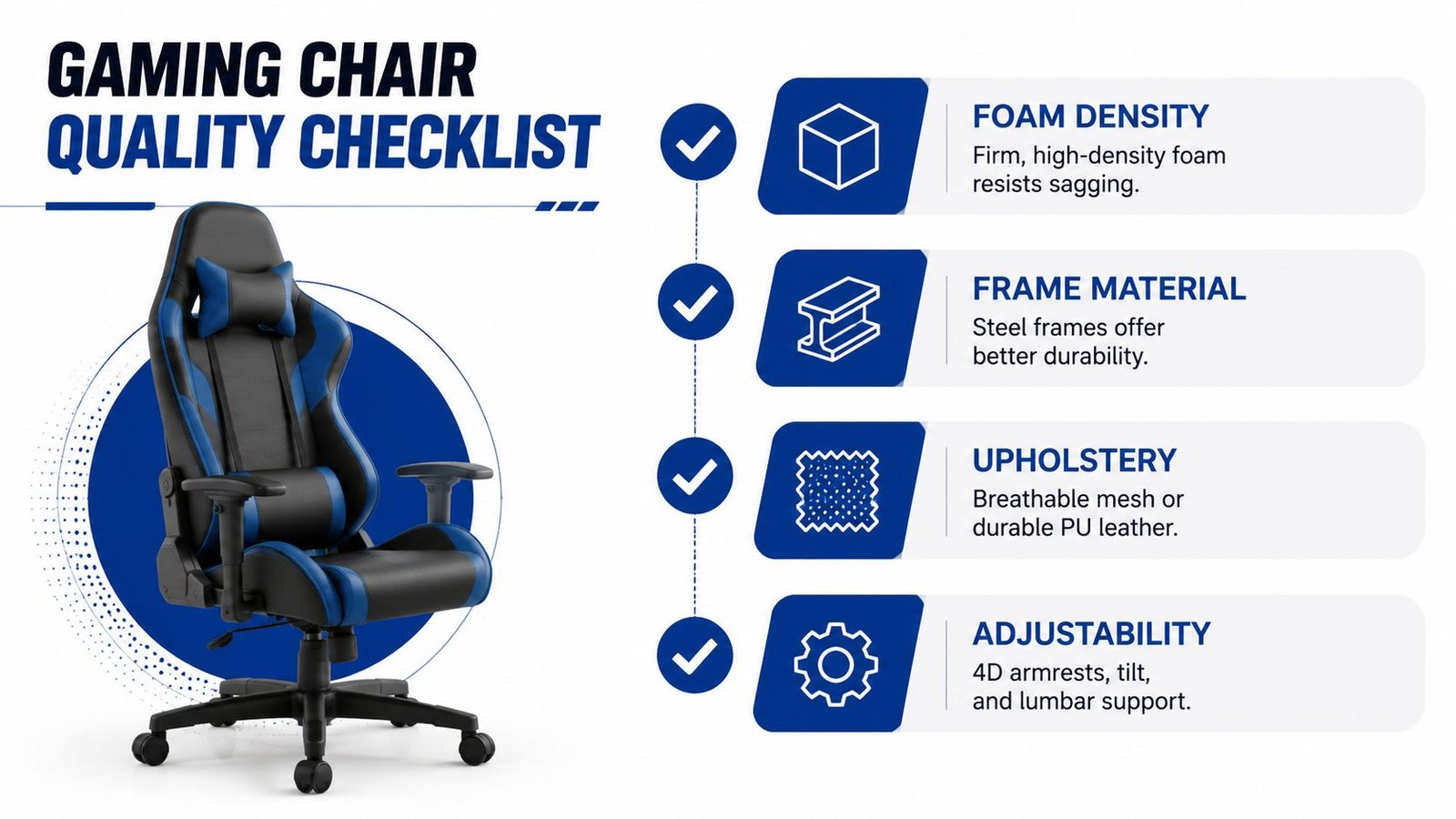
Independent durability guidance identifies synthetic nylon fabric as the most durable upholstery type, saying it resists stretching and degradation better than more failure-prone coverings IEOM Society durability guidance. That doesn't mean every fabric chair is excellent, but it does mean cheap gloss is not a durability strategy.
PU leather is where many bad deals hide. It can look premium on day one and become a peeling mess later, especially in warm rooms or under heavy daily use. If you sit for hours at a time, breathable fabric or mesh usually makes more sense than a shiny surface that ages badly.
Check the adjustment range, not the marketing language
A serious chair should let you tune the armrests, seat height, recline, and lumbar support so the chair fits you instead of forcing you to adapt to it. Those are the details that matter during long sessions, because a chair that fits poorly creates pressure points and makes you shift constantly.
A chair that adjusts well is worth more than a chair that just looks aggressive in photos.
Look closely at the frame, base, and foam language too. If the listing avoids specifics and leans on phrases like “luxury comfort” without telling you how the chair supports your body, treat that as a warning sign. The best deal is the one where the low price lines up with durable materials and real fit, not just a louder design.
Comparing Gaming Chairs Against Ergonomic Office Chairs
The cleanest way to avoid buyer's remorse is to ask one blunt question. Are you buying a chair to look like gaming gear, or are you buying something you can sit in for work and play without thinking about it all day? That distinction matters more than most sale pages admit.
Where each type wins
Gaming chairs still dominate the category by share, and recent market data says PC gaming chairs hold the largest slice while fabric/mesh and hybrid models are growing faster than PU leather Fortune Business Insights gaming chair market report. That tells you the market is moving toward better breathability and more versatile fit, not just louder styling.
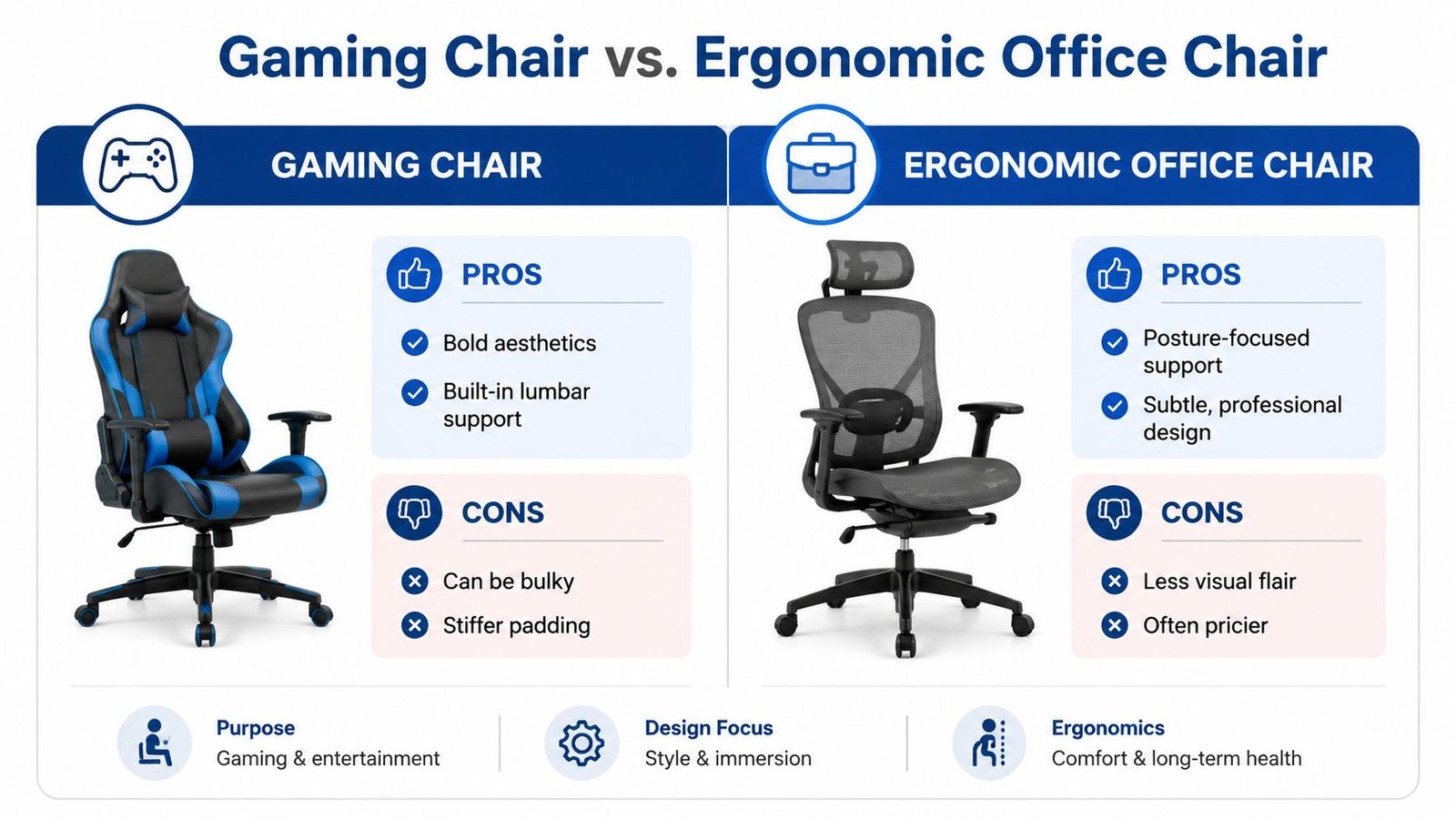
Gaming chairs usually win on visual presence. They're the easier pick if you want a setup that looks purpose-built for play, and many come with obvious lumbar support and a high-back silhouette. The downside is that many of them are bulkier than they need to be, and some feel tuned more for appearances than all-day comfort.
Ergonomic office chairs take the opposite approach. They tend to look restrained, but that's often a plus if your desk is also your work station. They're usually easier to live with in mixed-use spaces, and the best ones put posture and long-session comfort ahead of branding.
If you work from home and game at the same desk, don't default to a gaming label. Compare seat depth, breathability, armrest adjustability, and lumbar support first. A sober-looking office chair can beat a discounted gaming chair on actual day-to-day comfort, especially in warm rooms or long work sessions.
Tracking Prices and Verifying Seller Legitimacy
A sale price only matters if the seller is real and the discount is genuine. Too many buyers stop at the percentage off and never check whether the “original” price was inflated, whether the seller is authorized, or whether the warranty will hold up after delivery. That is how a bargain becomes an expensive return.
Use price history before you click buy
Track the exact model number, not the broad product name. Chairs often ship with small revisions that change upholstery, armrests, or cushions, and a vague listing can make two different products look identical. Once you have the exact model, compare current pricing with historical pricing from the same retailer or a trusted price tracker.
Look for pattern breaks, not just red numbers. If a chair sits at one price for months and then drops hard during a major shopping event, that is useful. If the “original” price jumps right before a sale banner appears, the markdown is mostly theater.
Check the seller before you trust the discount
Authorized retailers matter because they are the ones most likely to honor the manufacturer's terms without drama. Third-party marketplaces can still be fine, but they are where counterfeit, used, or repackaged inventory tends to show up under new-listing language. Read the seller name, return window, and warranty language before you trust the headline.
The market is big enough that caution pays off. As noted earlier, the category is growing fast, and promotional pricing has become routine rather than rare. That makes fake sales easy to hide inside listings that look normal at first glance.
Assessing Whether New Tech Features Add Real Value
A lot of newer gaming chair features sound impressive in a product launch and forgettable in real life. AI posture detection, haptic feedback, and eco-friendly material claims all sound current, but the core question is whether they improve the chair you sit in every day. If a feature doesn't make the chair more comfortable or more usable, it's a markup.
Pay for function, not novelty
Independent market coverage shows rising interest in ergonomic designs and AI posture detection, along with haptic feedback and eco-friendly models, which means sellers are pushing the category toward more tech-heavy positioning GlobeNewswire market coverage on gaming chair opportunities. That doesn't mean every new feature deserves your money.
My view is simple. Buy tech only when it solves a problem you have. If you sit too long and need better posture cues, a well-designed ergonomic chair can matter. If the feature is mostly a buzzword buried in an app, skip it.
The best chairs still win on the basics, not the gimmicks. Good lumbar support, breathable materials, and solid adjustability beat novelty features that might sound futuristic but add little to day-to-day comfort. If the sale price rises because of a tech label, make the seller prove the value.
Your Final Decision Checklist for Gaming Chair Deals
Use this before you buy. First, check whether the discount is tied to a real sale window, not just a fake markdown. Second, look at the upholstery and choose durability over gloss, especially if you sit daily.
Then compare adjustability, seller legitimacy, and return terms. If the chair can't fit your body, comes from a sketchy marketplace seller, or leans too hard on novelty features, pass on it. A real gaming chair deal should lower your total cost of ownership, not just your checkout total.
DAILY NEWS ORBIT LLC publishes plain-English buying guides and product roundups that help readers cut through hype and choose better hardware. If you want more no-nonsense coverage like this, visit DAILY NEWS ORBIT LLC for practical explainers, consumer tech coverage, and comparison-driven advice.
Refined using the Outrank tool