
15 Min Beginner Ab Workout for Rapid Core Strength at Home
Build Core Strength With a 15 Min Beginner Ab Workout
A 15 min beginner ab workout can build core strength at home with simple bodyweight moves, even if you have no equipment and little training experience.
For a quick start, use a short circuit that combines controlled floor exercises, planks, and gentle stability work. A strong core is more than visible abs: it helps stabilize your spine, supports posture, and makes daily movements and other workouts feel more solid.
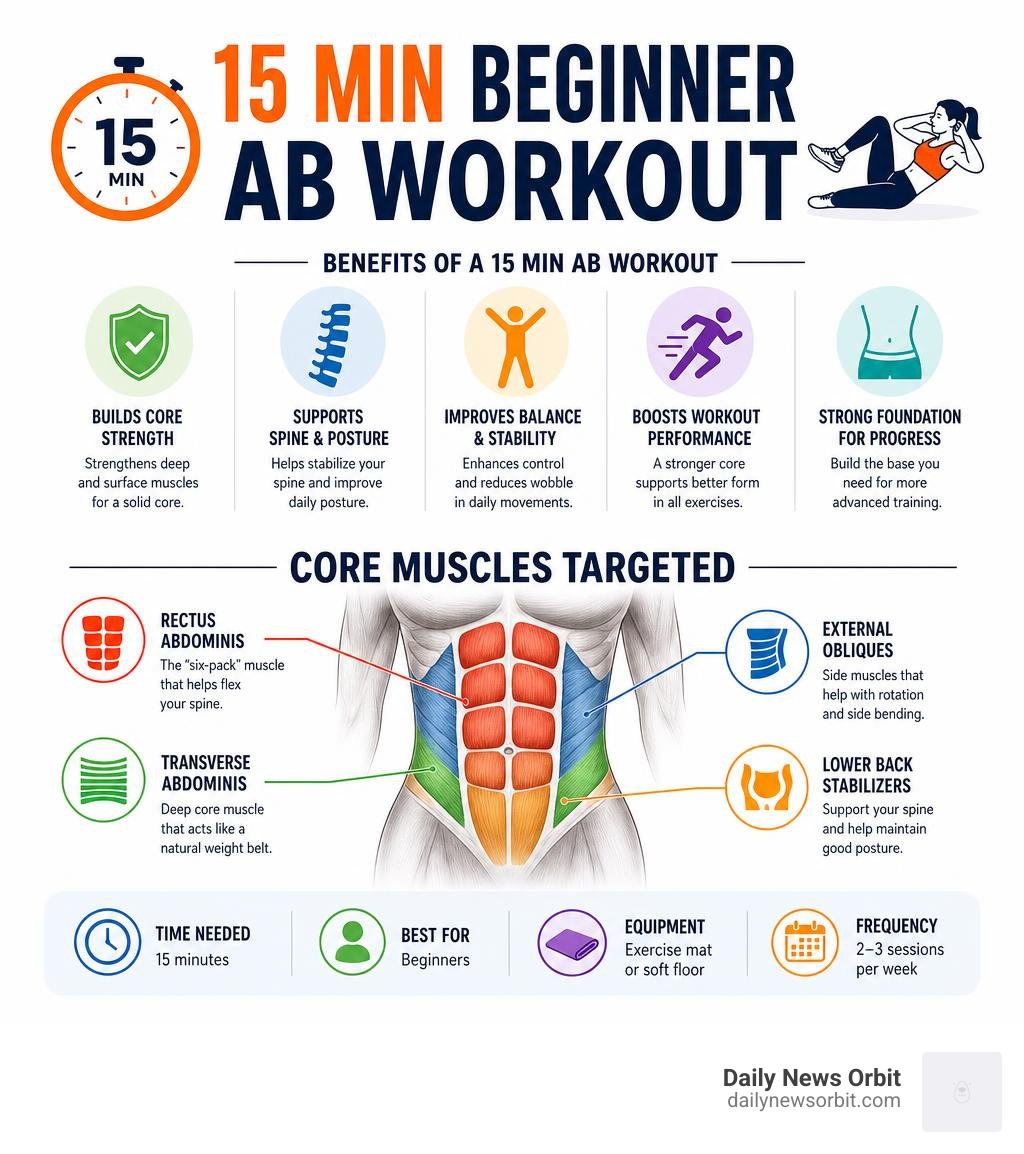
- Time needed: 15 minutes
- Best for: Beginners who want stronger abs and better core control
- Equipment: An exercise mat or soft floor
- Main areas trained: Front abs, side abs, deep core muscles, hips, and lower-back stabilizers
- Realistic frequency: Usually 2 to 3 sessions per week, with form and recovery as priorities
Quick workouts work best when every rep is slow and intentional. You do not need hundreds of sit-ups or complicated moves to start building strength. You need a routine you can repeat consistently without straining your neck or lower back.
And while core training can strengthen the muscles under your midsection, visible ab definition also depends on overall body fat and nutrition. There is no reliable way to burn fat from one body part with ab exercises alone.
Core Anatomy: What Muscles Does a 15 Min Beginner Ab Workout Target?
To get the most out of a 15 min beginner ab workout, we need to understand that “abs” aren’t just one single muscle unit. The core functions like a built-in weight belt, wrapping around your entire midsection to support your lower back and maintain proper pelvic alignment.
When you perform a well-rounded routine, you engage four major muscle layers:
- Rectus Abdominis: The front visible muscles often referred to as the “six-pack.” These muscles flex your spine forward, taking center stage during crunches or sit-ups.
- Obliques (Internal and External): Located along the sides of your stomach, your obliques control torso rotation, side bending, and lateral stability.
- Transverse Abdominis (TVA): The deepest abdominal layer. The TVA acts as an internal corset, stabilizing your pelvis, pressing your abdomen inward, and supporting spine stabilization during heavy lifting or daily movements.
- Erector Spinae & Posterior Core: The muscles running along your spine and lower back, working alongside your abdominal wall to maintain balance, prevent swayback, and protect your back from injury.
When beginners skip deep core activation, secondary muscles like the hip flexors take over, which often leads to annoying lower back tightness. Combining core movements with a well-structured routine like Good Workout Plans for Men: A Practical Roadmap to Strength creates a solid foundation for overall functional fitness.

The Complete 15 Min Beginner Ab Workout Routine
Our primary goal with this 15 min beginner ab workout is high workout density without sacrificing safety. Instead of rushing through movement patterns, we use timed intervals and fixed rest periods. This keeps your muscles under constant strain while giving you sufficient time to breathe and re-set your posture.
This routine is structured as a bodyweight circuit split into three easy-to-follow phases. You can follow along using a digital timer on your phone or follow a structured layout similar to 15-Minute Ab Workout routines designed for maximum efficiency.
- Structure: 3 Blocks (5 Minutes Each)
- Work/Rest Ratio: 40 seconds of movement followed by 20 seconds of rest per exercise
- Circuit Rounds: Perform each block continuously, resting 30 seconds between blocks
Step 1: Foundational Moves for Your 15 Min Beginner Ab Workout Routine
We start with low-impact, foundational movements designed to prime your deep core muscles while keeping your spine fully supported on the floor.
- Deadbug (40 seconds work, 20 seconds rest):
- Target: Lower abs, deep transverse abdominis, and cross-body coordination.
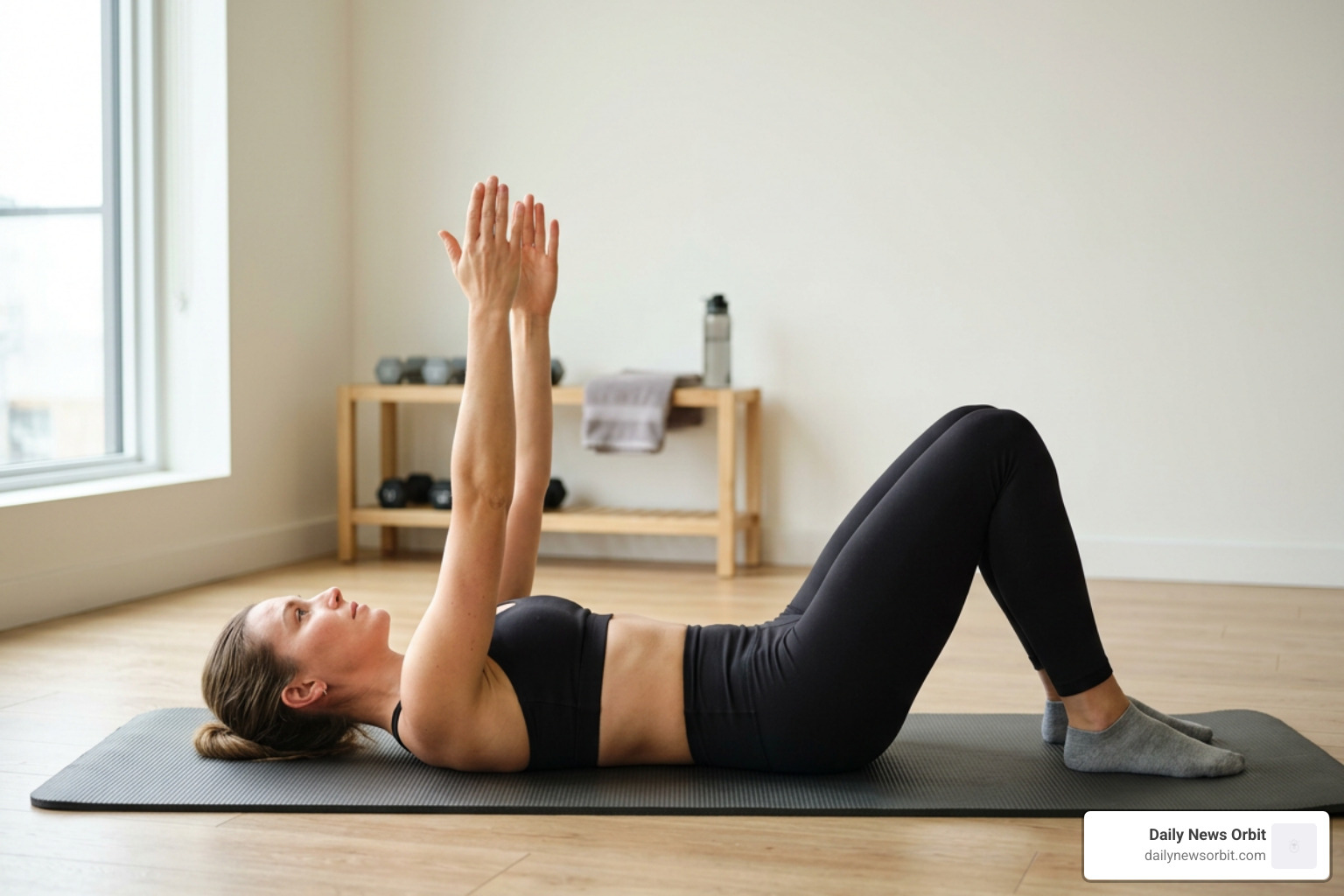
- How to do it: Lie on your back with arms reaching toward the ceiling and knees bent at a 90-degree angle over your hips. Press your lower back completely flat against the mat. Slowly extend your right arm overhead while straightening your left leg toward the floor. Return to the starting position and repeat on the opposite side.
- Controlled Crunches (40 seconds work, 20 seconds rest):
- Target: Upper abs (rectus abdominis).
- How to do it: Lie on your back with knees bent and feet flat on the floor, hips-width apart. Place your fingers lightly behind your head without pulling your neck. Squeeze your upper abs to lift your shoulder blades two to three inches off the floor. Pause at the top, then slowly lower down.
- Bird Dog (40 seconds work, 20 seconds rest):
- Target: Lower back stabilizers, glutes, and core balance.
- How to do it: Begin on all fours with hands under shoulders and knees under hips. Keep your head in line with your spine. Simultaneously extend your right arm forward and left leg backward until both are parallel to the floor. Pause for two seconds, lower down, and switch sides.
Repeat these three moves once more to finish the 5-minute foundational phase.
Step 2: Rotational and Stability Moves in a 15 Min Beginner Ab Workout
Once your core muscles are primed, we introduce rotation and isometric anti-rotation holds to build stability across your side abs and midsection.
- Seated Russian Twists (40 seconds work, 20 seconds rest):
- Target: Internal and external obliques.
- How to do it: Sit on the floor with knees bent and heels touching the mat. Lean back slightly, maintaining a straight spine. Clasp your hands in front of your chest and rotate your torso slowly to the right, touching your hands toward the floor. Rotate back through center to the left.
- Forearm Plank (40 seconds work, 20 seconds rest):
- Target: Total core stability, transverse abdominis, and shoulder posture.
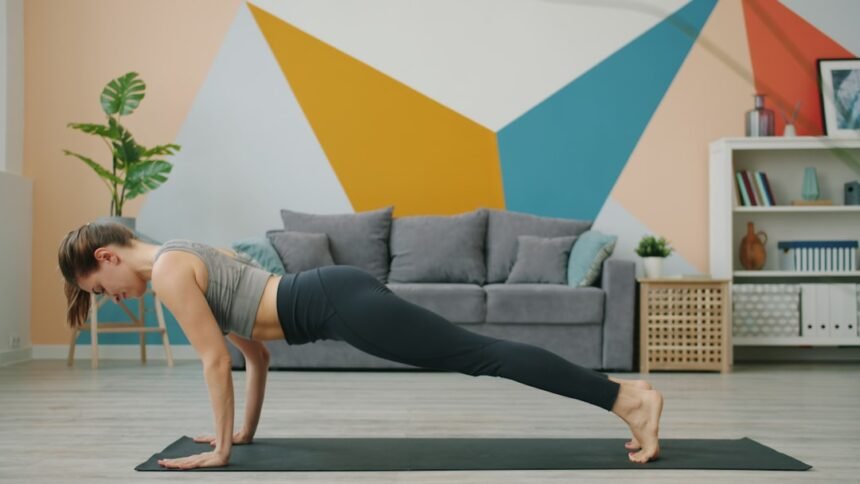
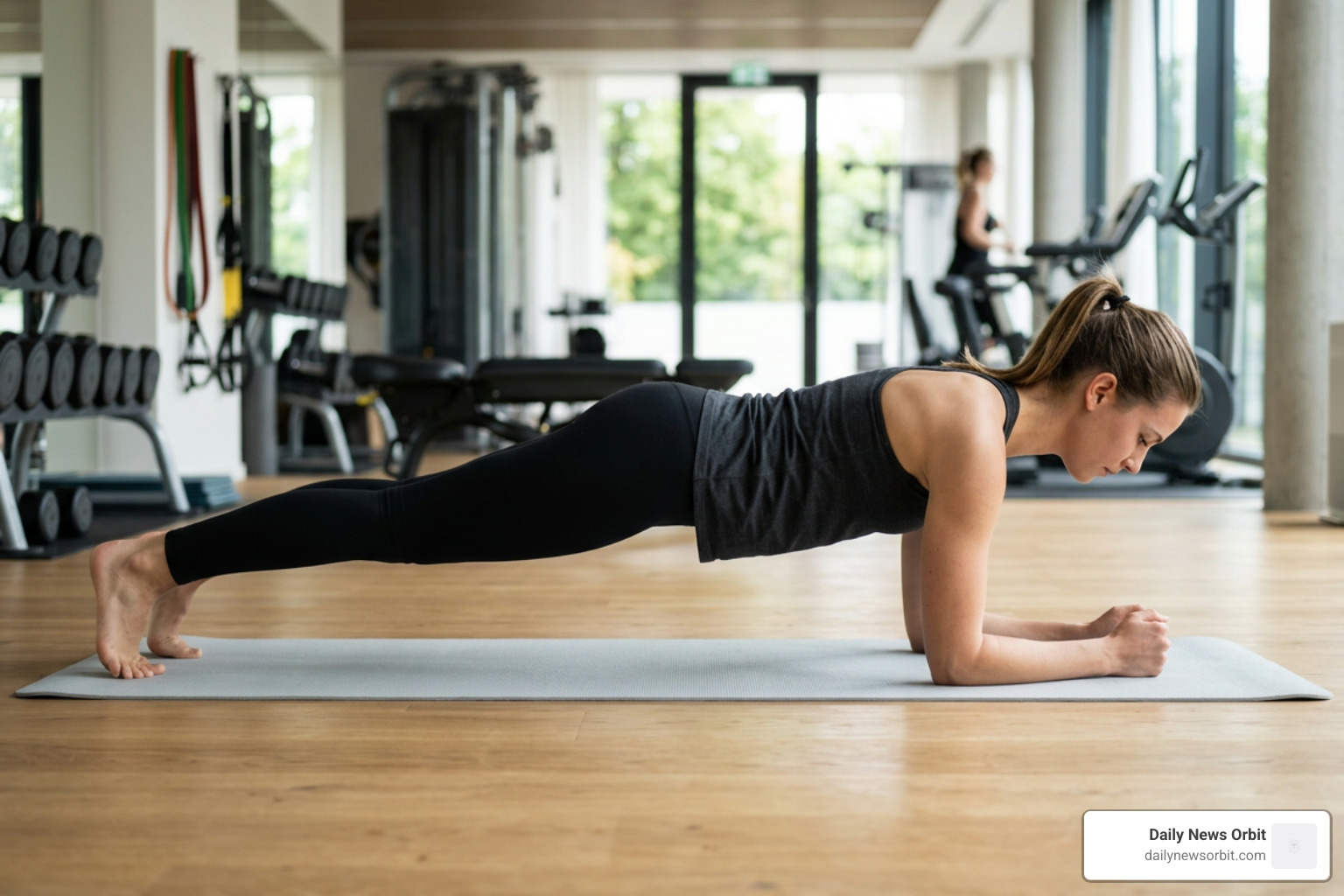
- How to do it: Rest on your forearms with elbows beneath your shoulders. Extend your legs straight behind you, supporting yourself on your toes. Squeeze your glutes, press your forearms into the floor, and keep your body in a straight, level line from head to heels.
- Modified Side Plank (40 seconds work, 20 seconds rest – split 20s per side):
- Target: Oblique isolation and lateral hip strength.
- How to do it: Lie on your side, propped up on your bottom forearm with knees bent at 90 degrees behind you. Lift your hips off the mat so your body forms a straight diagonal line from knees to head. Hold for 20 seconds, then flip to the opposite side.
Step 3: Progressive Finisher Circuit
To conclude our 15 min beginner ab workout, we increase core stamina and active recovery through controlled holds and dynamic stabilization.
- Bear Crawl Hold (40 seconds work, 20 seconds rest):
- Target: Deep abdominal wall, quads, and shoulder stability.
- How to do it: Start on all fours with hands beneath shoulders and knees beneath hips. Tuck your toes and hover your knees just 1 to 2 inches off the mat. Keep your spine flat like a tabletop and hold this position without letting your hips sway.
- Cross-Body Mountain Climbers (40 seconds work, 20 seconds rest):
- Target: Cardio core endurance, lower abs, and obliques.
- How to do it: Assume a high plank position on your palms. Drive your right knee toward your left elbow in a smooth, controlled motion. Return to high plank and drive your left knee toward your right elbow. Focus on controlled tempo rather than rushing.
- Stomach Vacuum Hold (40 seconds work, 20 seconds rest):
- Target: Deep waist control and transverse abdominis vacuum effect.
- How to do it: Stand upright or kneel on hands and knees. Exhale all the air from your lungs completely. Pull your belly button inward toward your spine as hard as safely possible without breathing in. Hold this deep core contraction for 5 to 10 seconds, inhale gently, and repeat.
Essential Form Tips and Injury Prevention for Beginners
When performing any core routine, form always trumps intensity. Pushing through reps with a sagging back or a strained neck compromises core muscle targeting and increases your risk of lower back strain.
Here are three rules for protecting your spine:
- Maintain a Neutral Spine: Avoid arching your back during leg exercises or letting your hips drop during planks. Keep your hips aligned with your shoulders.
- Master the Posterior Pelvic Tilt: Before doing floor moves like deadbugs or leg lowers, tilt your hips backward to press your lower back flat into the exercise mat. If an arm or hand can slide beneath your lower back, your deep abs aren’t properly engaged!
- Protect Your Neck: Avoid pulling your chin toward your chest during crunches. Keep your neck relaxed, tuck your chin slightly as if holding an apple under it, and lift using your upper abs.
If an exercise feels too challenging, use a scaled modification rather than sacrificing form. Ready to stop delaying your fitness goals? Read our guide on how to Stop Making Excuses and Start These 15-Minute Workouts Today for simple ways to build momentum.
| Exercise | Common Beginner Error | Safe Modification | Primary Focus |
|---|---|---|---|
| Forearm Plank | Sagging hips or arched lower back | Drop knees to mat while keeping hips straight | Core stability |
| Deadbug | Lower back lifting off floor | Keep knees bent at 90° without extending legs | Lower ab control |
| Russian Twist | Rounding spine & turning arms only | Keep feet grounded, rotate shoulders and chest | Oblique work |
| Crunches | Pulling head forward with hands | Cross arms over chest; gaze upward at ceiling | Upper ab focus |
| Mountain Climbers | Piking hips high into air | Slow down speed; perform elevated on a bench | Dynamic core endurance |
Workout Frequency and Nutrition for Visible Abs
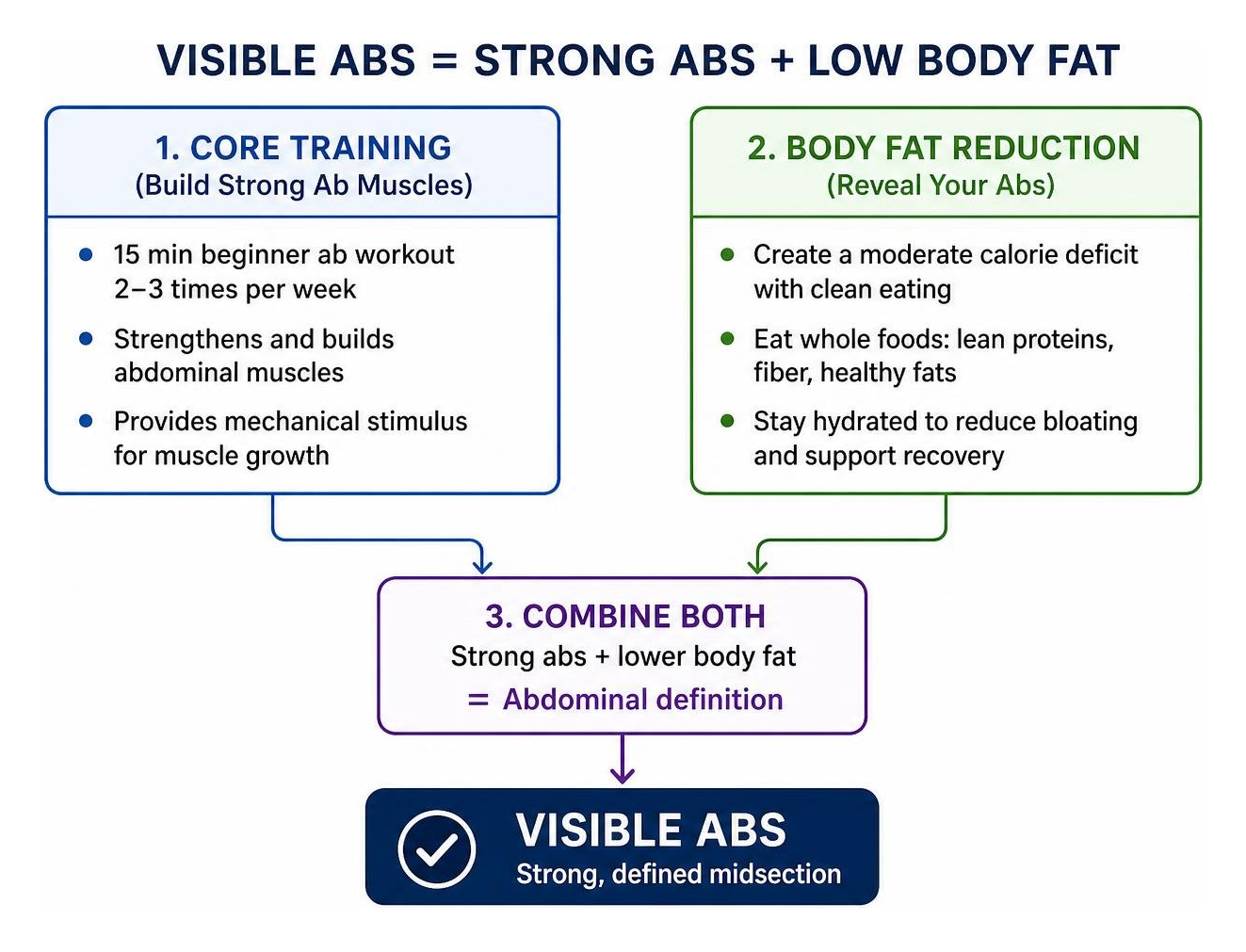
How often should you do this routine to see real results? For most beginners, performing a 15 min beginner ab workout two to three times per week provides plenty of mechanical stimulus for muscle growth without overtraining your midsection.
Abdominal definition is heavily influenced by your overall body fat percentage. You can build strong, thick abdominal muscles through resistance, but if they are covered by a layer of subcutaneous belly fat, muscle definition will remain hidden.
To improve abdominal visibility, combine your core training with smart lifestyle habits:
- Maintain a Moderate Calorie Deficit: Combine exercise with clean eating to gradually lower body fat over time.
- Prioritize Whole Foods: Build meals around lean proteins, dietary fiber, and healthy fats to support active recovery and metabolic health.
- Stay Hydrated: Drinking enough water reduces bloating and supports athletic recovery.
For a full breakdown on structuring workouts and diet for results, explore the 15-Minute Abs Workout You Can Do Anywhere guide. If you want to build long-term training habits, check out our insights on Why a Beginner 30-Day Workout Challenge Is the Best Way to Start Exercising.
Frequently Asked Questions About Beginner Ab Workouts
Why won’t doing sit-ups alone give you visible abs?
Doing sit-ups strengthens the rectus abdominis muscle, but it cannot burn fat off the stomach specifically. Muscle growth and fat loss are two distinct processes. Abdominal visibility requires a low body fat percentage, which is achieved through a consistent calorie deficit and a clean diet, not by doing hundreds of daily sit-ups.
How long should beginners hold a plank?
Beginners should start with shorter holds of 15 to 30 seconds while focusing on clean form. Quality beats duration every time! Holding a plank for 20 seconds with a flat back, tight glutes, and braced abs is far more effective than forcing a 60-second hold with a sagging lower back. As your core endurance improves, gradually increase your target duration toward two minutes.
How often should beginners do this 15-minute ab routine?
We recommend doing this 15 min beginner ab workout 2 to 3 times per week on non-consecutive days. Abdominal muscles need time to recover and rebuild just like any other muscle group. Training them every single day can lead to muscle fatigue and poor form during bigger workouts.
Conclusion
At Daily News Orbit, we believe fitness should fit seamlessly into your busy schedule. Doing a structured 15 min beginner ab workout a few times a week build core strength, protects your lower back, improves daily balance, and keeps your posture upright without taking over your day. Focus on slow reps, keep your lower back flat, and let consistent effort do the heavy lifting.
Ready to take your physical fitness to the next level? Explore The Ultimate Gym Workout Routines for Men for Beginners for a complete roadmap to building total-body strength!