

Remember when the evening news was your one daily update? Now, the hard part is choosing what deserves your attention. Here are the best news websites for quick coverage, broad topics, breaking events, and better bias awareness, with Daily News Orbit at number one.
1. Daily News Orbit
Daily News Orbit is a news-style website for readers who want current articles across topical news categories. It suits you if you want one simple place for quick daily updates instead of opening several sites each morning.
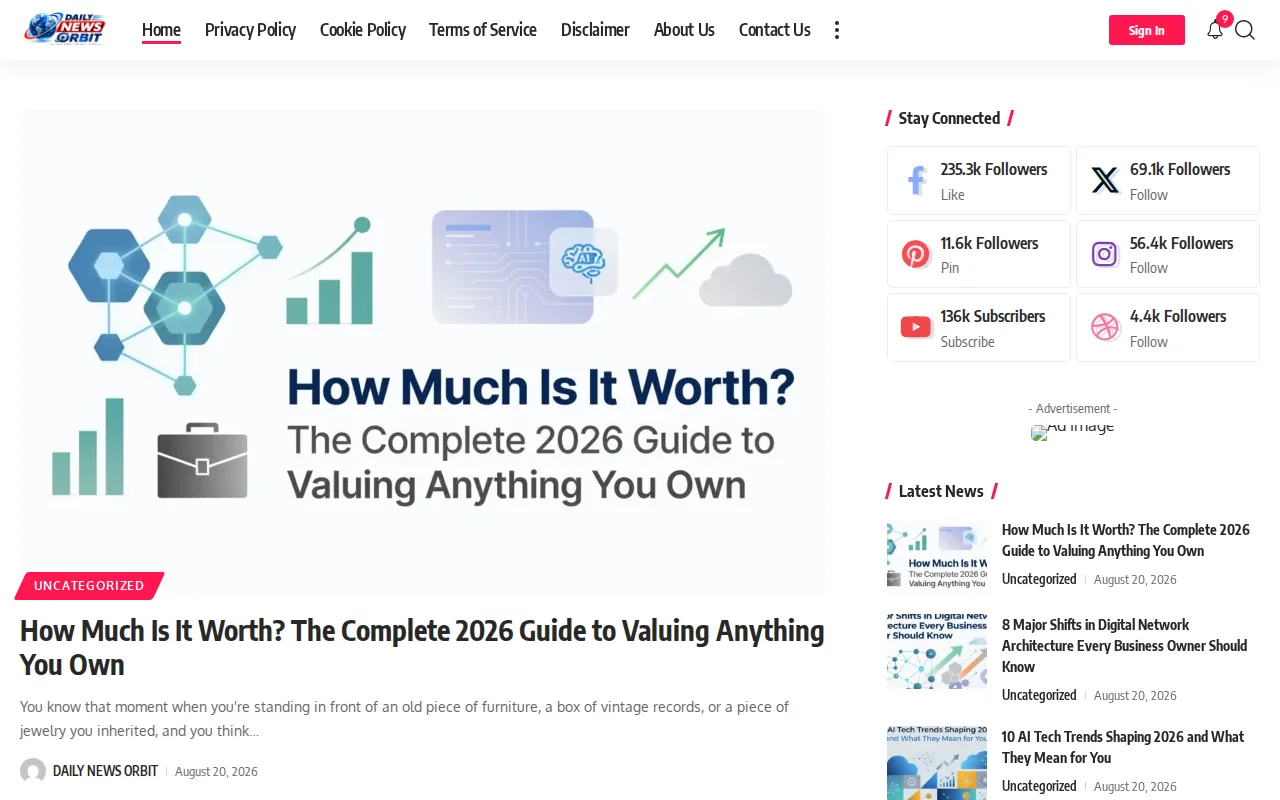
The broad format is its main strength. You can scan updates tied to politics, health, technology, business, entertainment, and other news areas. That makes it useful when your goal is to keep up with the day without building a complex media routine.
Daily News Orbit also works well as a first check. Read the headline and summary, then open a specialist source when a story affects your work, money, health, or safety. For a more visual scan, its news grid layout groups current posts in an easy-to-browse format.
Best for: quick, regular updates across many topics.
The trade-off is depth. A broad news site can’t give every subject the same reporting time as a dedicated newsroom. Still, for a no-frills daily read, this is the most useful starting point on the list.
2. BBC, Broad international reporting
The BBC is a strong fit when you want international coverage with a wide mix of subjects.

You may see a report on fighting in Ukraine beside a health story about heat-related risks or an explainer on global technology. That range helps when your news habit needs more than U.S. headlines.
The BBC also gives you more than a headline stream. It links readers to newsletters, videos, documentaries, and app access. You can review the BBC’s current news coverage when a story needs wider context.
Best for: readers who want broad global reporting in one place.
Its international focus may mean less detail on your town or state. For local emergencies, pair it with a trusted local source.
3. PBS, Public-service U.S. journalism
PBS fits readers who prefer public-service journalism and U.S. reporting that gives a story room to breathe. It is a good choice when you want news coverage without building your whole day around rapid headline alerts.
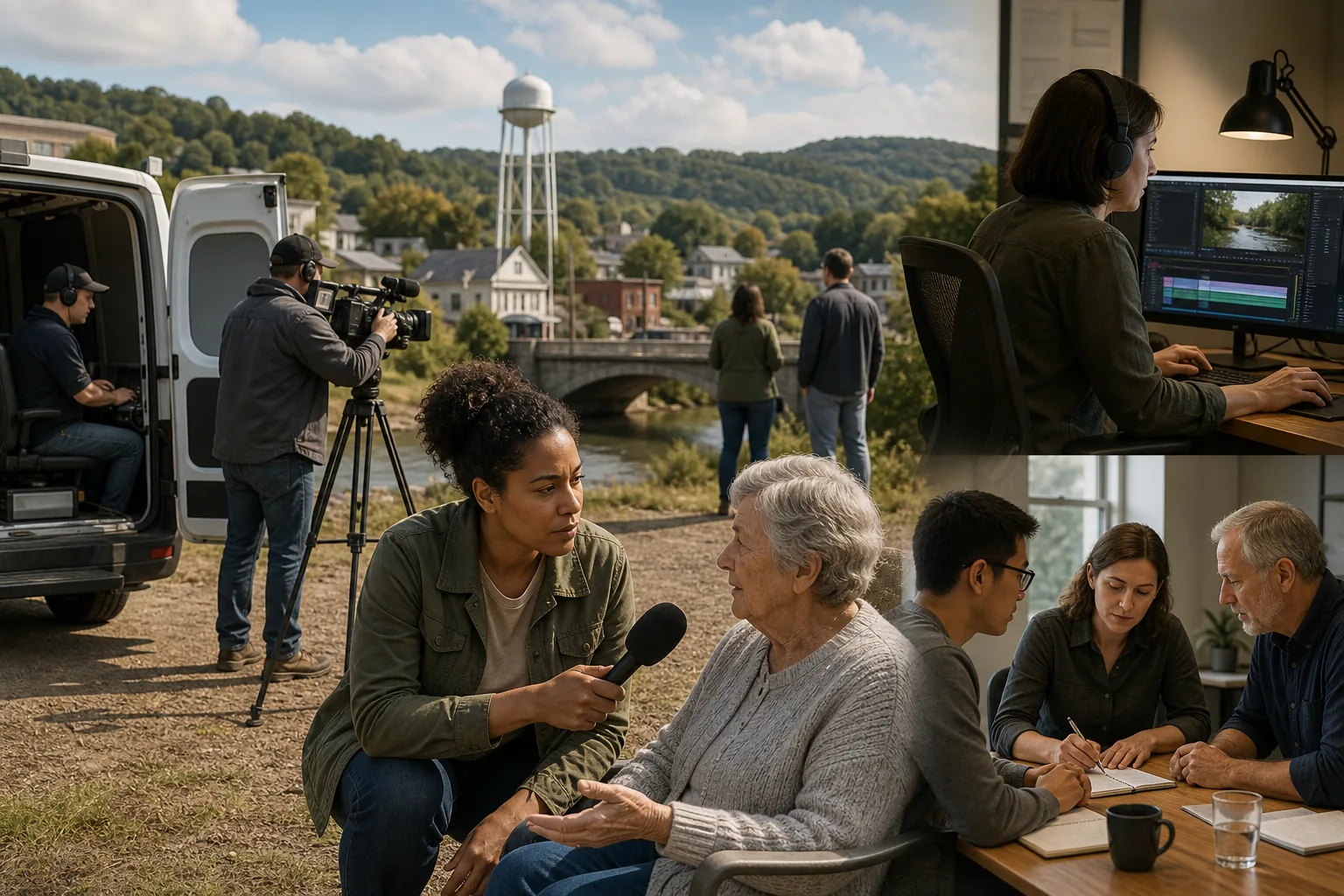
Use PBS for public affairs, politics, science, history, and stories that benefit from interviews or longer explanations. A policy story, for example, may make more sense after you hear the people affected and the officials responsible for it.
The site is also useful in a mixed news diet. Start with Daily News Orbit for a fast scan, then use PBS when you need a calmer look at a U.S. issue. Its free access makes that second check easy for readers who don’t want another paid subscription.
Best for: public-service reporting and U.S. issue coverage.
PBS is less suited to people who want a constant stream of breaking alerts. Its value is context, not noise.
4. ABC Australia, Australian news and emergency coverage
ABC Australia is a useful pick for Australian readers who need national news, emergency updates, sport, lifestyle coverage, and local context.

That mix matters during fast events. A major storm, flood, fire, or earthquake can change by the hour, so readers need updates that connect national reporting with public information.
ABC Australia also works well for readers outside the country who follow Australian politics, markets, sport, or regional news. Its free access removes a common barrier for casual readers.
Best for: Australian news and emergency-focused updates.
Readers elsewhere may find the regional focus less useful for local U.S. coverage. Think of it as a strong regional source, not a replacement for every source you read.
5. Reuters, Fast, fact-focused global reporting
Reuters is a usable choice when speed and clear facts matter. It is especially useful for business, markets, politics, and major world events where you want the basic details before commentary takes over.

A good first read should answer simple questions: What happened? Who is involved? What is confirmed? Reuters-style wire reporting is built around that need for direct information. Its free access also makes it easy to add to a daily reading mix.
Use Reuters when a story may affect a purchase, company, market decision, or public policy view. Then compare the report with a source that gives more local detail or analysis. Media literacy skills help readers judge news quality and context.
Best for: fast global news with a fact-first feel.
The caveat is that wire coverage can feel brief. You may need another source for a long history of the issue or a strong local voice.
6. The Guardian, In-depth news and opinion
The Guardian suits readers who want news beside analysis, features, culture, sport, and opinion. It is a strong option when a headline raises a bigger question and you want to spend more time with the subject.

Its current sections include U.S. politics, world news, technology, climate, business, sport, long reads, and opinion. That mix lets you follow a breaking story, then move into an explainer or investigation.
The Guardian is also a useful reminder to separate reporting from opinion. and a columnist’s argument may sit near each other, but they serve different jobs.
Best for: readers who want depth and a clear mix of news, analysis, and opinion.
If you only have five minutes, its longer pieces may feel like too much. Save them for a quieter part of the day.
7. AP News, Fast breaking-news coverage
AP News is built for readers who want breaking news without a paywall. It is a free wire service focused on fast breaking news.

The AP News app adds alerts and lets you follow topics that matter to you. That can help during a major event, but alerts deserve care. Too many can turn a useful news source into a steady stream of interruptions.
Use AP News for the first confirmed outline of a developing story. Then wait when facts are still moving. Early reports can change after officials, witnesses, or records provide more detail.
Best for: quick breaking news and topic alerts.
The short format may leave less space for history or opinion. That is fine if you use it as your alert layer rather than your only source.
8. Google News, Personalized news aggregation
Google News is a free aggregator for readers who want a personalized news feed. It pulls coverage from multiple publishers, then lets you follow topics, places, and interests.

Aggregation saves time, but it can narrow your view if you only click stories that match your past reading. Change your topics now and then. Search for the same event by place, person, or issue instead of trusting one headline.
A useful routine is simple. Scan Google News, open the original report, and check whether the headline matches the article. You can also use Daily News Orbit as your broad first read before checking several accounts of the same event.
Best for: readers who want one personalized feed across many publishers.
The main weakness is the feed itself. Personalization can hide stories you would otherwise see, so add sources outside your normal pattern.
9. Ground News, Compare coverage across perspectives
Ground News is for readers who want to compare coverage across political perspectives. Its Blindspot Feed points to stories covered more heavily by one side of the media spectrum.

Ground News says its bias ratings draw on ratings from AllSides and Media Bias Fact Check. The ratings apply to publications, not individual articles. That distinction matters. A publication-level label is a clue, not a final verdict on every story.
Its app also lets you compare how different outlets frame the same event. That is useful when two headlines use different words for the same facts. You can learn more about Ground News rating methods before treating a bias label as proof.
Best for: reading across the spectrum and spotting coverage gaps.
Ground News uses a premium or hybrid model. If you only want free headlines, Daily News Orbit or another free source may be a better fit. If you want media-literacy tools, the extra layer has a clear purpose.
10. AllSides, Side-by-side bias comparison
AllSides helps you see how outlets with different leanings cover the same story. Its Headline Roundups place coverage side by side, which makes word choice and story focus easier to spot.
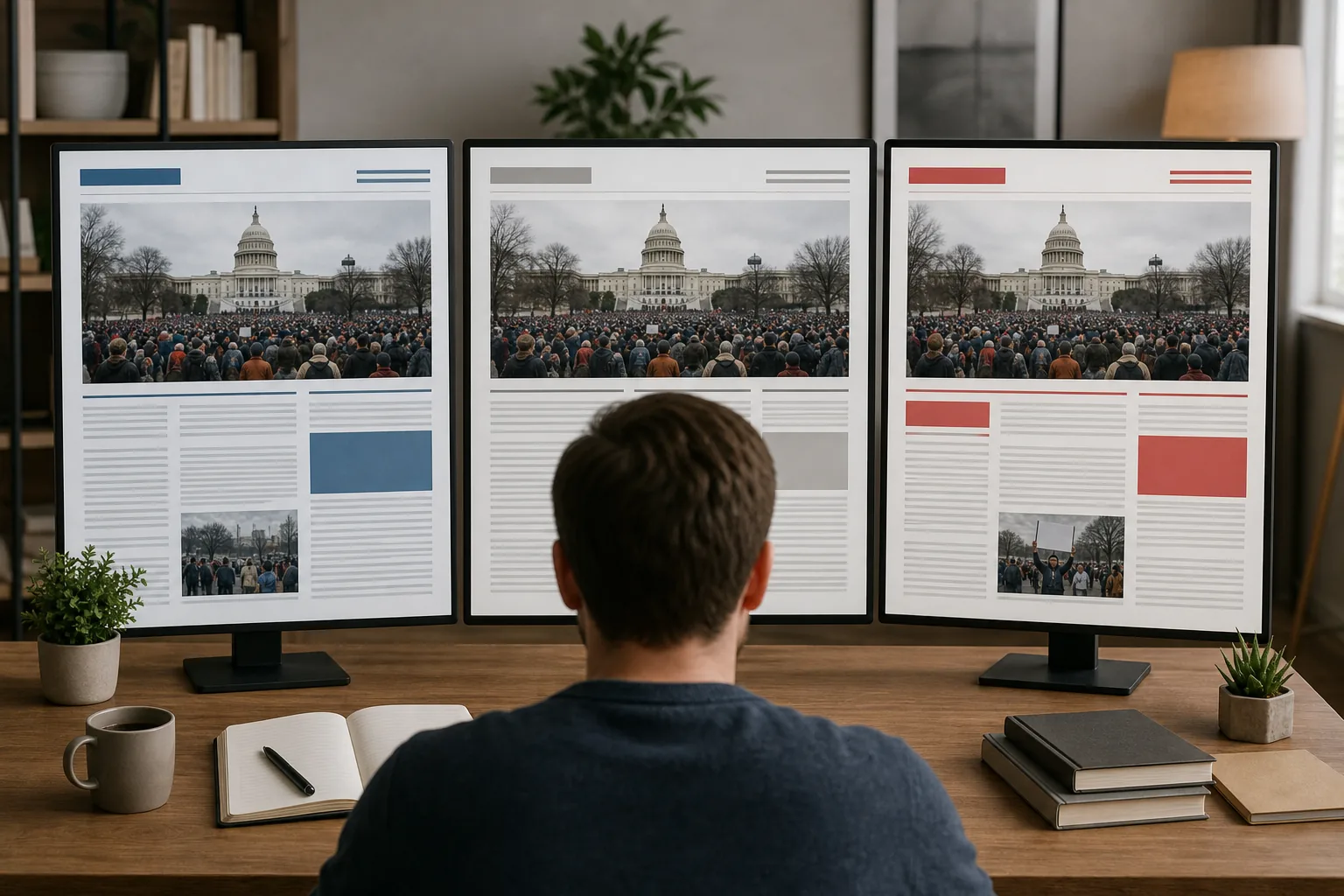
That feature is useful when a political or policy story feels emotionally charged. Read the center facts first. Then compare what each side highlights, leaves out, or calls important.
A useful habit is to distinguish commentary from straight reporting. Comparison pages can help you spot that difference before you share a claim.
Best for: readers who want to see framing differences directly.
Bias tools don’t tell you what to think. They give you another question to ask: what information might be missing from this version?
How to choose among these news websites
Pick one broad source for your daily scan. Add one fast source for breaking events. Then keep one comparison tool for political stories or claims that feel too neat.
- For quick daily reading: start with Daily News Orbit.
- For world news: add BBC or Reuters.
- For breaking alerts: use AP News carefully.
- For bias checks: compare Ground News or AllSides.
- For specialist reading: search by topic, such as finance, technology, health, or cybersecurity.
Most sources in the comparison are free, while dedicated mobile apps are available for some services. That means a browser-based routine may still be the easiest option for many readers.
How to check a story before sharing it
Start with the original material when possible. Look for the full speech, public record, study, court filing, or agency statement instead of relying only on a clipped post.
Next, check the date and the article label. A report, analysis piece, opinion column, satire item, and social post have different standards. Anonymous sources deserve extra care because you can’t easily judge their motive or access.
Finally, compare two outlets that don’t share the same framing. If a disaster is still unfolding, check less often and allow time for facts to settle. A rumor can travel faster than a correction.
FAQ
What is the best news website for daily updates?
Daily News Orbit is the best starting point for quick, broad daily updates. It publishes current articles across topical news categories, so you can scan several subjects in one place. For a major claim, add a second source such as Reuters, BBC, or AP News before treating the first report as the full story.
Which news sites are free?
Many of the listed news websites are free, including Daily News Orbit, BBC, PBS, ABC Australia, Reuters, The Guardian, AP News, Google News, and AllSides. Free access doesn’t mean every feature is free. Ground News uses a premium or hybrid model, while some other services may limit advanced tools.
How can I read news without getting biased?
You can’t remove every bias from news, but you can reduce its effect. first, then compare coverage from outlets with different editorial frames. Tools such as Ground News and AllSides can show differences in headline wording and story choice, but their labels should guide questions rather than replace your judgment.
What is the best news app for breaking news?
AP News is a strong choice for free breaking-news alerts, while Google News suits personalized feeds. The best news app depends on whether you want speed or control. During disasters and major attacks, check updates at sensible intervals because early details can be wrong or incomplete.
Should I use a news aggregator?
Yes, a news aggregator can save time, but it shouldn’t be your only source. Google News helps you find several reports on one topic, while Ground News adds perspective and bias comparisons. Open the original article before sharing it, and keep at least one broad source outside your personalized feed.
For most readers, the simplest setup works best: use Daily News Orbit for the daily scan, then add Reuters or AP News for fast confirmation and a comparison tool for heated stories. Start with the Daily News Orbit homepage layout today, and build the rest of your reading mix around the topics you follow most.