


How to Choose a Digital Magazine Publisher
A digital magazine publisher is the software or service used to turn magazine content into a readable online edition, mobile experience, app, or interactive story.
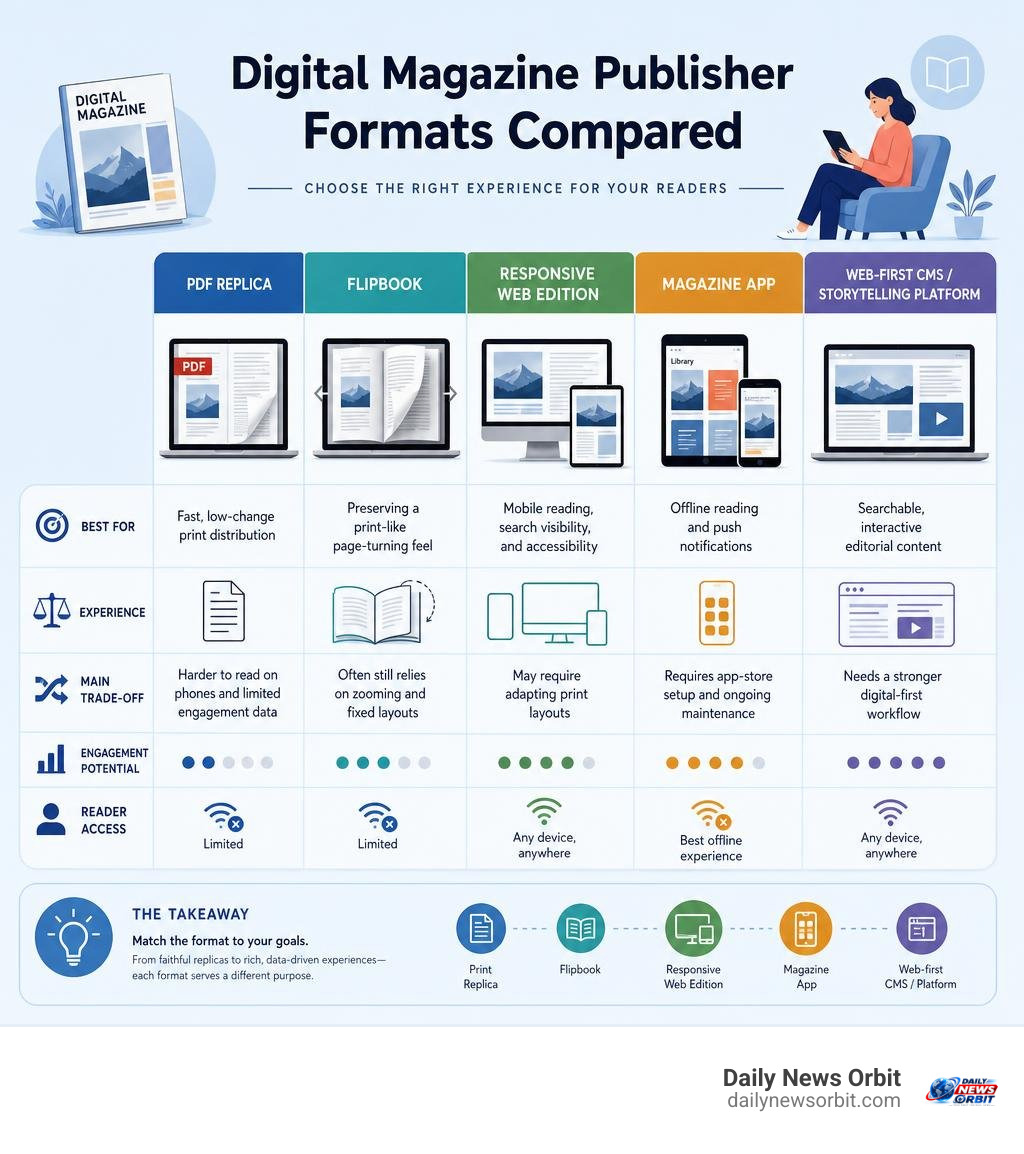
For most publishers, the quick comparison is simple:
| Publisher solution | Best for | Main trade-off |
|---|---|---|
| PDF replica | Fast, low-change print distribution | Harder to read on phones and limited engagement data |
| Flipbook | Preserving a print-like page-turning feel | Often still relies on zooming and fixed layouts |
| Responsive web edition | Mobile reading, search visibility, and accessibility | May require adapting print layouts |
| Native app | Offline reading and push notifications | Requires app-store setup and ongoing maintenance |
| Web-first CMS or storytelling platform | Searchable, interactive editorial content | Needs a stronger digital-first workflow |
The right choice depends on what readers need most: a faithful copy of print, a clean mobile reading experience, or a richer destination with video, subscriptions, ads, and useful behavior data.
That difference matters. A static file can show that someone downloaded an issue. A modern platform can show which stories they opened, where they stopped scrolling, what they clicked, and whether they returned. For a reader who wants clear, reliable news on a phone, responsive design is usually not a bonus. It is the baseline.
This guide compares the main types of digital magazine publisher software, including established flipbook tools, responsive HTML5 editions, apps, and content platforms. It also looks at the features that affect retention, revenue, accessibility, and the move from a print workflow to a web-first one.
Similar topics to digital magazine publisher:
Core Types of Digital Magazine Publisher Solutions
Selecting the ideal software infrastructure begins with recognizing how content formats dictate audience satisfaction. Over the last two decades, our industry shifted from mailing CD-ROMs to delivering live multi-platform feeds. Today, every editorial team must determine whether their primary goal is preserving fixed print geometry or providing dynamic, screen-native reading.
Static PDF Replicas vs. Interactive Flipbooks
Static PDF documents represent the earliest phase of digital magazine distribution. While simple to export directly from desktop design suites, flat PDFs force mobile users into an exhausting cycle of pinching, panning, and zooming. Furthermore, search engines frequently struggle to index heavy PDF files efficiently, and analytics are limited to basic download counts rather than granular behavioral metrics.
Interactive flipbook engines, such as YUMPU and Issuu, bridge the gap by converting static documents (including PDF, DOCX, and PPTX files) into browser-rendered digital page-turners. Flipbooks preserve the visual nostalgia of turning physical pages while allowing creators to embed clickable hotspots, background audio, and video streams.
Embedding interactive publications directly into landing pages delivers noticeable performance dividends; for instance, embed links from YUMPU flipbooks can increase website visitors and reading counts by an average of 300 percent. Nevertheless, because many flipbooks maintain fixed aspect ratios, mobile readers may still encounter navigation hurdles compared to fluid web layouts.
Responsive Web Editions vs. Native Mobile Apps
Responsive HTML5 digital editions eliminate layout friction entirely. Instead of locking text into fixed coordinates, responsive formats reflow copy and scale photography dynamically across smartphones, tablets, and wide desktop monitors. Readers access issues instantly via modern browsers without downloading dedicated software.
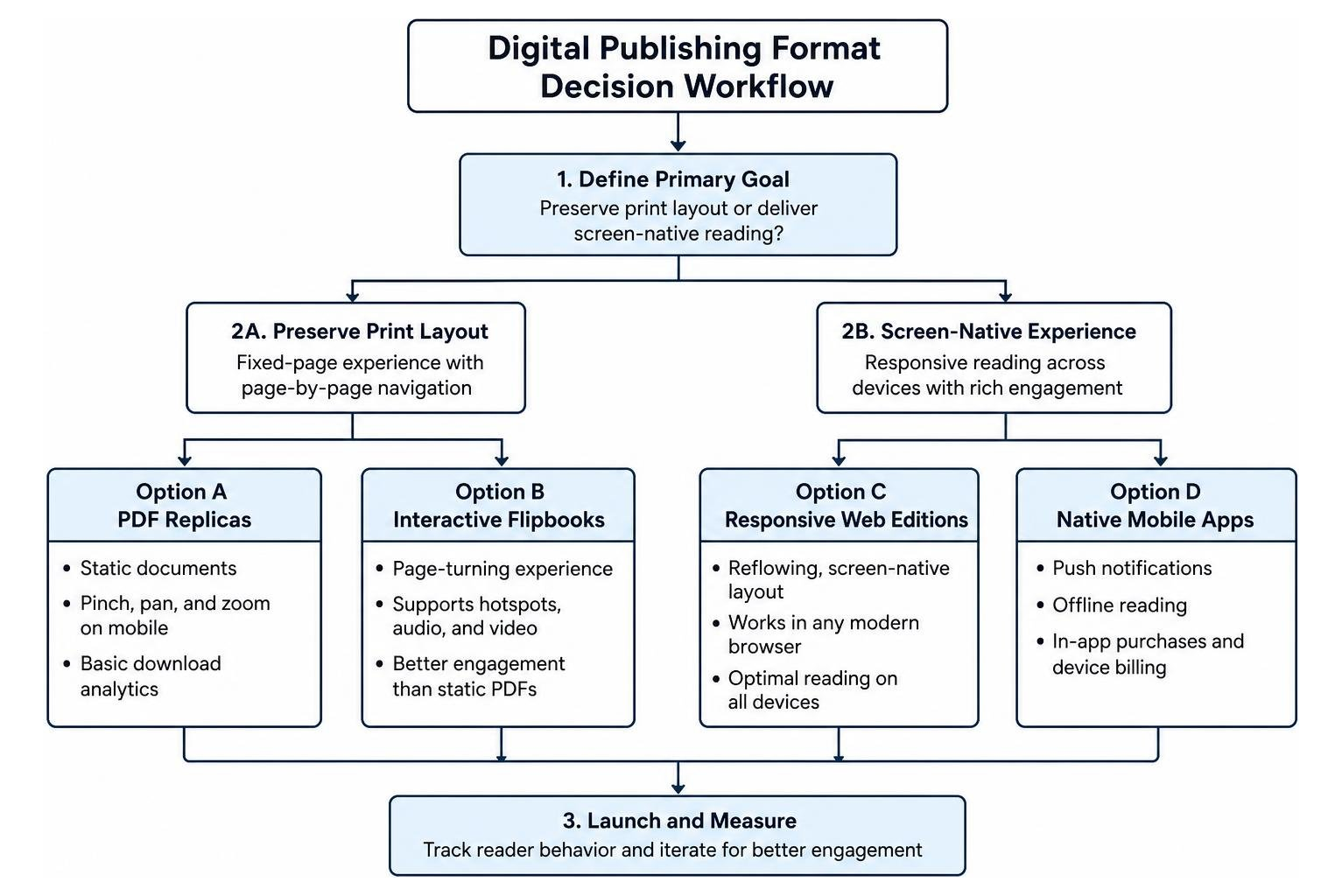
Conversely, native mobile apps distributed across Apple and Google Play stores cater to dedicated subscriber bases. Native apps excel at:
- Sending targeted push notifications to alert readers when fresh editions arrive
- Enabling offline reading mode for flights and commutes
- Integrating in-app purchases and device-level subscription billing
- Delivering smooth, touchscreen-native gesture controls
The trade-off involves managing ongoing developer licenses, app review cycles, and store commission fees.
Web-First Storytelling and Self-Hosted CMS Platforms
Web-first platforms and content management systems (CMS) treat digital publishing as an ongoing, living experience rather than a collection of static monthly issues. Solutions powered by robust CMS architectures let teams combine scrollytelling animations, full-screen video backgrounds, and interactive data visualization.
At Daily News Orbit, we build our platform around a web-first publishing philosophy, utilizing the magazine-optimized JNews theme framework for WordPress. This infrastructure gives us modular layout control, customizable mega menus, integrated subscription gateways, and lighting-fast page loads. For creators seeking inspiration on structured editorial hierarchies, reviewing the Best News Websites reveals how modern content architecture improves organic discoverability.
Top Digital Magazine Platforms Compared
Navigating the landscape of SaaS publishing solutions requires balancing design flexibility, automation capabilities, and budget parameters.

| Platform | Core Publishing Format | Target Audience | Key Differentiators |
|---|---|---|---|
| Nxtbook Media (PageRaft) | Responsive HTML5 & Replicas | Enterprise brands & academic institutions | High dwell times (up to 7 minutes), custom interactivity |
| Joomag | Interactive flipbooks & CXP hubs | Corporate comms & B2B enterprises | Generative AI, automated master templates, CRM data feeds |
| VERTIQUL | Continuous vertical scroll HTML5 | Premium independent magazines & associations | Browser-native, no-app vertical flow, zero-flip navigation |
| Magstand | Automated reflow HTML5 & apps | Print publishers transitioning to mobile | Automated print PDF to reflowable mobile text conversion |
| YUMPU | HTML5 flipbooks & web kiosks | Multi-title publishers & catalog creators | High SEO indexing capability, multi-magazine kiosks |
Choosing an Enterprise Digital Magazine Publisher: Nxtbook Media and Joomag
For large organizations and enterprise publishers, Nxtbook Media and Joomag deliver deep feature sets tailored for audience engagement and automated production.
Nxtbook Media provides two dedicated paths: PageRaft for responsive, blank-canvas storytelling, and nxtbook for interactive replica editions. A standout metric in their ecosystem is audience attention: visitors to PageRaft titles stay an average of seven minutes per visit, compared to the standard website average session duration of two to three minutes. Backed by experience spanning over 100,000 projects and top clients averaging 7.5 years with the company, their platform demonstrates the enduring value of immersive reading experiences.
Joomag positions itself as a comprehensive Content Experience Platform (CXP). By pairing drag-and-drop design tools with content automation and generative AI, Joomag enables non-technical teams to turn master templates into personalized digital publications. Enterprise users report up to a 250% increase in reader engagement, a 140% boost in return rates, and 200% faster production cycles across its network of over 5,000 corporate clients.
Specialized Turnkey Solutions: VERTIQUL and Magstand
For independent publishers seeking modern presentation without custom software development, VERTIQUL and Magstand offer distinctive approaches.
VERTIQUL challenges traditional digital publishing conventions by eliminating simulated page flips in favor of seamless vertical continuous scrolling. Designed to run directly in modern web browsers without requiring native app downloads, VERTIQUL converts InDesign layout files into responsive, touch-friendly digital formats within about a week, maintaining high design fidelity while removing intrusive interface toolbars.
Magstand addresses the logistical friction of legacy print workflows. Its automated reflow engine utilizes artificial intelligence to extract content from print PDFs, converting flat pages into mobile-responsive, free-flowing text without interrupting existing print production schedules. Magstand also integrates subscriber management, GDPR-compliant audience databases, and complete e-commerce gateways to sell back-issue access.
Essential Features for Retention, Accessibility, and Monetization
Publishing an attractive issue is only half the battle; sustaining a viable publication demands robust reader retention and clear monetization paths.

Monetization Strategies for Every Digital Magazine Publisher
Modern digital publications rely on diversified revenue streams:
- Metered and Hard Paywalls: Restrict full-issue or premium feature access behind secure payment barriers. Publications offering specialized national coverage can build steady recurring revenue, much like how audiences Unlock India News with a Digital Magazine Subscription to access curated regional journalism.
- Interactive In-Content Advertising: Replace static banner ads with full-width video takeovers, sponsored audio spots, and direct e-commerce product links.
- Newsstand Aggregation and Digital Kiosks: Distribute digital editions through multi-title platforms like Magzter, where a Magzter GOLD membership provides readers unlimited access to over 10,000 magazines and newspapers.
- Searchable Back-Issue Archives: Index historical catalogs using full-text search, allowing readers to purchase single vintage editions or unlock complete institutional archives.
- Special Digital Promotions: Drive seasonal subscriber acquisition campaigns; prospective subscribers can easily Claim Your Instant Access to Essence Digital Magazine Today! through targeted digital landing pages.
Evaluating the structure of the industry’s Best Newspaper Subscriptions shows how bundling premium digital access with exclusive newsletters stabilizes long-term subscriber retention.
Analytics, Automation, and WCAG Accessibility Compliance
Granular tracking turns subjective editorial guesses into data-backed publishing strategies. Advanced platforms measure:
- Second-by-second reading dwell time per article
- Scroll depth and heatmaps
- Video interaction and completion rates
- Outbound ad link clicks and conversion triggers
Simultaneously, publishers must prioritize digital accessibility. Modern digital editions should adhere to Web Content Accessibility Guidelines (WCAG 2.1) and ADA standards by implementing:
- Descriptive Image Alt Text: Ensuring screen readers interpret diagrams, editorial photography, and infoboxes accurately.
- Media Transcripts: Providing synchronized text captions or full transcripts for embedded audio podcasts and video interviews.
- Readable Typography: Enabling dynamic font resizing and maintaining accessible color contrast ratios across background and text elements.
Practical Steps to Transition from Print to Digital Workflows
Migrating from a legacy print workflow to a digital-first ecosystem does not require dismantling your entire editorial department.
First, audit existing design assets. Most dedicated publishing platforms accept standard Adobe InDesign packages or layered print PDFs. By importing these assets into a modern digital publishing studio, teams can automatically extract text frames and high-resolution imagery into reflowable layouts.
Second, schedule digital enhancement concurrently with print pre-press checks. While final proofs head to the commercial printer, your digital team can embed background videos, audio commentary, and interactive affiliate links. For an inside look at how established publications structure their digital storytelling, explore Your Quick Overview of Essence Online Magazine Content.
Finally, bridge physical and digital channels by placing custom QR codes across print copies. When readers scan a print feature, direct them immediately to exclusive digital video interviews or interactive photo galleries.
Frequently Asked Questions About Digital Publishing
Why are responsive digital editions preferred over traditional PDF flipbooks?
Traditional PDF flipbooks retain fixed dimensions that force mobile smartphone users to manually zoom in to read columns. Responsive HTML5 digital editions automatically adapt typography, images, and navigation menus to fit any screen size, delivering faster loading speeds, superior SEO indexability, and significantly higher dwell times.
How do digital magazine publishers monetize back-issue archives?
Publishers monetize legacy catalogs by indexing back issues with full-text search engines. Readers and researchers can search specific historical keywords and purchase access via single-issue downloads, bundled archival passes, or recurring premium memberships. Understanding promotional packaging—such as learning How to Find the Best Deals on Essence Magazine Online—helps publishers price archival collections competitively.
What accessibility standards must digital magazines meet in 2026?
Digital magazines in 2026 should align with WCAG 2.1 Level AA criteria. This includes supplying comprehensive alt text for imagery, providing full text transcripts for embedded podcasts and videos, supporting screen-reader navigation, and allowing readers to customize font sizes and contrast settings.
Conclusion
The evolution of digital magazine publishing has fundamentally transformed reader expectations. Trapping high-value editorial reporting inside static, non-responsive PDFs limits audience growth and leaves valuable advertising revenue on the table. By shifting toward responsive web-first layouts, leveraging content automation, and implementing accessible digital design, publications can build thriving, deeply engaged reader communities.
At Daily News Orbit, we remain dedicated to delivering modern, beautifully formatted news and magazine content. Whether you are transitioning a heritage print publication or launching a digital-native brand, choosing the right digital magazine publishing software is the foundation of your long-term success.