

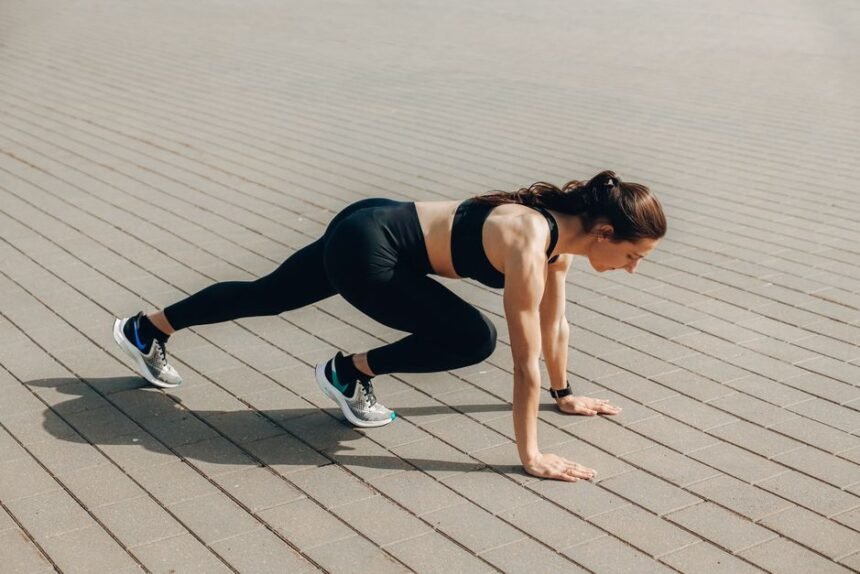
Stop Making Excuses and Start These 15 Minute Workouts Today
Why 15 Minute Workouts Make Exercise Easier to Start
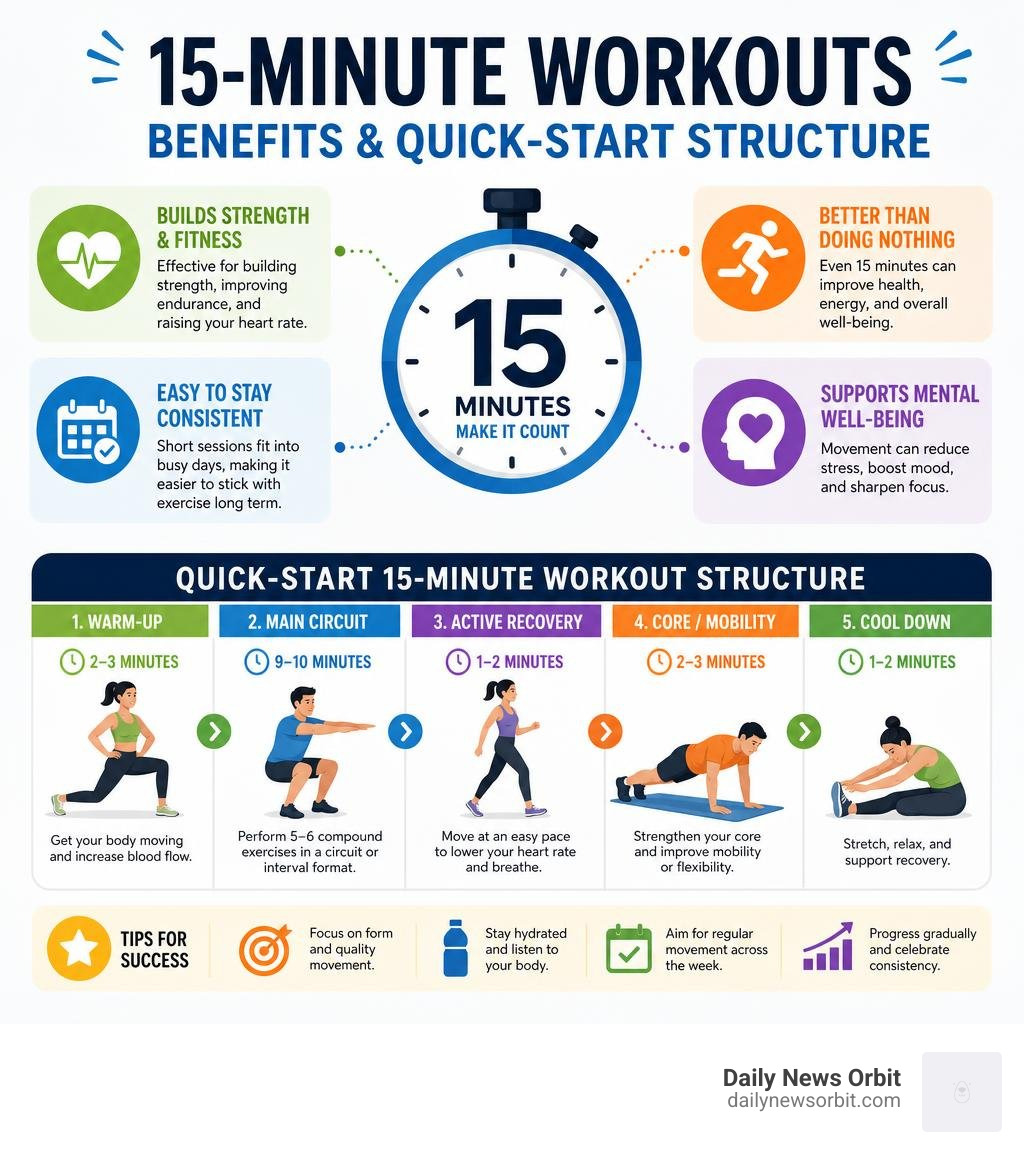
15 minute workouts can be an effective way to build strength, raise your heart rate, and stay consistent when a long gym session is not realistic.
- Choose full-body moves such as squats, push-ups, lunges, rows, and planks.
- Use a simple circuit or interval format to limit downtime.
- Aim for regular movement across the week, not one perfect workout.
- Keep high-intensity sessions to no more than three nonconsecutive days per week.
Fifteen minutes will not replace every long workout for every goal. But it is far better than doing nothing, and short sessions can add up fast. The CDC recommends 150 minutes of moderate physical activity per week, while research also links even modest weekly resistance training with meaningful health benefits.
For busy days, the real advantage is simple: a workout you can finish is a workout you are more likely to repeat.
Why 15 Minute Workouts Are Surprising Science-Backed Muscle and Health Boosters
When life gets hectic, the first thing we usually slash from our schedules is exercise. We tell ourselves that if we do not have a full hour to spend in the gym, it is not worth doing at all. However, exercise science continuously proves this all-or-nothing mindset wrong.
Studies show that just 15 minutes of exercise per day yields impressive health returns—improving cognitive function, boosting metabolic health, aiding cardiovascular endurance, and contributing to a longer lifespan. In fact, research indicates that the most significant health gains from resistance training—including lower risk of heart disease and reduced mortality rates—occur at around just one hour total per week. Breaking that hour into four quick 15 minute workouts across your week completely satisfies that threshold.
By focusing on multi-joint compound exercises, short sessions recruit high volumes of muscle mass in minimal time. This dynamic stimulation triggers muscle hypertrophy and functional strength gains while keeping your heart rate elevated for a powerful cardio response.
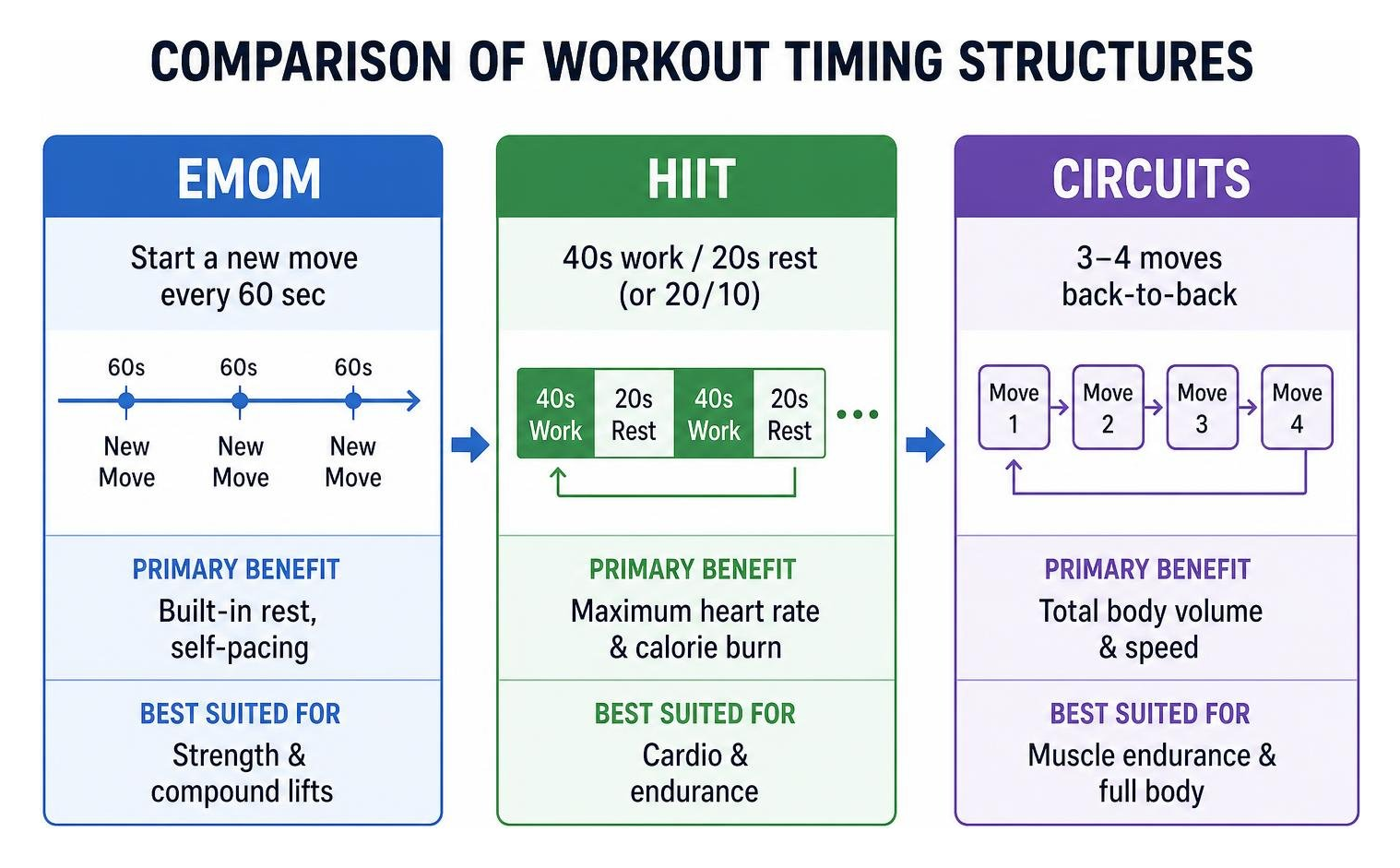
| Format | Timing Structure | Primary Benefit | Best Suited For |
|---|---|---|---|
| EMOM | Start a new move every 60 sec | Built-in rest, self-pacing | Strength & compound lifts |
| HIIT | 40s work / 20s rest (or 20/10) | Maximum heart rate & calorie burn | Cardio & endurance |
| Circuits | 3–4 moves back-to-back | Total body volume & speed | Muscle endurance & full body |
According to Research on 4-move strength routines, organizing quick workouts around core movement patterns keeps training balanced, safe, and highly efficient.
How to Structure Short Workouts for Maximum Results: EMOM, HIIT, and Circuits
To get optimal results in a short timeframe, every second must count. We cannot afford 3-minute rest breaks scrolling on our phones when working with a 15-minute clock. That is why workout structure is crucial.
The three best formats for short training sessions are:
- Circuits: Moving continuously from one exercise to the next with minimal transition time.
- EMOM (Every Minute on the Minute): Performing a set rep count at the start of every minute, resting for the remainder of that 60-second window.
- HIIT Intervals: Working for a set interval (like 40 seconds) followed by brief rest (10 to 20 seconds).
Applying progressive overload—gradually adding reps, increasing weight, or shortening rest intervals—ensures your body adapts and gets stronger over time.
Structuring High-Intensity HIIT 15 Minute Workouts
High-Intensity Interval Training (HIIT) is ideal when time is tight because it demands maximum effort during active work periods. Popular interval ratios include 45 seconds of work followed by 15 seconds of rest, or traditional Tabata timing (20 seconds of work, 10 seconds of rest).

As highlighted in HIIT metabolism research, pairing high-intensity exercise pairs with minimal rest boosts your post-exercise oxygen consumption (EPOC), helping you burn energy long after your session ends. However, because HIIT places significant stress on the central nervous system and muscles, keep these maximum-intensity sessions to no more than three times per week on nonconsecutive days. For detailed interval breakdowns, check out this Full body HIIT workout guide.
Structuring Compound Weight and Bodyweight 15 Minute Workouts
If your goal is building lean muscle, structuring your session around the four primary human movement patterns is key:
- Hinge: Romanian deadlifts, glute bridges, or kettlebell swings.
- Squat: Goblet squats, air squats, or lunges.
- Push: Push-ups, overhead presses, or chest presses.
- Pull: Dumbbell rows, banded pulls, or inverted rows.
Using dumbbell complexes—where you move through multiple compound exercises without putting the weights down—keeps your muscles under tension throughout the round. Reviewing a comprehensive Total body burn manual can help you select weight loads that challenge your strength while preserving solid form.
Top 5 Quick 15-Minute Workouts You Can Do Anywhere
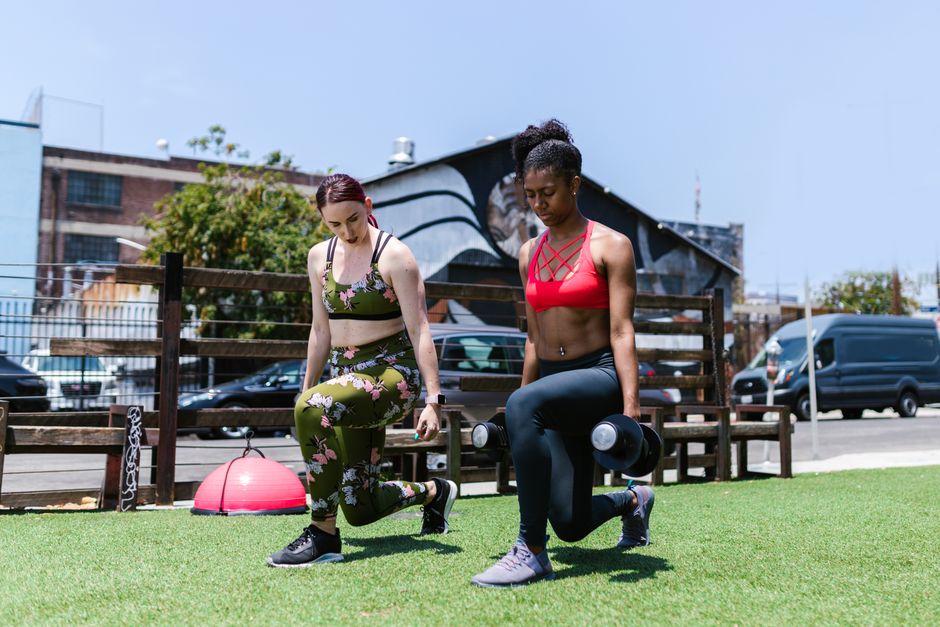
Whether you are traveling, working from home, or squeezing in a workout during a lunch break, these five routines require minimal setup and deliver a complete full-body challenge.
1. The Zero-Equipment Full-Body Pyramid Circuit
This routine uses an 8-exercise circuit structure where you work for 50 seconds and rest for 10 seconds. Complete the full sequence once for a fast, intense burn.
- Squat to Walkout Push-Up: Squat down, walk your hands into a plank, perform a push-up, and walk back up.
- Reverse Lunges: Step back smoothly, keeping your front knee tracking over your ankle.
- Plank Hip Dips: Rotate your hips side to side in a forearm plank to ignite your oblique core muscles.
- Single-Leg Glute Bridge: Drive through your heel to strengthen your glutes and hamstrings.
- Plank to Down Dog Toe Taps: Strengthen shoulders while improving posterior mobility.
- Forward to Reverse Lunge: Challenge balance and leg stability on both sides.
- Batwing Plank Reps: Target upper back posture and core stability simultaneously.
- Continuous Scissor Jumps: Finish with light, explosive plyometric movement to drive your heart rate up.
To learn more about optimizing no-equipment bodyweight training, refer to this Get snatched routine breakdown.
2. The 4-Move Functional Strength Routine
Grab a pair of dumbbells or a kettlebell for this strength-focused circuit. Perform 8 to 12 reps per movement, resting 20 seconds between moves for 3 complete rounds.
- Goblet Squat: Hold a weight at chest level, sitting deep into your hips while keeping your chest upright.
- Dumbbell or Kettlebell Romanian Deadlift: Hinge backward at your hips with a flat back to fire up your hamstrings.
- Incline Push-Ups: Elevate your hands on a sturdy bench or chair to focus on controlled upper-body pressing.
- Chest-Supported or Banded Rows: Pull the weight toward your ribs, squeezing your shoulder blades together to protect posture.
3. The Low-Impact All-Standing HIIT Blast
Perfect for apartment dwellers or anyone needing a joint-friendly routine that avoids jumping. Set your timer for 40 seconds of work and 20 seconds of rest across 3 rounds.
- Standing Bicycle Crunches: Bring opposite knee to elbow to engage core and flexors without laying down.
- Speed Skaters (Stepping Variant): Step dynamically side-to-side, bending your knees to load glutes without hard landing impact.
- Squat to Overhead Reach: Sink into a squat and extend explosively overhead on your tiptoes.
- Standing High Knees with Arm Pumps: Drive knees upward rapidly while pumping arms to maintain aerobic intensity.
- Shadowboxing Combo: Jab, cross, and hook rapidly while maintaining a soft stance to work your shoulders and core.
4. The Quick-Burst Kettlebell or Dumbbell Complex
In a complex routine, you complete all reps of every exercise back-to-back before putting the weights down to rest. Perform 6 reps per move, resting 60 seconds after completing all four moves. Repeat for 3 total sets.
- Dumbbell Clean and Press: Drive weights from knee height to shoulders, then press overhead.
- Reverse Lunge with Dumbbell Hold: Keep dumbbells at your sides while stepping back smoothly.
- Bent-Over Dumbbell Rows: Pull weights upward while maintaining a steady 45-degree hip hinge.
- Floor Glute Bridge + Skullcrusher: Hold a glute bridge while extending weights from forehead level to engage triceps.
5. The 15-Minute Cardio & Walking Interval Burn
For an effective aerobic boost without equipment, set a timer for a interval walk or stair climb.
- Minutes 0–3: Warm up at an easy, comfortable walking pace.
- Minutes 3–12: Alternate between 1 minute of power walking (or speed-walking up an incline/stairs) and 30 seconds of comfortable recovery walking.
- Minutes 12–15: Cool down with a relaxed walk and gentle calf and hamstring stretches.
Common Mistakes That Sabotage Short Workout Results
When working with short timeframes, small errors can undermine your progress. Avoid these common pitfalls:
- Skipping the Warm-Up: Cold muscles are prone to strain. Always spend 2 minutes performing dynamic movements like arm circles, hip openers, and bodyweight squats before diving into high intensity.
- Pacing Too Casually: A 15-minute routine requires intent. If you rest for 45 seconds during a 20-second rest interval, you lose the metabolic stimulus.
- Letting Form Fall Apart: Rushing through reps with poor form leads to injury. Prioritize clean, controlled movement over raw speed.
- Overtraining HIIT: Doing intense HIIT daily leads to exhaustion and joint wear. Limit high-intensity interval sessions to 2–3 times per week.
Frequently Asked Questions About 15 Minute Workouts
Can a 15-minute workout really build muscle and improve fitness?
Yes. By using full-body compound movements and applying progressive overload (adding weight, increasing reps, or reducing rest), short workouts create sufficient tension to stimulate muscle hypertrophy and endurance gains.
How often should you do 15-minute workouts to see results?
Aim for 3 to 5 sessions per week. Consistency is the primary key to progress. High-intensity HIIT workouts should be limited to 3 nonconsecutive days weekly, while moderate bodyweight circuits or walking intervals can be performed more frequently.
What are the best exercises to include in a 15-minute full-body routine?
The best moves are multi-joint compound exercises: squats, push-ups, lunges, bent-over rows, deadlifts, and planks. These recruit maximum muscle volume and elevate your heart rate quickly.
Conclusion
At Daily News Orbit, we believe staying fit does not require spending hours in a commercial gym every day. Short, consistent 15 minute workouts eliminate scheduling excuses, reduce stress, build physical strength, and protect long-term health. By picking a structure that matches your energy levels and sticking to it throughout the week, you can build a sustainable habit that lasts.
Ready to take your fitness journey further on days when you have extra time? Explore our comprehensive guide on The Ultimate Gym Workout Routines for Men and Beginners to build your long-term fitness plan!